Control.
Engineers stay in charge of AI-assisted and human-written RTL decisions.
Sigasi helps ASIC and FPGA teams in aerospace validate, understand, document, and review RTL in full project context, whether it is written by engineers, generated by HLS, supplied by partners, or produced by AI. SystemVerilog, Verilog, VHDL, and mixed-language projects are analyzed locally at interactive speed. Sigasi’s semantic analysis stays on-premises; project files are not sent to Sigasi servers.
SystemVerilog · Verilog · VHDL · Mixed-language · AI-assisted or human-written RTL · Analyzed locally, on your own infrastructure
Engineers stay in charge of AI-assisted and human-written RTL decisions.

Teams understand project context, dependencies and design impact faster.

Technical leads apply coding rules and project-specific engineering discipline.

Developers catch issues earlier and reduce avoidable downstream friction.

RTL reaches review and integration in a more inspectable, maintainable state.

An aerospace RTL project has a life beyond its first implementation. Engineers change, supplier IP evolves, and hardware moves to new device generations. Years later, another team may need to understand why a block exists and what a change will affect.
Sigasi Visual HDL gives engineers a workspace for that continuing work. Its deterministic semantic analysis connects VHDL, Verilog, and SystemVerilog source files with their configured libraries and dependencies, bringing project context into everyday RTL development.
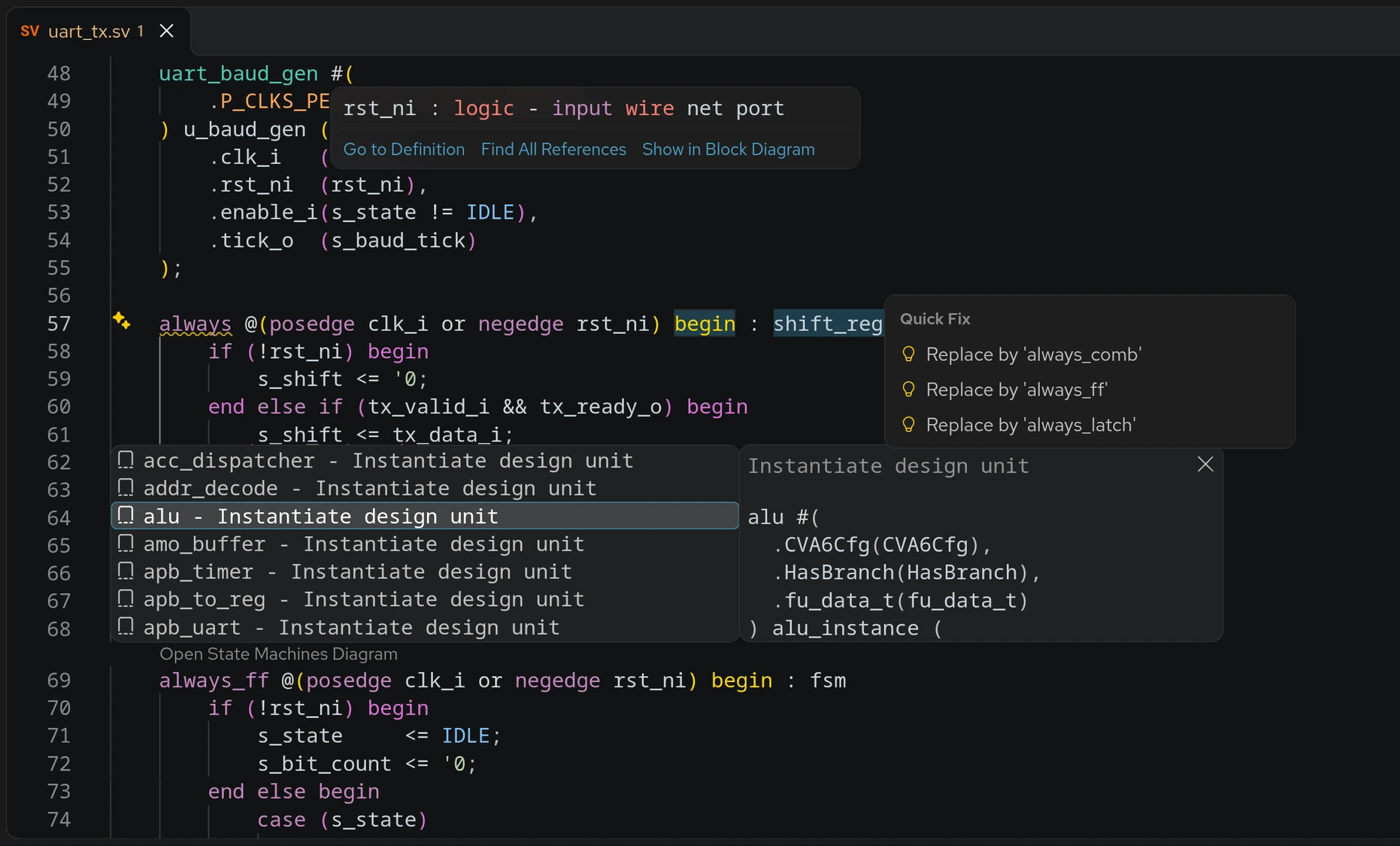
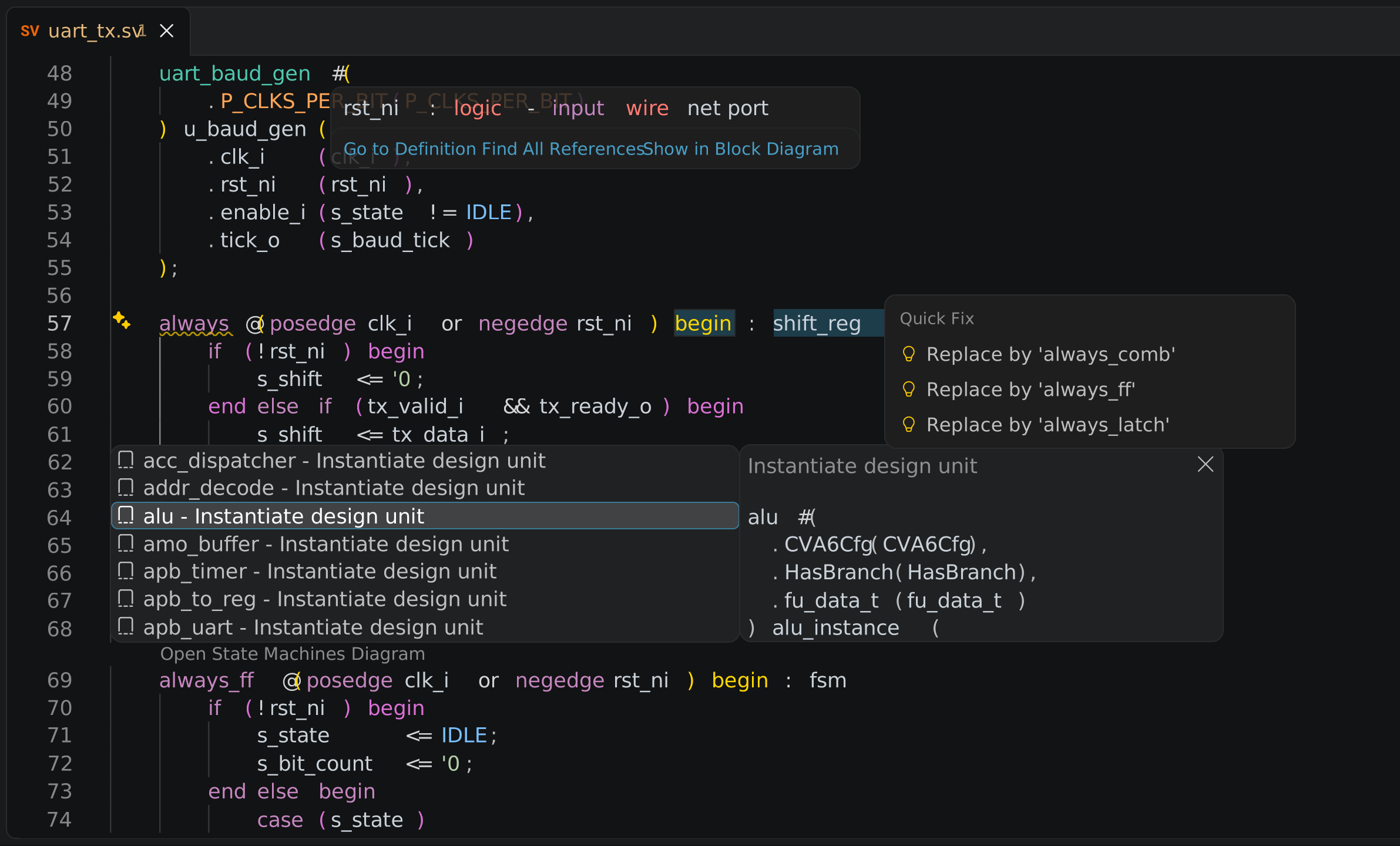
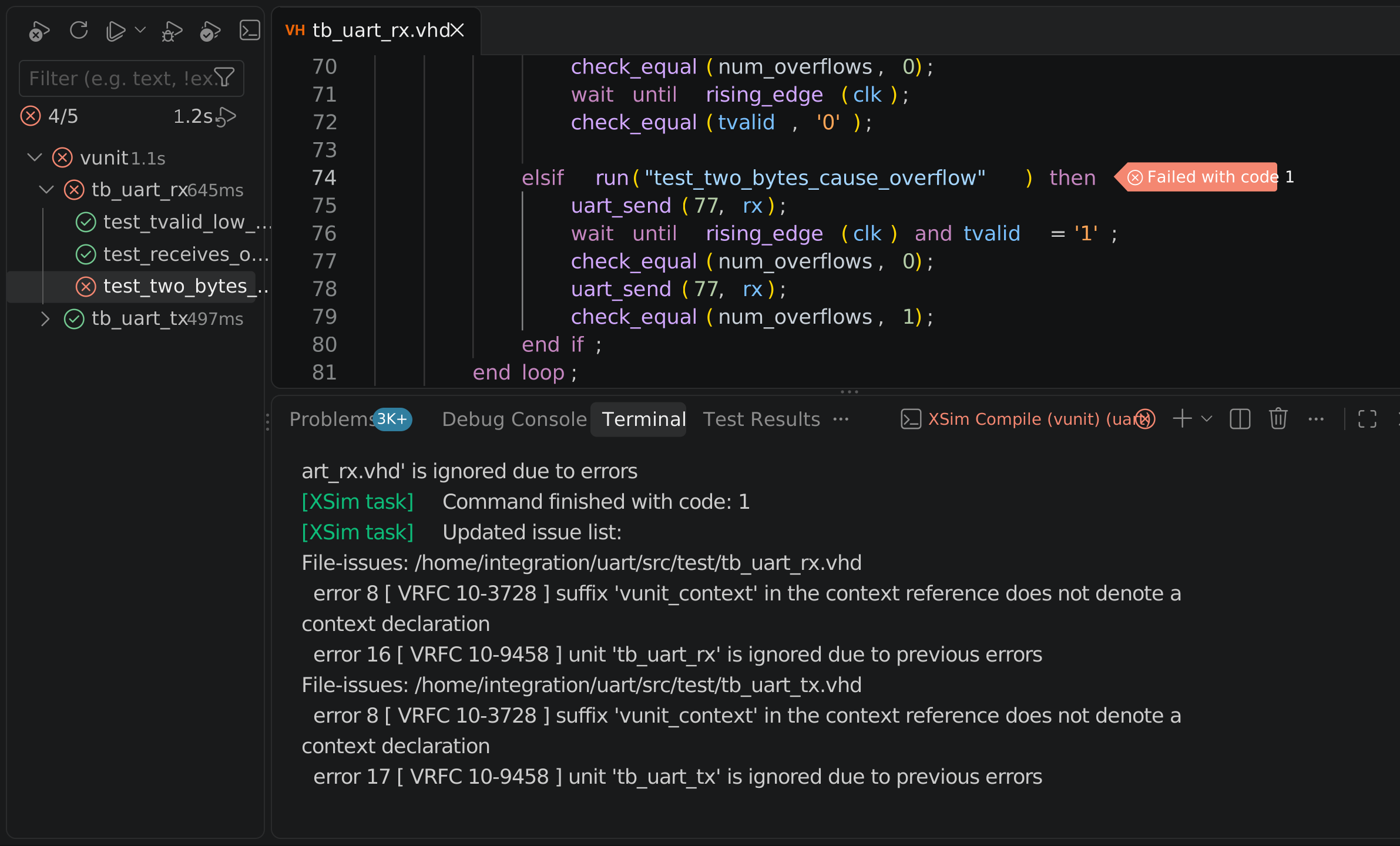
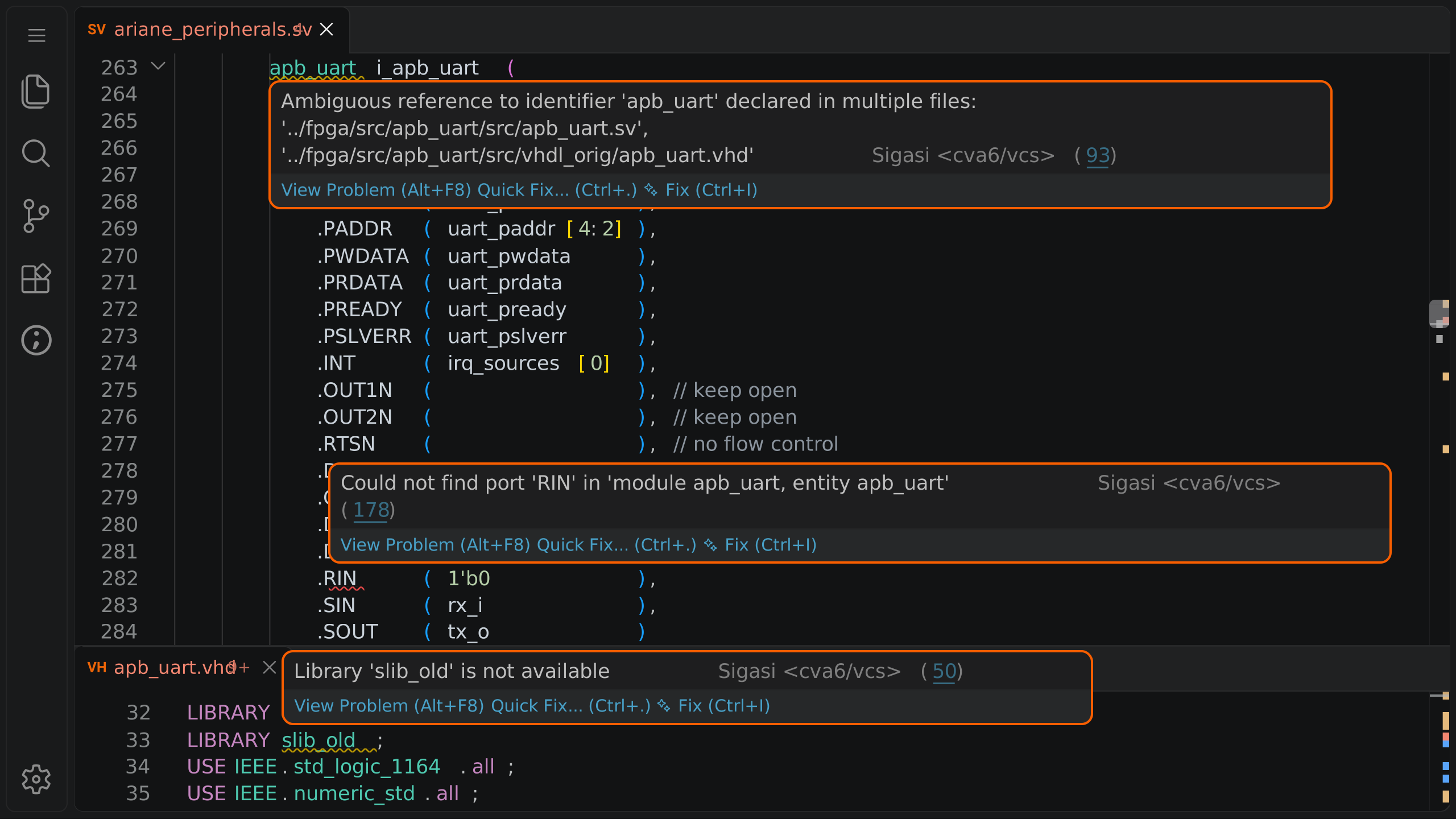
A missing package or unresolved reference should be investigated while the engineer is working on the change. Sigasi provides diagnostics and configurable linting in the editor, helping teams identify supported language and coding-rule issues before they interrupt downstream work. That feedback also helps engineers investigate the cause. A missing dependency may require a project-configuration fix rather than a rewrite of otherwise valid RTL. Resolving the right problem early keeps review attention on the design itself.
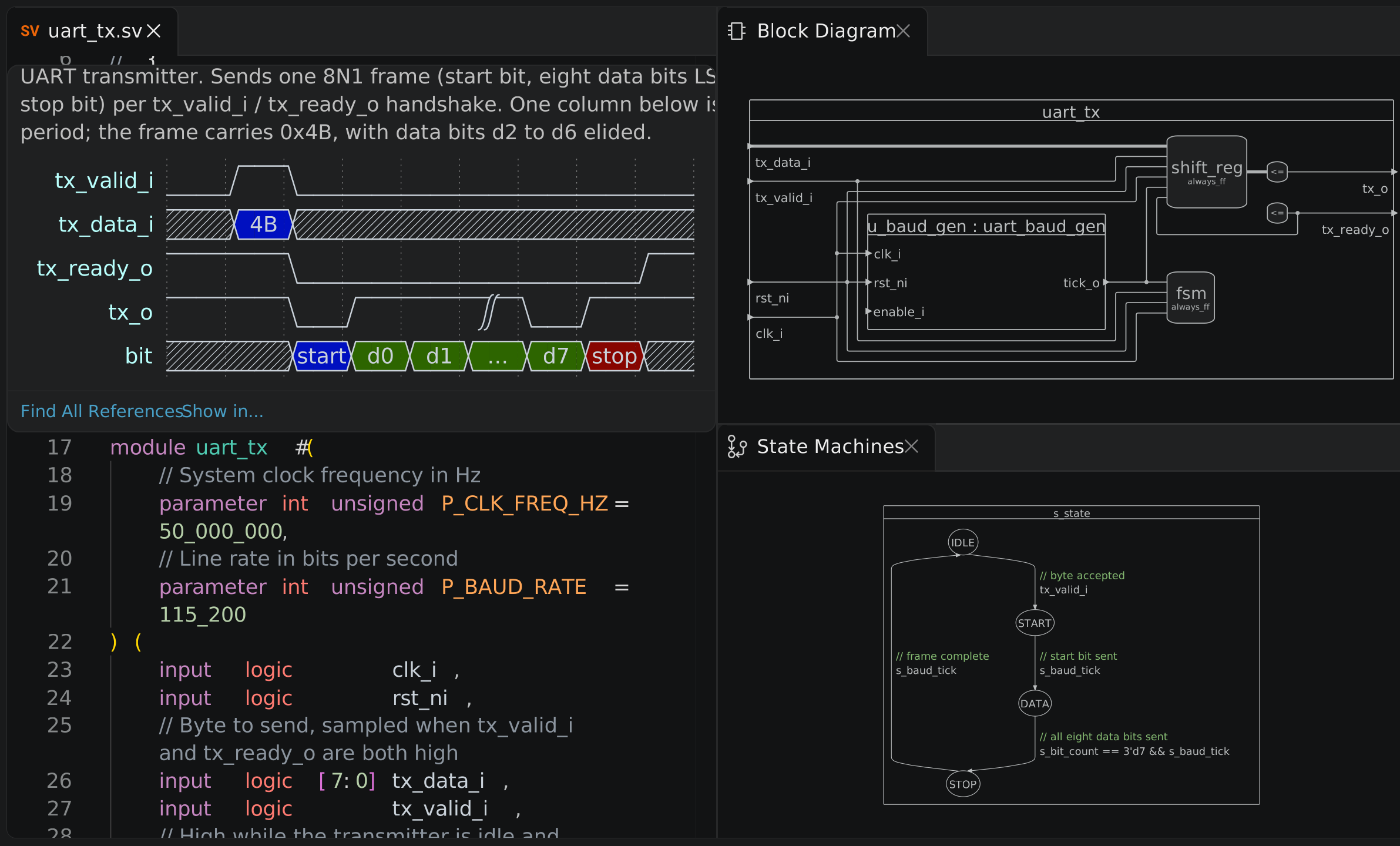
A source tree rarely explains the architecture on its own. Navigation, reference searches, hierarchy views, and diagrams help engineers explore unfamiliar RTL and follow its relationships. State-machine views make supported control structures easier to inspect directly alongside the code. For a team taking over a legacy design or integrating supplier HDL, that means a practical way to investigate the implementation. Source-derived documentation can capture interfaces, comments, and design structure for later review, provided teams regenerate it from the relevant baseline.
Airborne and space programs operate within different assurance frameworks. FAA guidance recognizes DO-254/ED-80 for airborne electronic hardware. European space projects may apply ECSS engineering and product-assurance standards for ASICs, FPGAs, and IP cores , tailored to the program.
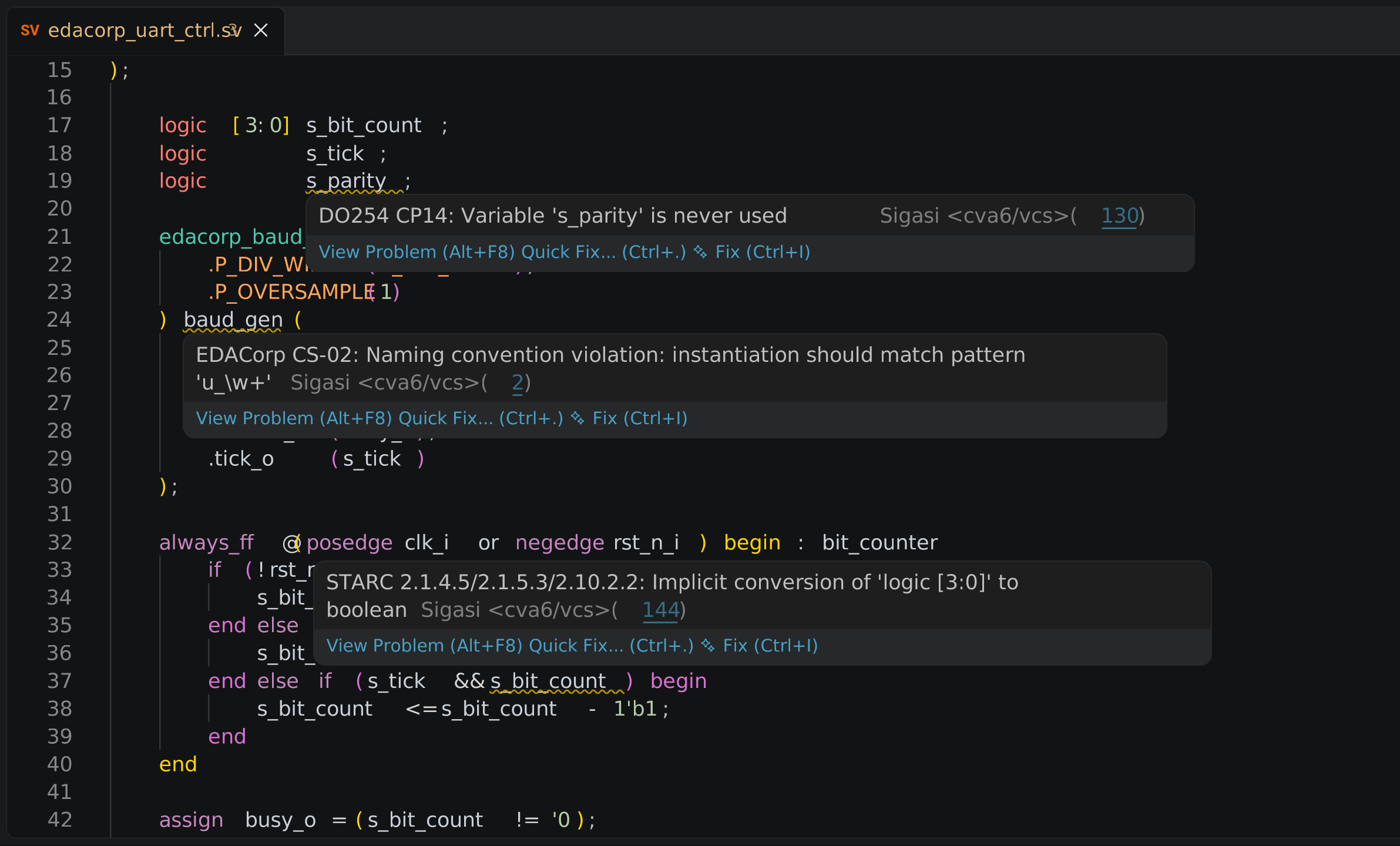
Sigasi supports disciplined RTL development within those processes. Its configurable checks include mappings to selected best-practice coding guidelines used in DO-254 programs. Those checks help engineers apply coding expectations consistently; they do not establish DO-254 compliance or certify hardware.
Sigasi works alongside FPGA vendor tools such as Vivado, Quartus Prime, and Libero, and alongside ASIC implementation flows. It concentrates on the HDL project that engineers create and maintain. Simulation, formal verification, synthesis, timing analysis, and hardware testing continue to answer their respective engineering questions. Teams can also use licensed CLI workflows to run supported checks and generate documentation in automation. Consistent results depend on controlling the source baseline, tool version, configuration, and dependencies.
Where a program permits AI-assisted development, Sigasi can give supported agents access to diagnostics, project context, symbol searches, and HDL formatting through MCP. The current MCP server runs inside the Sigasi extension with the project open.
An agent can use that feedback to revise its changes. Engineers still review the implementation against its requirements, and the design still passes through the program’s verification and assurance activities. A clean diagnostic report is useful feedback, not proof of functional correctness.
Aerospace teams need to understand both today’s changes and the design they will inherit tomorrow. Sigasi brings project-aware analysis, navigation, visualization, and documentation into that daily work. Request the aerospace whitepaper to explore how deterministic RTL analysis supports design review, engineering continuity, and controlled AI-assisted development.
Sigasi parses the full project, not the open file: hierarchy, types, scopes, dependencies, interfaces and references across SystemVerilog, Verilog and VHDL. That model is what makes a review of supplier, legacy or AI-generated RTL an inspection rather than a reading exercise.
Compile at coding speed, so problems surface in the second they are written rather than at integration.
Fewer iterations, less wasted AI tokens, less review late in a program when work is most expensive.
RTL checked against your real project whether you or an AI agent wrote the code. You decide what moves forward based on facts, not hope.
12 weeks
16 weeks
10 weeks
6 weeks (-50%)
12 weeks (-25%)
10 weeks (no impact)
Five short recordings of the product doing the work described above. No sign-up.
View all screencasts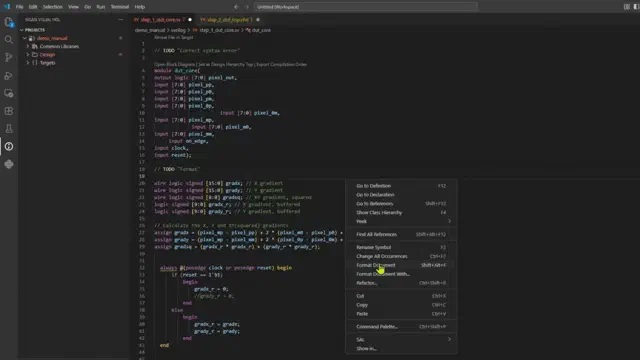 Incremental real-time compiler
Context-aware feedback, linting and completion as you type
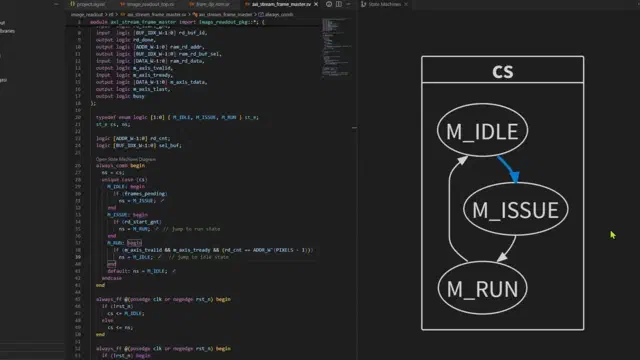 Interactive visual design creator
Block and state machine diagrams generated while you type
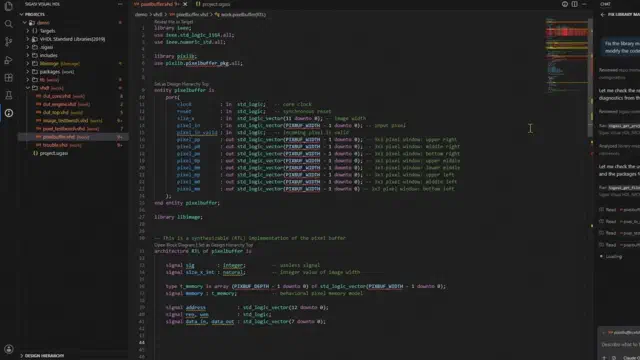 Dependency analysis
Spot missing mappings and broken includes across supplier and legacy code
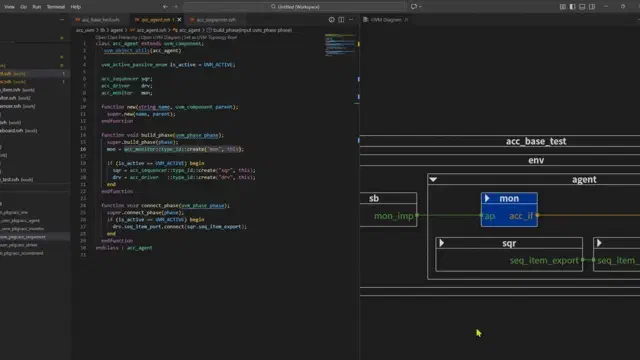 Verification accelerator
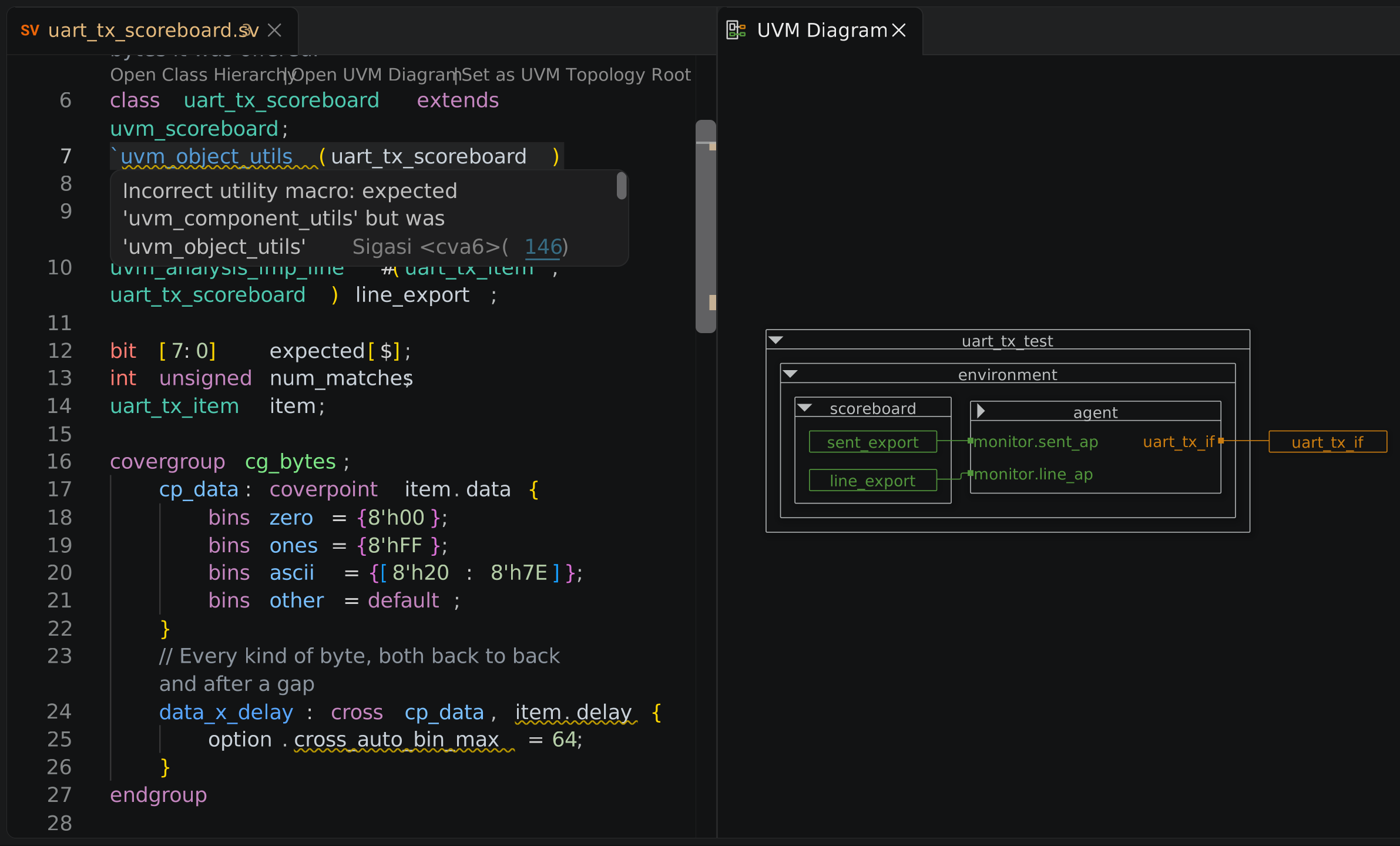
Debug UVM, UVVM, OSVVM, VUnit and Cocotb faster
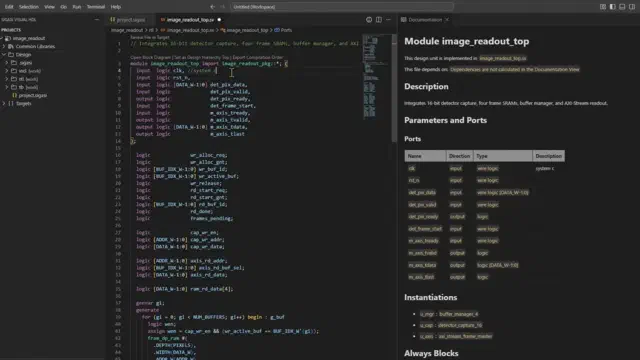 Up-to-date documentation
Documentation generated from the design, ready for review packages
Sigasi controls RTL at interactive speed, so aerospace teams can move faster without giving up control. Evaluate it on a representative FPGA project, on your own infrastructure.