Governance.
Shared rules applied the same way in every team, every site, and in CI.
Review loops, onboarding friction and late-stage issues are upstream problems that surface downstream, where they cost the most. Sigasi builds one deterministic model of your SystemVerilog, Verilog, VHDL and mixed-language projects, applies your rules consistently across teams and sites, and runs the same checks in the engineer’s workspace, in a coding agent, and in CI. It runs in VS Code next to the tools you already have.
SystemVerilog · Verilog · VHDL · Mixed-language · Model-neutral and toolchain-independent · Analyzed locally, on your own infrastructure
Shared rules applied the same way in every team, every site, and in CI.

One project model, so hierarchy and dependencies are inspectable rather than tribal.

The same diagnostics for the engineer, the reviewer, the agent and the pipeline.

Issues surface while a change is still cheap, instead of at integration.

Runs in VS Code beside your simulator, synthesis and sign-off flow. Nothing is replaced.
A CAD organization is measured on something it does not write a line of: how reliably the design teams deliver correct silicon on the promised deadline. Tooling decisions reach that outcome indirectly, through review loops, onboarding time, verification load, and documentation that stopped matching the design months ago.
That is an awkward place to argue from. The failures you are accountable for happen downstream, and the levers you control are upstream.
Four patterns show up in almost every program.
Review loops that make schedules unpredictable, because an issue introduced in the week the code was written is not found until integration or simulation bring-up. Onboarding friction and inconsistent coding patterns, which turn every new hire and every transferred block into mentoring overhead. Late-stage issues that consume verification bandwidth that was budgeted for finding real bugs. And documentation drifting out of sync, so the only reliable description of a block is in the head of the engineer who wrote it.
None of these needs a new methodology. They need the problem to surface earlier, and the same answer to be available to everyone who asks.
Sigasi Visual HDL is a deterministic semantic HDL platform. It builds one model of the real project: types, scopes, libraries, interfaces, hierarchy and dependencies across SystemVerilog, Verilog, VHDL and mixed-language designs.
That model is shown to the engineer in the VS Code workspace, exposed to a chosen coding agent through MCP and the command line, and run in CI. It is the same engine in every place, so the author, the reviewer, the agent and the pipeline work from the same facts rather than from four tools that disagree at the edges.
For a CAD organization that has consequences you can plan around.
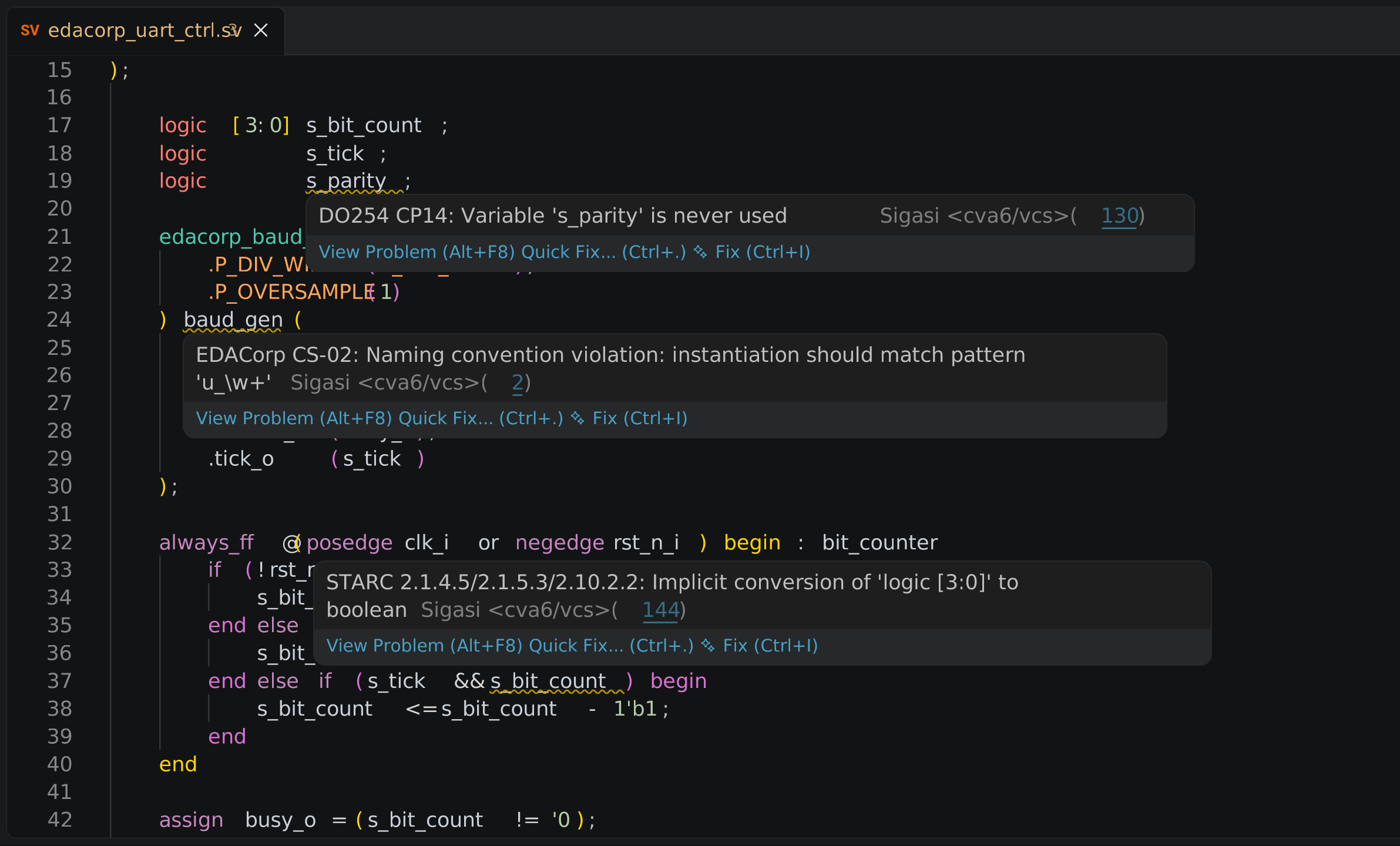
You can customize linting rules to your taste, easily implementing a company styleguide or adopt standards such as DO-254 or STARC. The team agrees which issues block and which inform, while being able to apply different standards to self-written and third-party souce code.
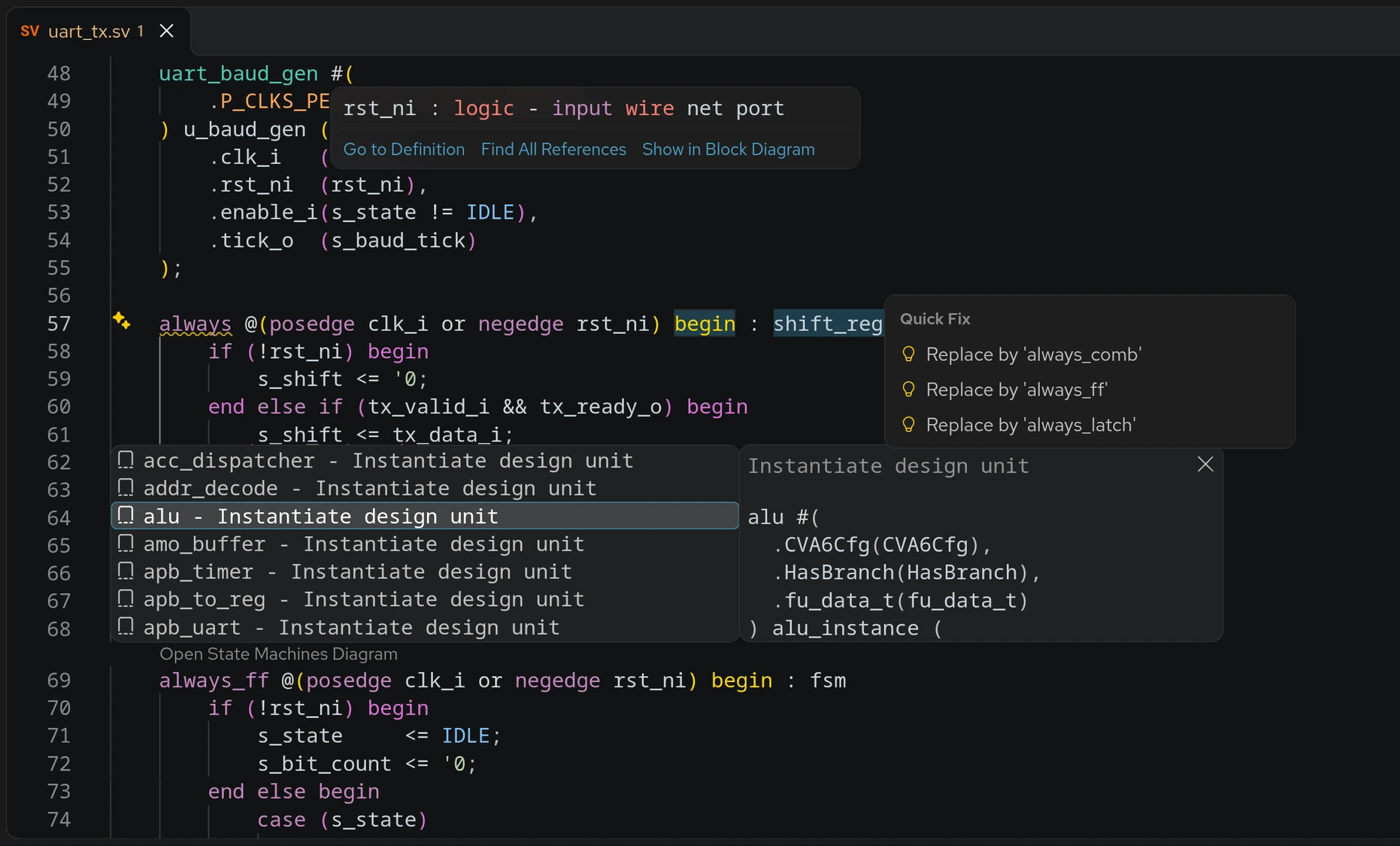
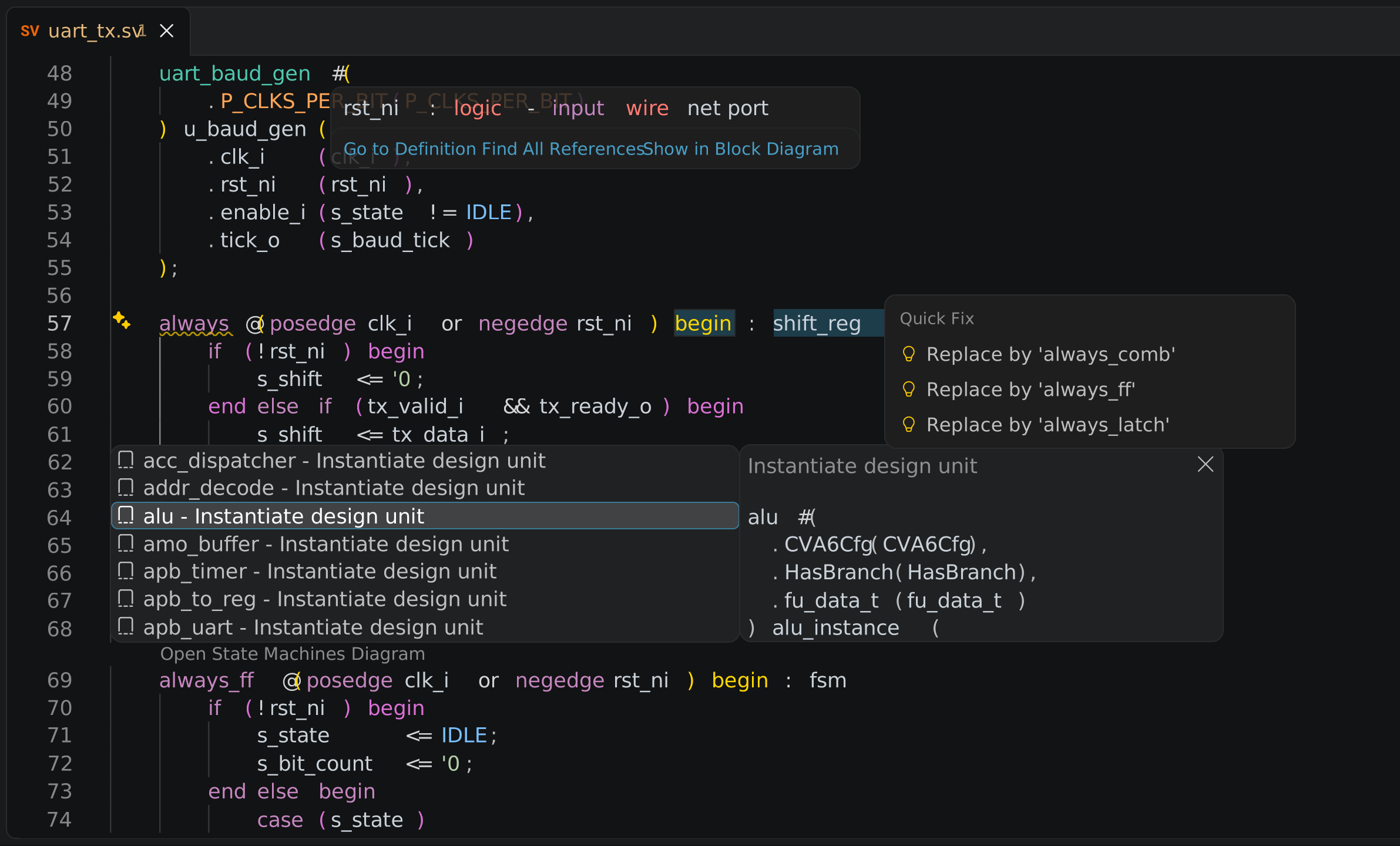
Accurate navigation and symbol resolution, diagnostics while engineers type, and refactoring that stays project-aware across files and packages. The benefit grows with the size of the codebase and the number of contributors, which is the opposite of how editor features usually scale.
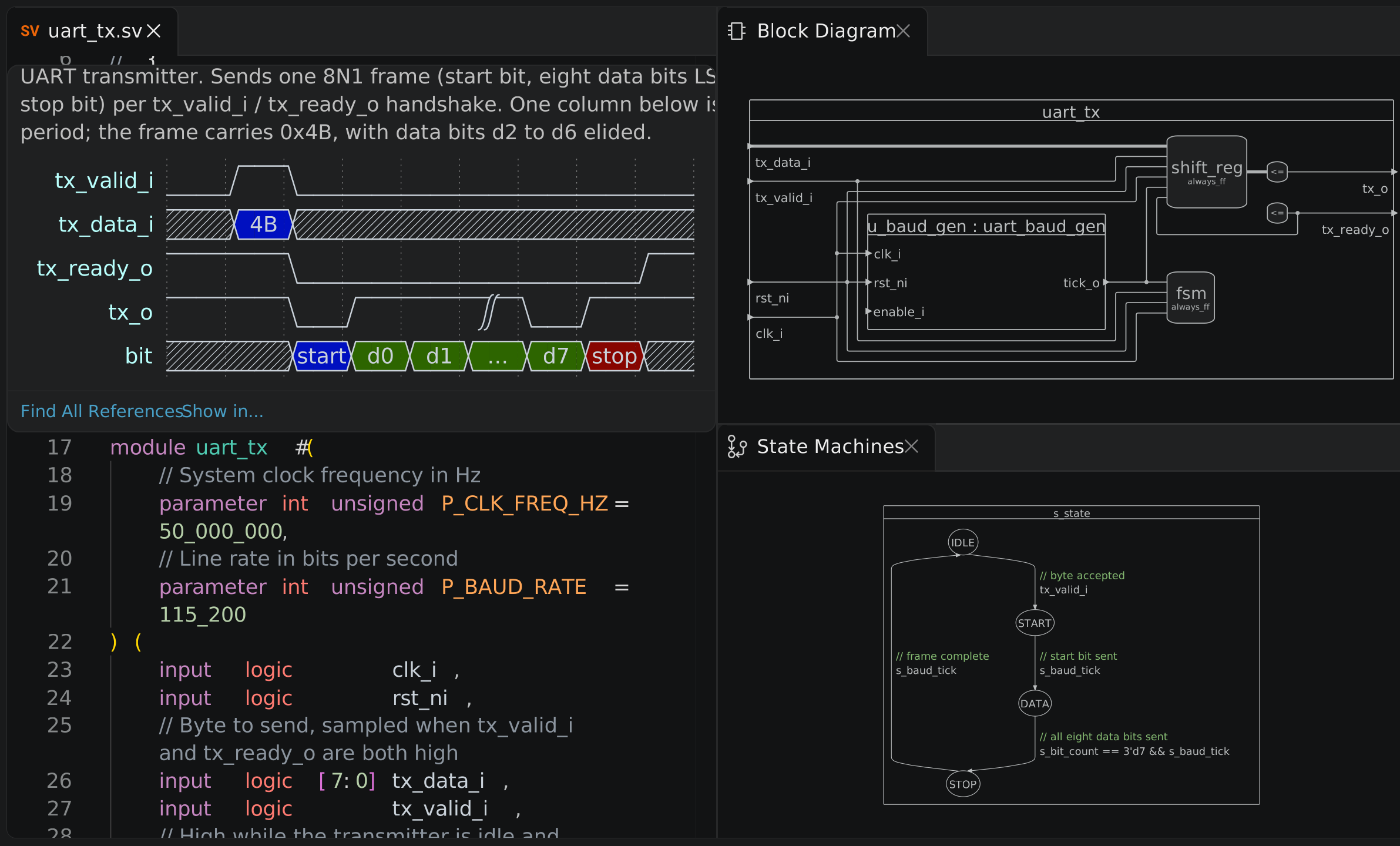
Hierarchy views, block and state machine diagrams and design documentation are produced from the code and regenerate as it changes. Handovers stop depending on whether someone updated a drawing, and knowledge silos get smaller without anyone being asked to write more.
Sigasi runs in VS Code next to the simulator, synthesis and verification tools your teams already use, and complements them rather than replacing anything. That is what makes a multi-team, multi-site rollout practical: you are not asking engineers to abandon a flow they trust.
The designs you support outlive the people who wrote them. Mixed-language environments, large hierarchies, reused IP and many contributors are the normal condition, not an edge case, and they are what the project model is built for.
That also covers the direction most programs are traveling. An FPGA prototype becomes an ASIC-grade flow on the same source. A verification environment in SystemVerilog sits on top of RTL in VHDL. The boundary between them is where project knowledge is thinnest, and it is analyzed as part of one model rather than as two unrelated files.
Coding agents will reach your teams whether or not you select one. They can draft and modify HDL quickly, and they do not automatically know your library mappings, compile order, include paths, reused IP or team rules.
Sigasi gives the agent that project context and checks what it proposes, through the same engine the engineer uses. The agent does not grade its own work, and the engineer approves what moves downstream. Sigasi does not generate RTL and does not decide.
This is also a procurement point. Sigasi is not tied to one coding agent, one FPGA vendor, one simulator or one vertically integrated EDA suite. One program may approve a cloud agent, another an internally hosted model, another none at all, and the same deterministic layer serves all three. AI is optional. Project understanding is not.
Sigasi analyzes HDL locally, on the engineer’s workstation or inside your controlled environment. Project files are not sent to Sigasi servers for semantic analysis. Commercial telemetry is optional and does not transmit HDL source code, and licensing can run from a node-locked file or an internal FlexNet server. The analysis engine can operate without external internet access when installation, licensing and dependencies are available inside the environment.
A connected coding agent is a separate component with its own provider and configuration, and should be reviewed on its own terms. More detail is on the security page.
Sigasi does not generate RTL and it does not decide. It does not replace simulation, formal verification, coverage analysis, synthesis, sign-off or your engineers. It does not certify a design or guarantee compliance, and no tool that catches issues early can promise to catch every issue. Checks run when an engineer or an agent invokes them, and in CI wherever your pipeline requires them; capabilities vary by edition.
Abstract claims are not a procurement case. A short trial on an active repository is.
The measurements worth taking:
Within one project you’ll feel Sigasi’s impact on your productivity and velocity. Request a team trial, or book a free session tailored to your flow.
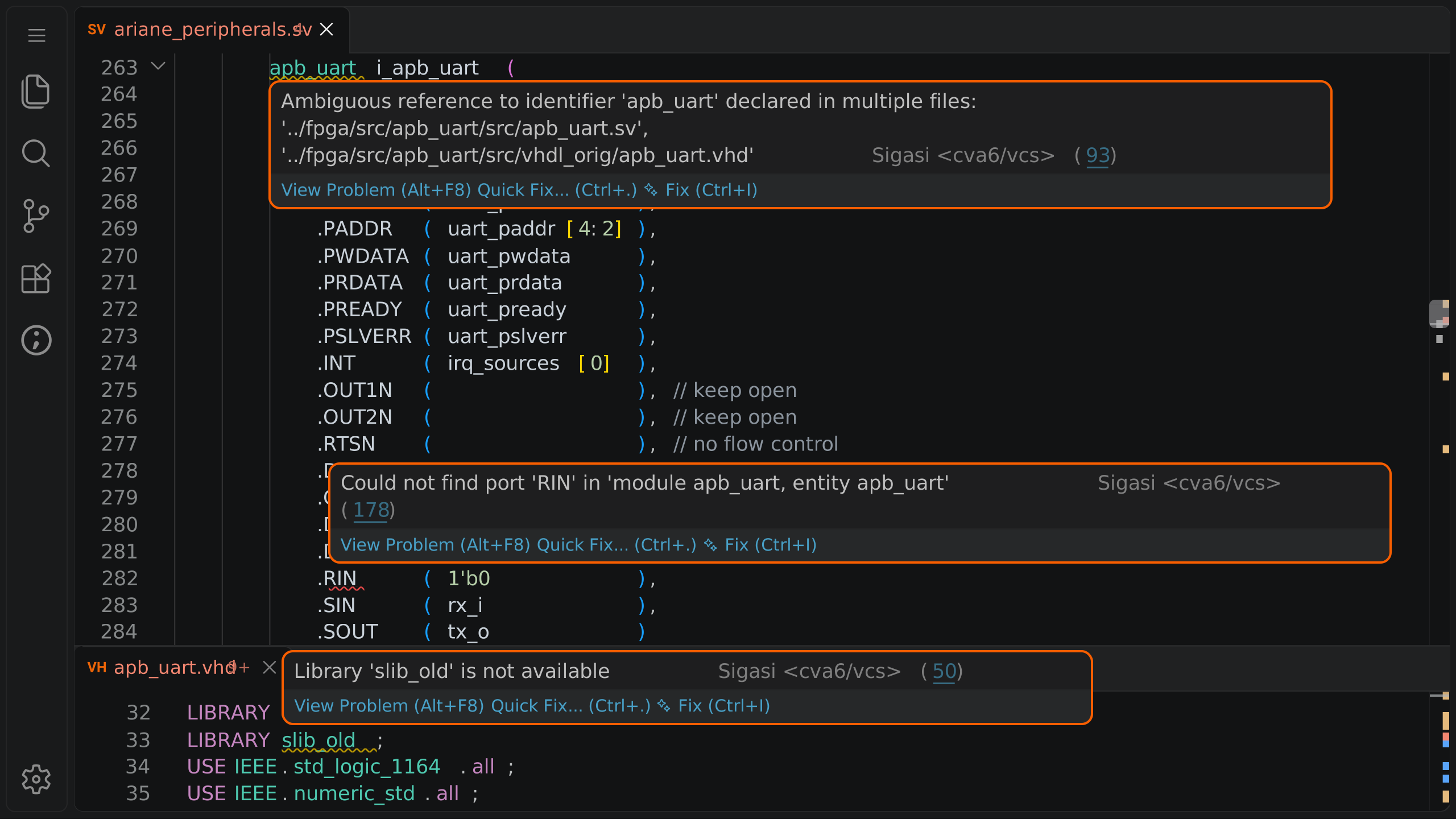
Sigasi parses the full project, not the open file: hierarchy, types, scopes, dependencies, interfaces and references across SystemVerilog, Verilog and VHDL. That shared model is what lets an engineer, a reviewer, a coding agent and your CI ask the same question and get the same answer.
Compile at coding speed, so problems surface in the second they are written rather than at integration.
Fewer iterations, less wasted AI tokens, less review late in a program when work is most expensive.
RTL checked against your real project whether you or an AI agent wrote the code. You decide what moves forward based on facts, not hope.
12 weeks
16 weeks
10 weeks
6 weeks (-50%)
12 weeks (-25%)
10 weeks (no impact)
Five short recordings of the product doing the work described above. No sign-up.
View all screencasts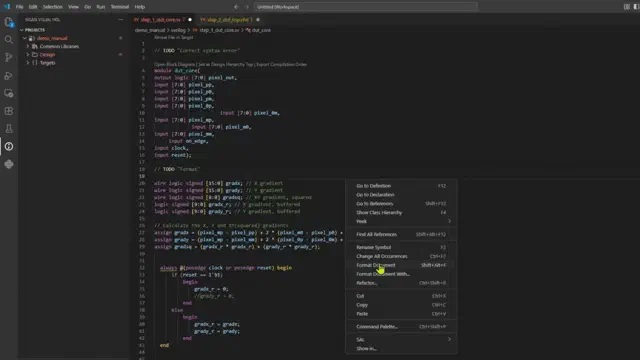 Incremental real-time compiler
Context-aware feedback, linting and completion as you type
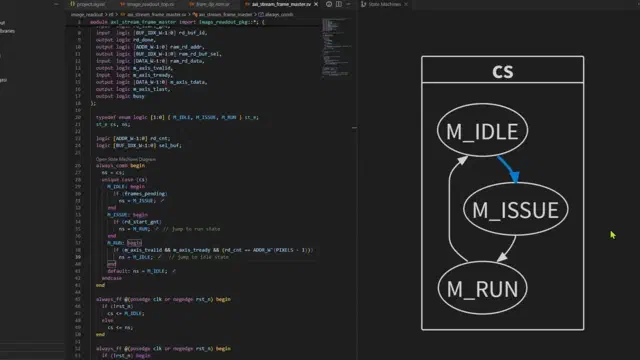 Interactive visual design creator
Block and state machine diagrams generated while you type
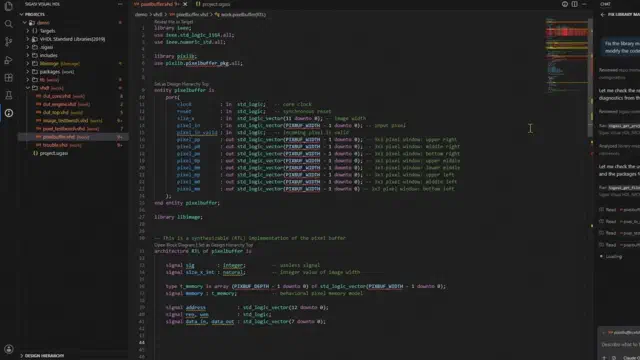 Dependency analysis
Spot missing mappings and broken includes instantly
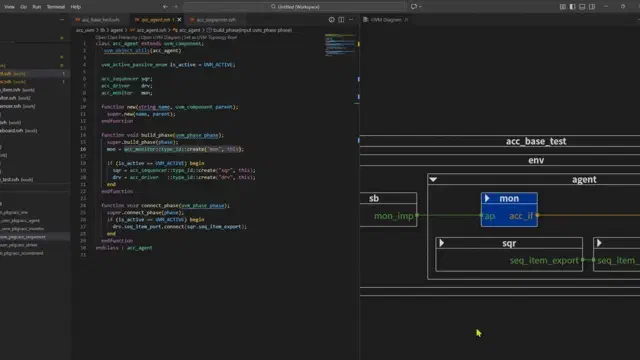 Verification accelerator
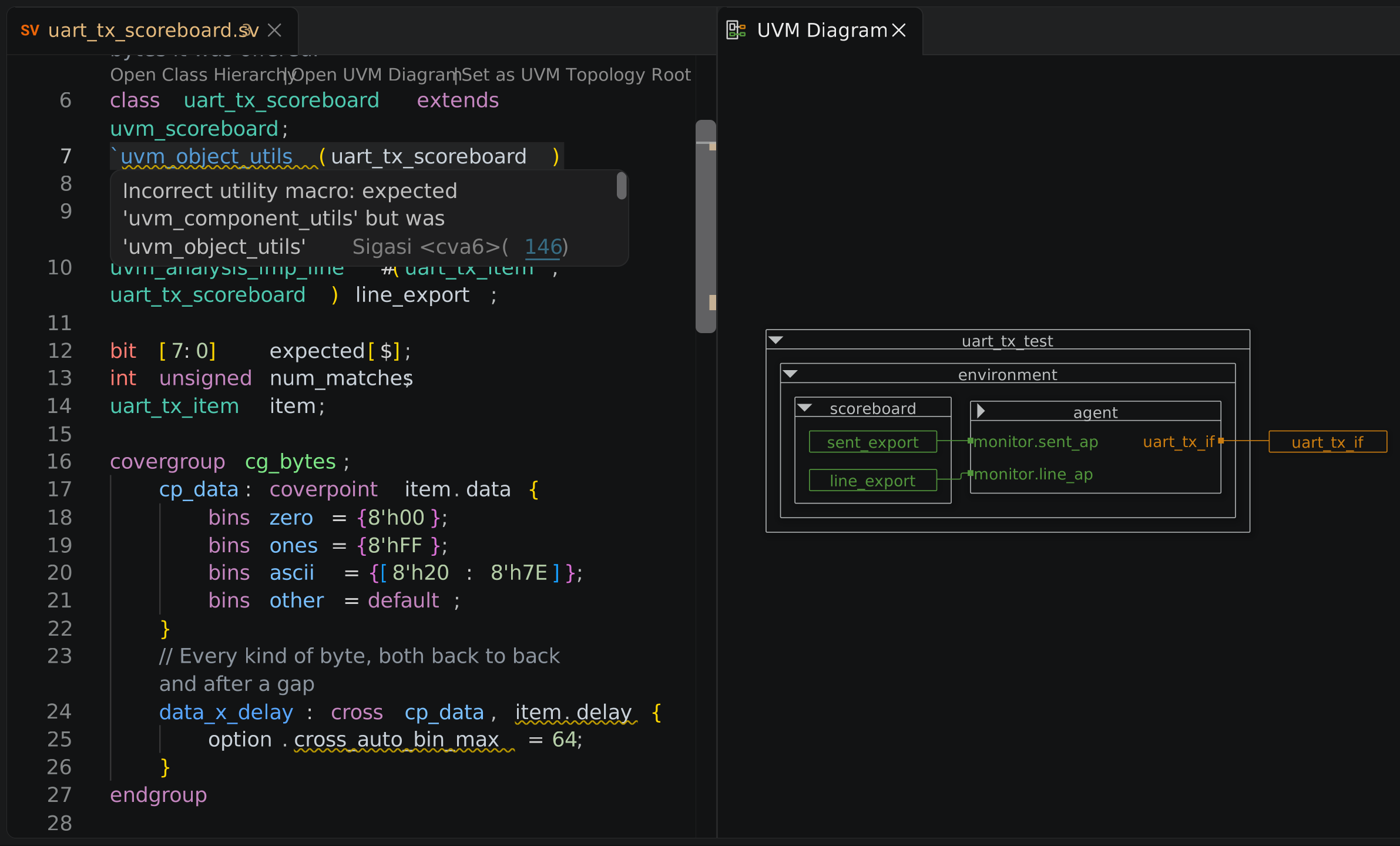
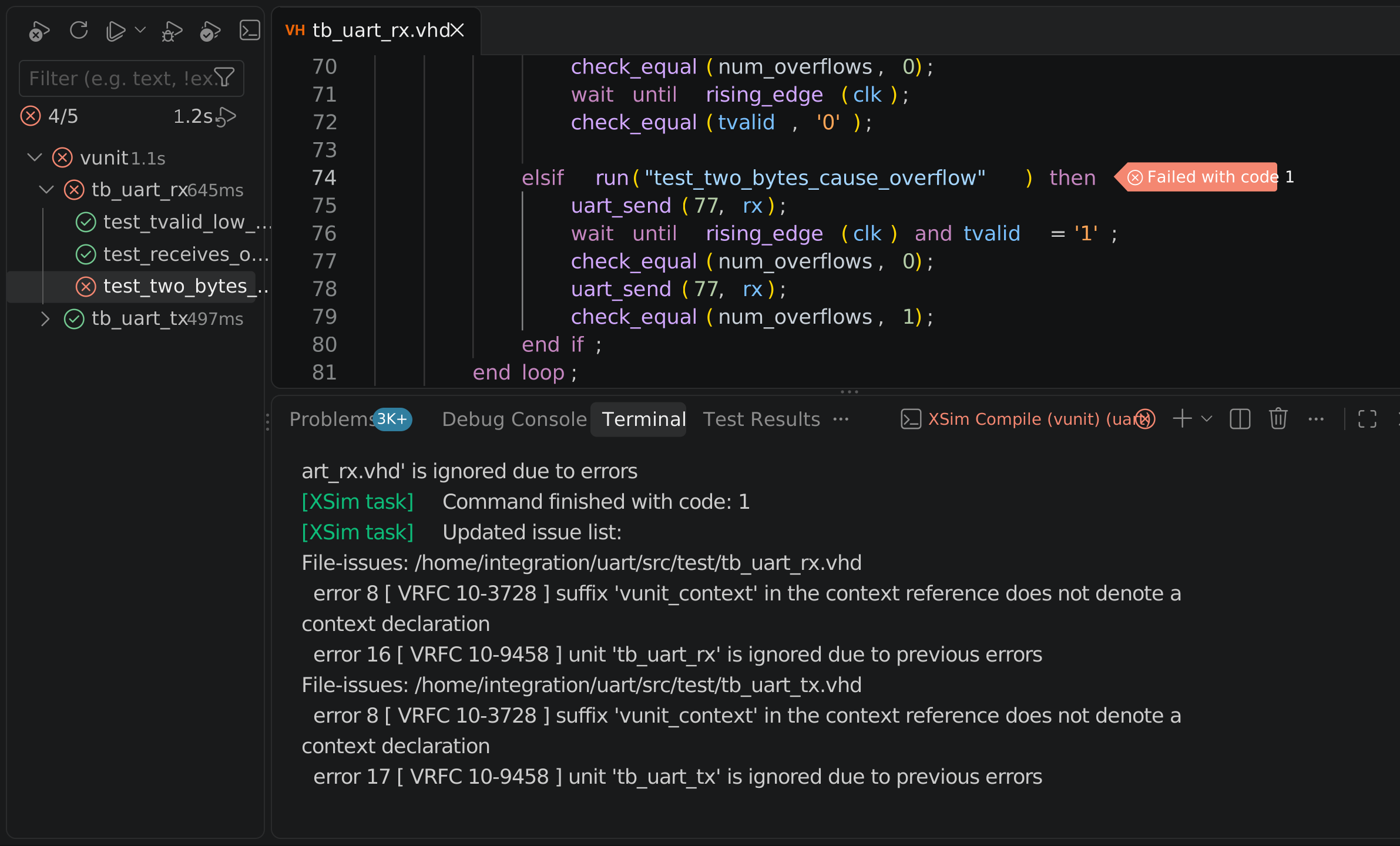
Debug UVM, UVVM, OSVVM, VUnit and Cocotb faster
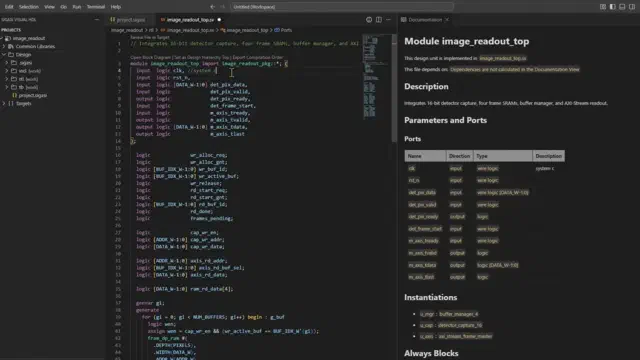 Up-to-date documentation
Documentation generated from the design, always current
A two to three week trial on one or two representative projects, with your own rule set, in VS Code and optionally in CI. Measure review churn, pre-simulation issues, onboarding speed and integration surprises against your own baseline.