Control.
Engineers stay in charge of AI-assisted and human-written RTL decisions.
Sigasi helps FPGA teams in defense validate, understand, and review RTL in full project context, whether it is written by engineers or generated by AI. SystemVerilog, Verilog, VHDL and mixed-language projects, are analyzed locally on-prem at interactive speed. Nothing leaves your servers.
SystemVerilog · Verilog · VHDL · Mixed-language · AI-assisted or human-written RTL · Analyzed locally, on your own infrastructure
Engineers stay in charge of AI-assisted and human-written RTL decisions.

Teams understand project context, dependencies and design impact faster.

Technical leads apply coding rules and project-specific engineering discipline.

Developers catch issues earlier and reduce avoidable downstream friction.

RTL reaches review and integration in a more inspectable, maintainable state.

A defense RTL project can pass through several teams before its final upgrade. Supplier blocks arrive, interfaces change, and a new device generation replaces the original target. The source may still compile, yet the next engineer needs to understand the design decisions and dependencies behind it.
Sigasi Visual HDL brings deterministic semantic analysis into that daily engineering work. Its workspace connects VHDL, Verilog, and SystemVerilog source with configured libraries and dependencies, helping engineers investigate the actual project while they develop and review RTL.
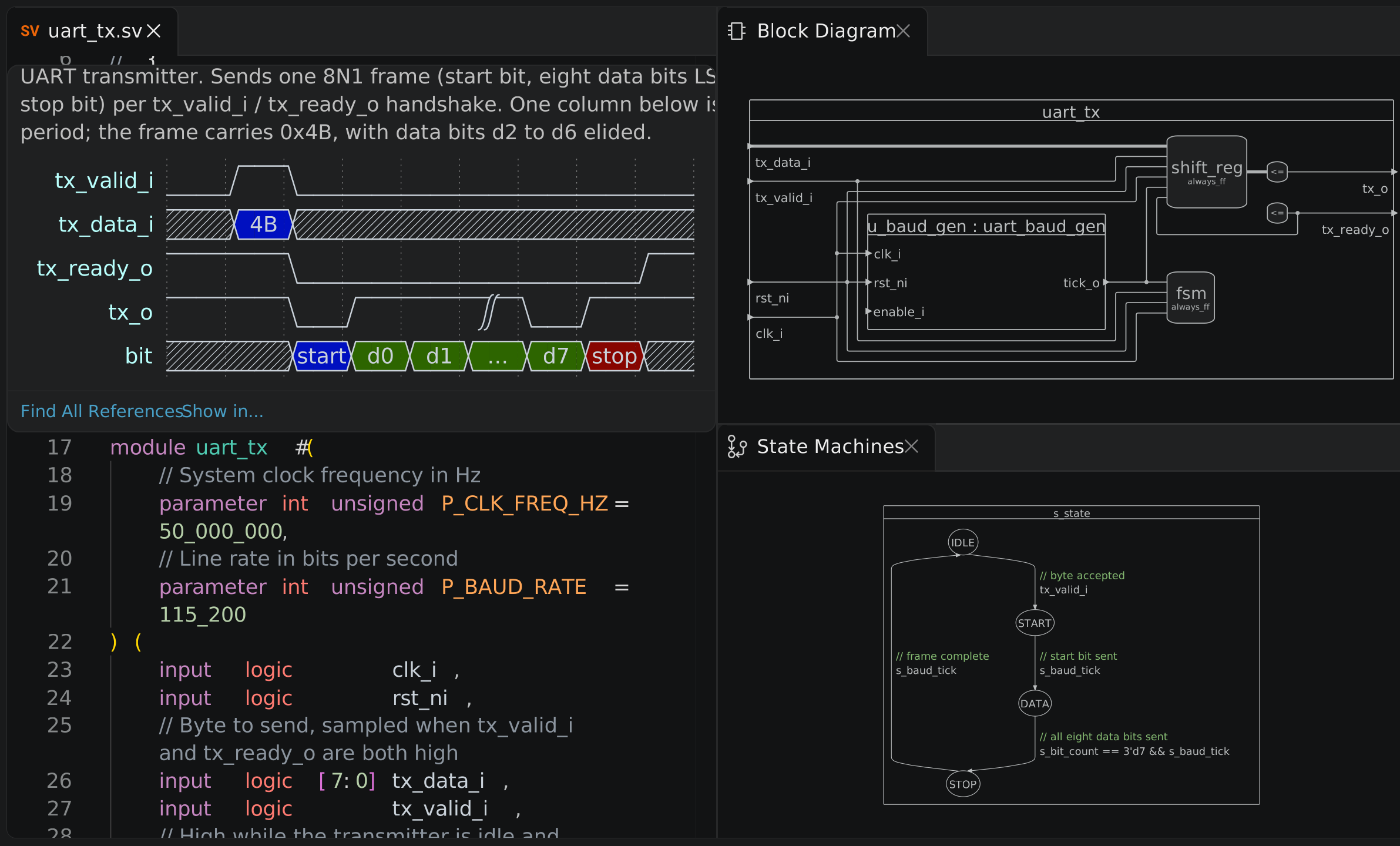
Navigation, reference searches, hierarchy views, and diagrams help engineers explore unfamiliar implementations. Supported state-machine views connect states and transitions back to the source, giving reviewers another way to inspect control logic. For a team taking over a legacy block, this provides a practical starting point for maintenance. Analysis requires accessible, supported HDL and the right configuration; supplier documentation and integration evidence remain important where the implementation is unavailable.
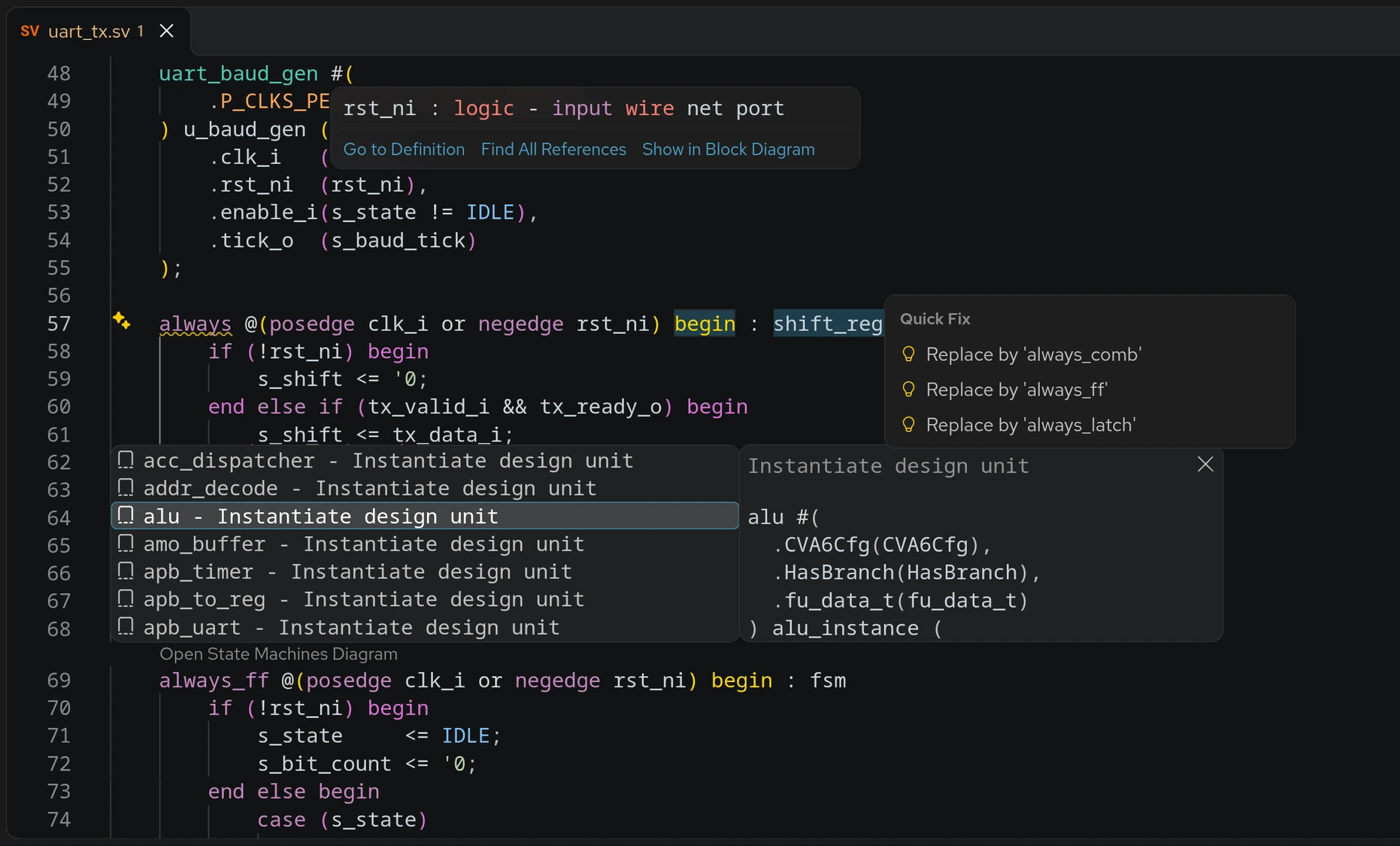
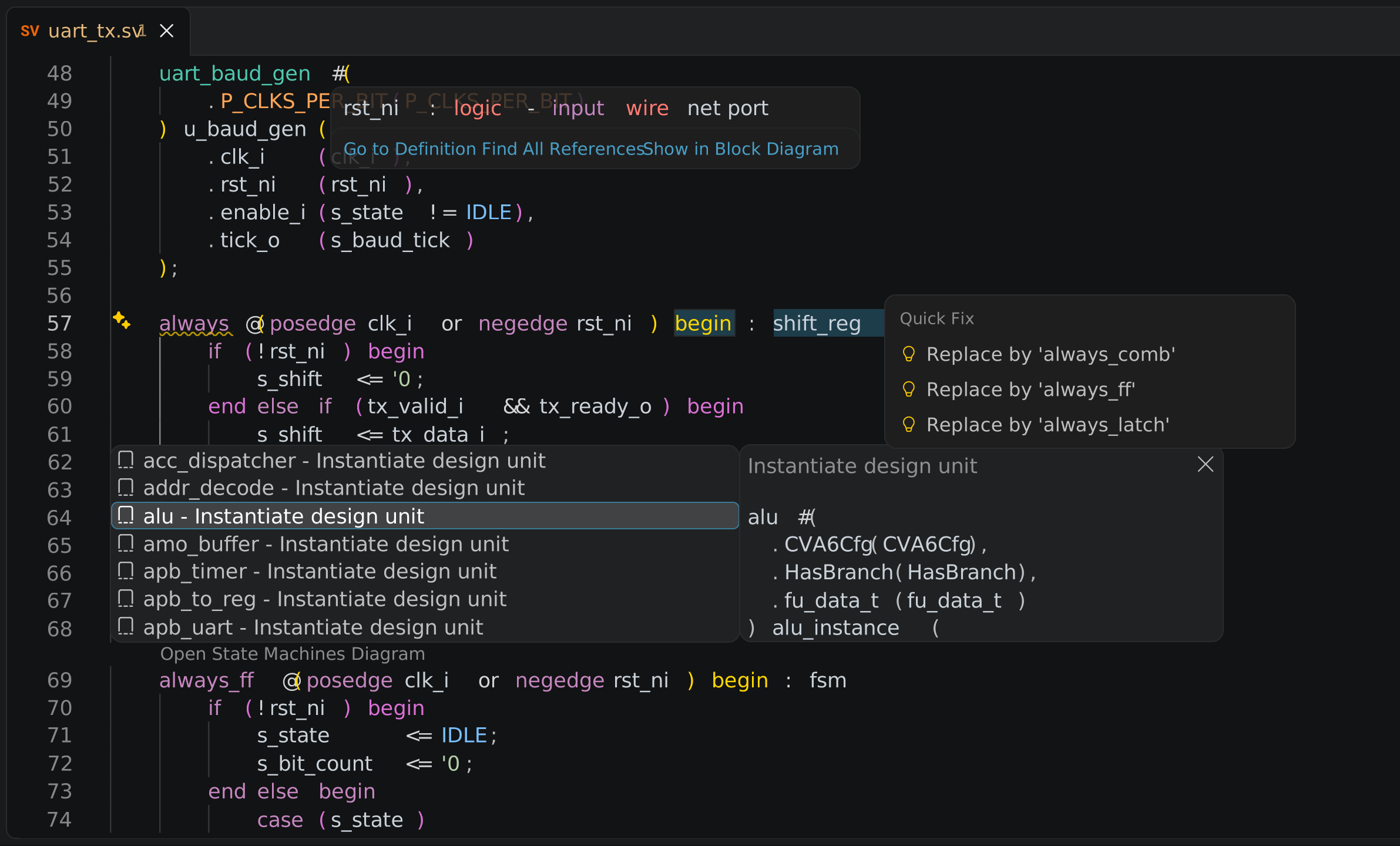
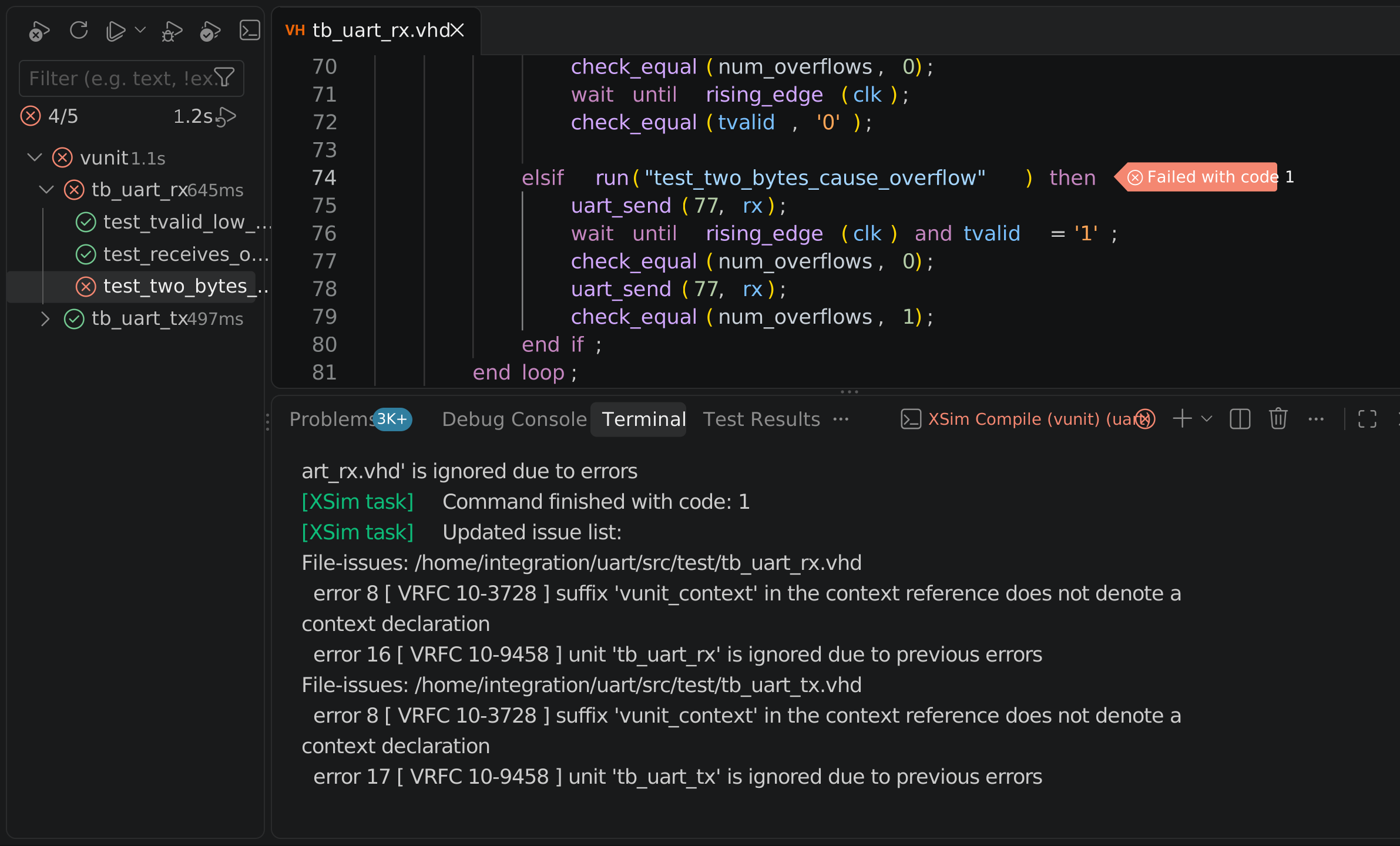
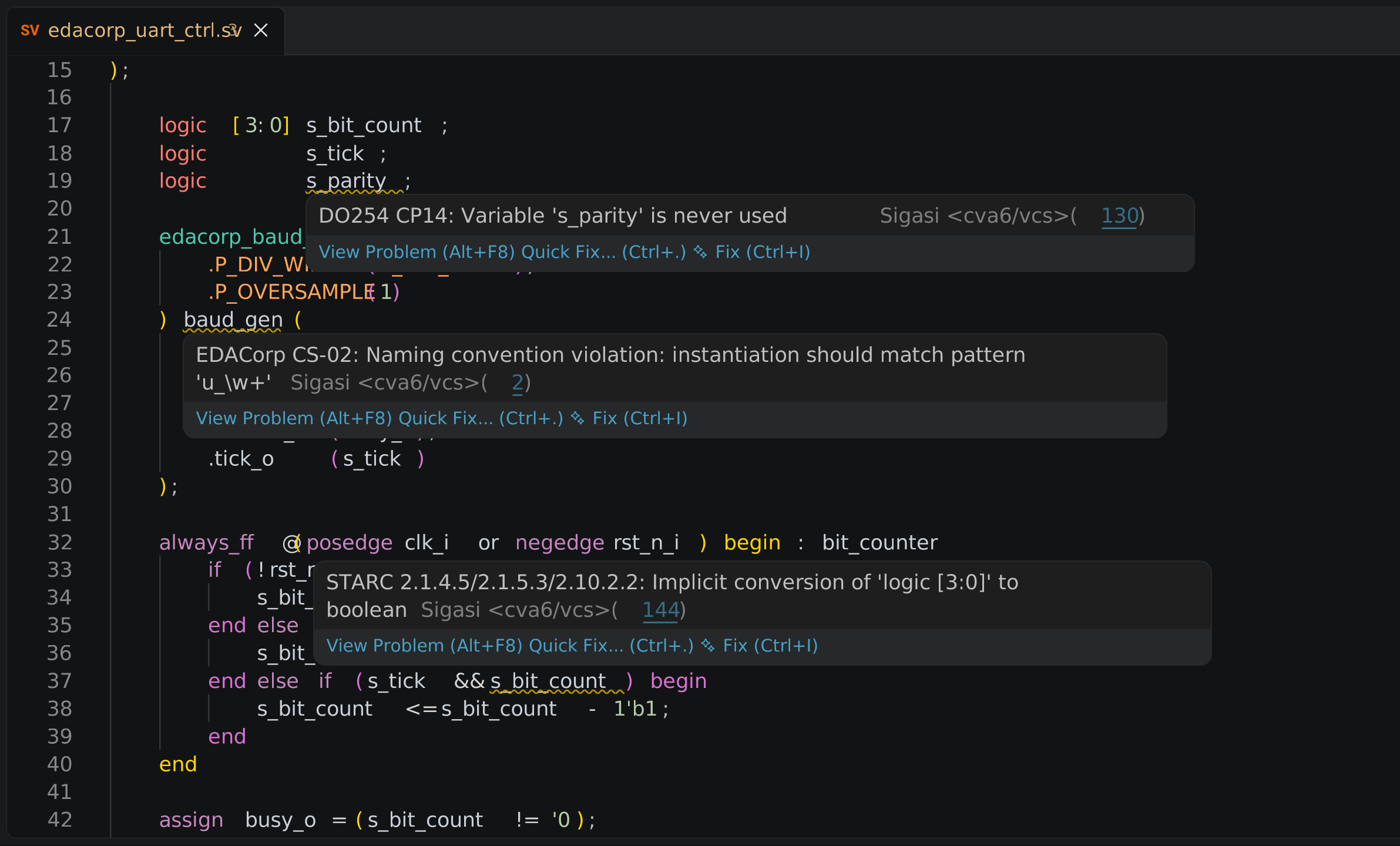
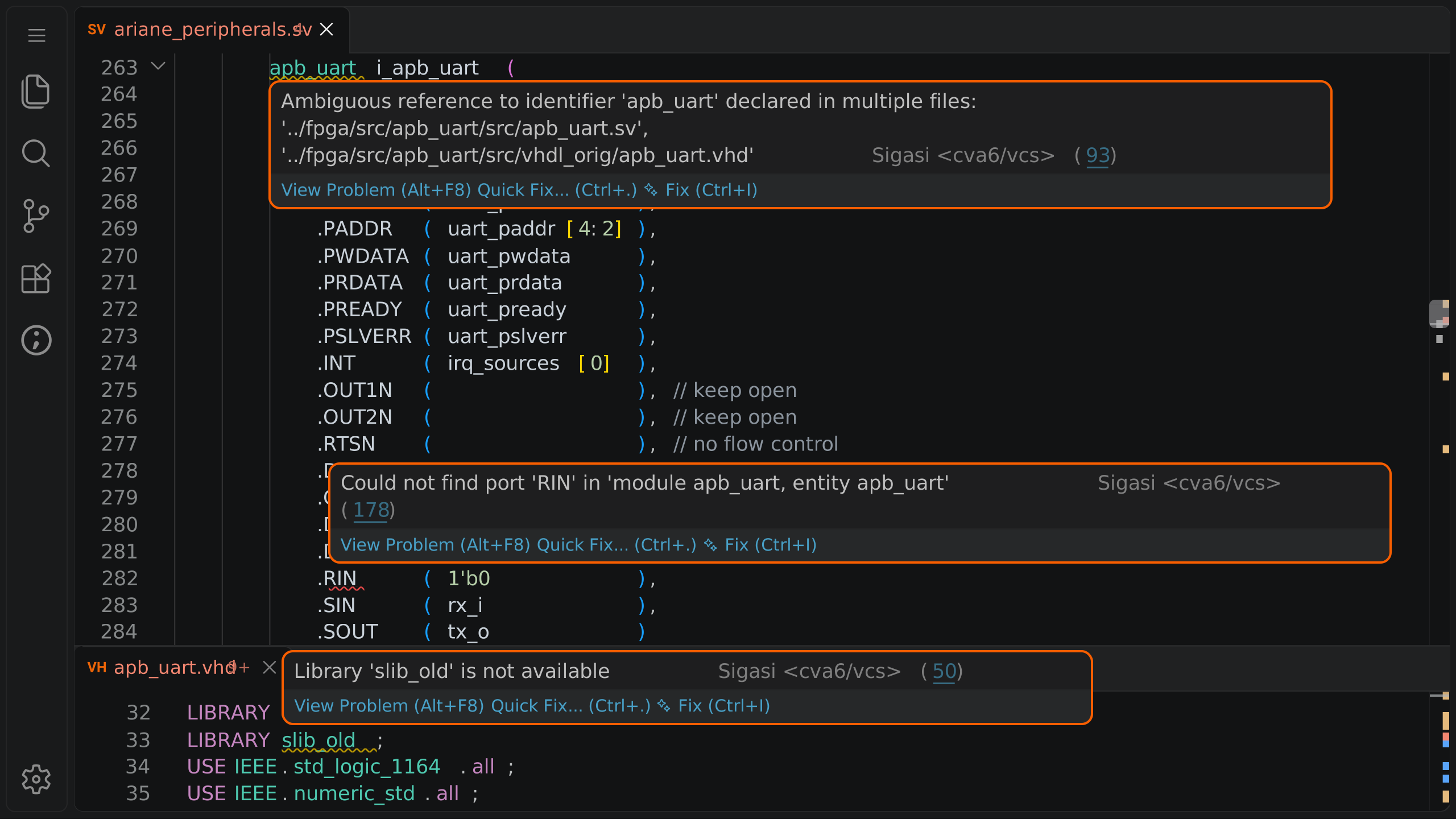
Sigasi provides semantic diagnostics and configurable linting in the editor. Engineers can investigate supported language and coding-rule issues before they interrupt simulation or implementation work. Project context matters to the repair. An unresolved reference may result from a missing library mapping rather than a defect in the RTL. Understanding that distinction helps engineers avoid unnecessary source changes and keep reviews focused on the intended modification.
A maintainable project needs more than a source archive. Versioned configuration, dependencies, and shared coding settings help teams reconstruct the environment used for a change. Source-derived documentation can capture implementation information for later review when it is regenerated from the relevant baseline. Sigasi works alongside FPGA vendor tools, simulators, and other verification and implementation tools. Licensed CLI workflows can repeat supported checks and documentation generation in automation.
Defense programs have different assurance obligations. Where DO-254/ED-80 applies, Sigasi provides mappings to selected best-practice coding guidelines used in those programs. Those checks support development discipline; they do not establish compliance, certify hardware, or prove functional correctness.
Requirements review, simulation, formal verification, timing analysis, hardware testing, and approval retain their respective roles. A clean semantic report is one input to that process.
Sigasi documents self-contained installation packages and commercial licensing through a local license file or a FlexNet server. These options are relevant to restricted environments. The complete deployment still needs to meet the program’s requirements for dependencies, updates, network access, and connected tools.
Where AI agents are approved, Sigasi’s MCP tools provide project context, diagnostics, symbol searches, and formatting. The current server runs inside the extension with the project open. Engineers review the proposed changes before they move downstream.
Request the defense whitepaper to explore supplier handoffs, controlled project baselines, deployment considerations, and engineering review with Sigasi.
Sigasi parses the full project, not the open file: hierarchy, types, scopes, dependencies, interfaces and references across SystemVerilog, Verilog and VHDL. That model is what makes a review of supplier, legacy or AI-generated RTL an inspection rather than a reading exercise.
Compile at coding speed, so problems surface in the second they are written rather than at integration.
Fewer iterations, less wasted AI tokens, less review late in a program when work is most expensive.
RTL checked against your real project whether you or an AI agent wrote the code. You decide what moves forward based on facts, not hope.
12 weeks
16 weeks
10 weeks
6 weeks (-50%)
12 weeks (-25%)
10 weeks (no impact)
Five short recordings of the product doing the work described above. No sign-up.
View all screencasts Incremental real-time compiler
Context-aware feedback, linting and completion as you type
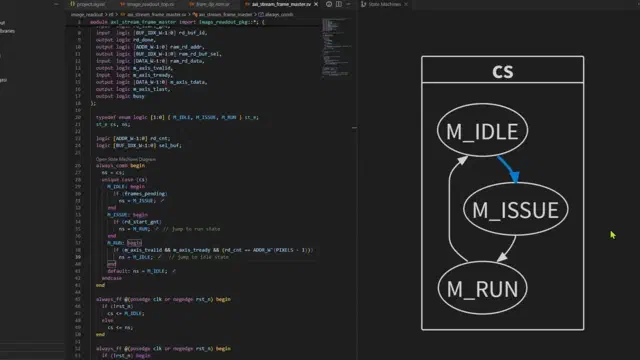 Interactive visual design creator
Block and state machine diagrams generated while you type
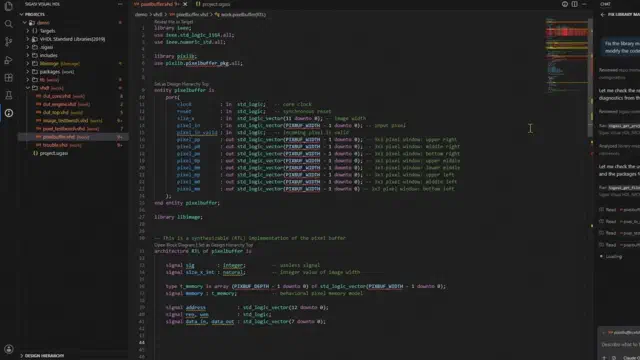 Dependency analysis
Spot missing mappings and broken includes across supplier and legacy code
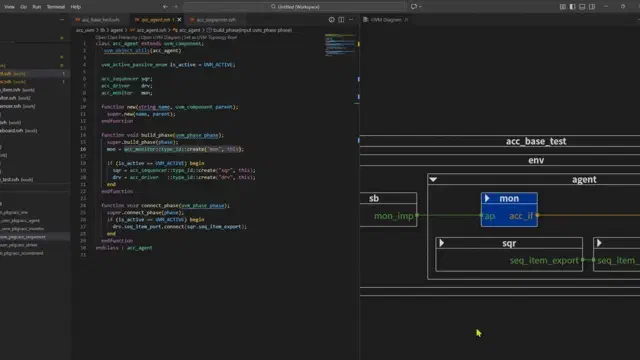 Verification accelerator
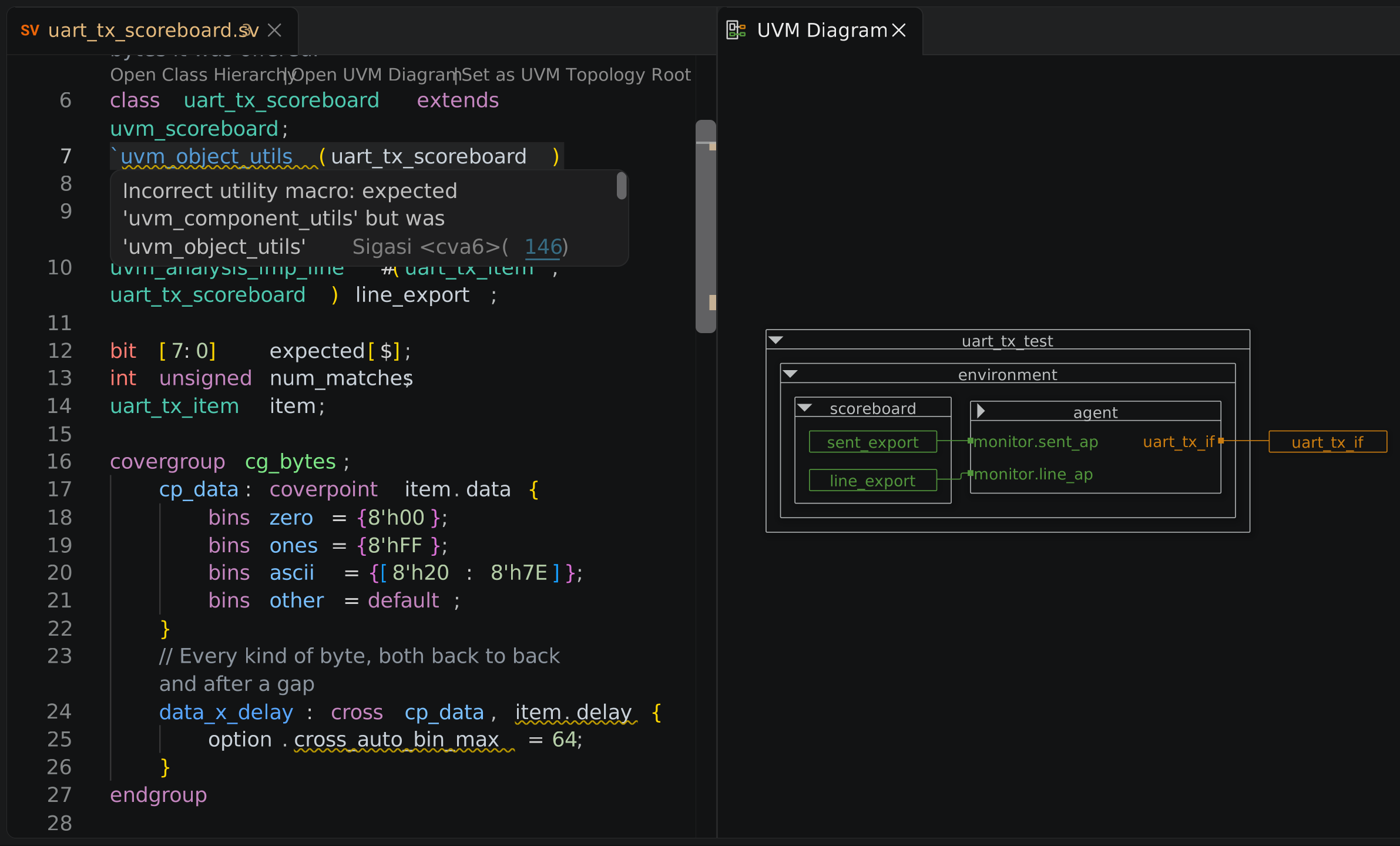
Debug UVM, UVVM, OSVVM, VUnit and Cocotb faster
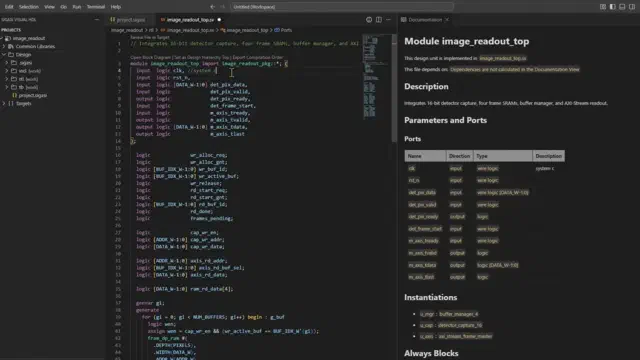 Up-to-date documentation
Documentation generated from the design, ready for review packages
Sigasi controls RTL at interactive speed, so defense teams can move faster without giving up control. Evaluate it on a representative FPGA project, on your own infrastructure.