Control.
Engineers stay in charge of AI-assisted and human-written RTL decisions.
Sigasi helps ASIC and FPGA teams in energy validate, understand, document, and review RTL in full project context, whether it is written by engineers, generated by HLS, supplied as IP, or produced by AI. SystemVerilog, Verilog, VHDL, and mixed-language projects are analyzed locally at interactive speed, across equipment that stays in service for decades and is maintained long after its original authors have moved on. Sigasi’s semantic analysis runs on your own infrastructure; project files are not sent to Sigasi servers.
SystemVerilog · Verilog · VHDL · Mixed-language · AI-assisted or human-written RTL · Analyzed locally, on your own infrastructure
Engineers stay in charge of AI-assisted and human-written RTL decisions.

Teams understand project context, dependencies and design impact faster.

Technical leads apply coding rules and project-specific engineering discipline.

Developers catch issues earlier and reduce avoidable downstream friction.

RTL reaches review and integration in a more inspectable, maintainable state.
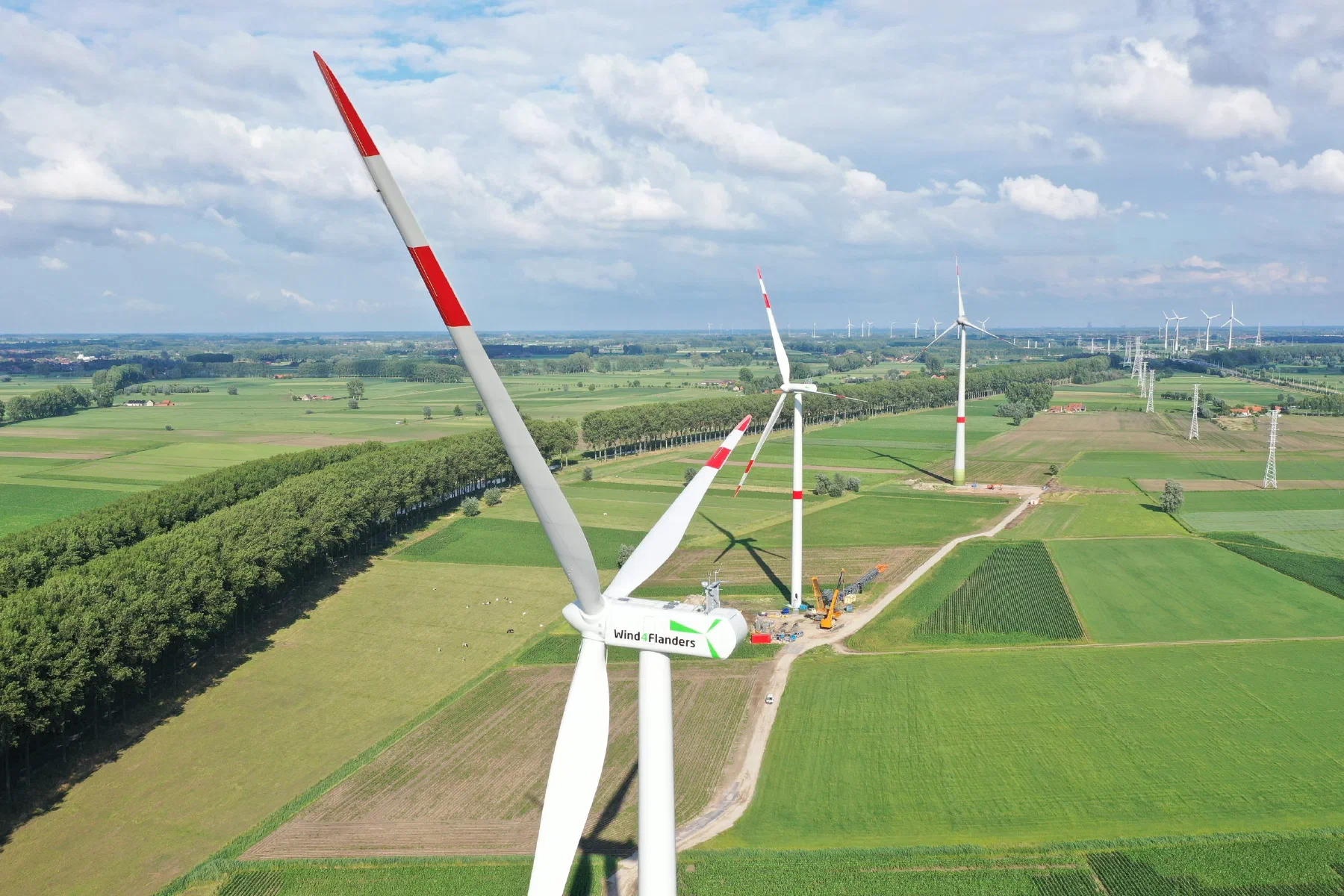
Energy equipment depends on electronics to measure conditions, convert power, communicate, and respond to faults. For engineers developing custom digital logic, a small change can reach far beyond one module: another measurement channel may affect shared types, interfaces, diagnostics, and the testbench.
Sigasi Visual HDL brings deterministic semantic analysis into that everyday work. Its workspace connects VHDL, Verilog, and SystemVerilog source with configured libraries and dependencies so engineers can investigate the project while they write and review RTL.
Programmable logic has roles in grid measurement, protection equipment, power-quality monitoring, and power conversion. AMD identifies merging units and protection devices among its grid applications. Imperix demonstrates a grid-tied inverter whose control algorithm runs entirely in an FPGA, with a CPU still handling configuration and monitoring tasks.
The wider semiconductor mix also includes analog measurement ICs, processors, battery-monitoring devices, and power semiconductors. Sigasi serves the teams creating and maintaining HDL within that mix; the appropriate hardware architecture depends on the product.
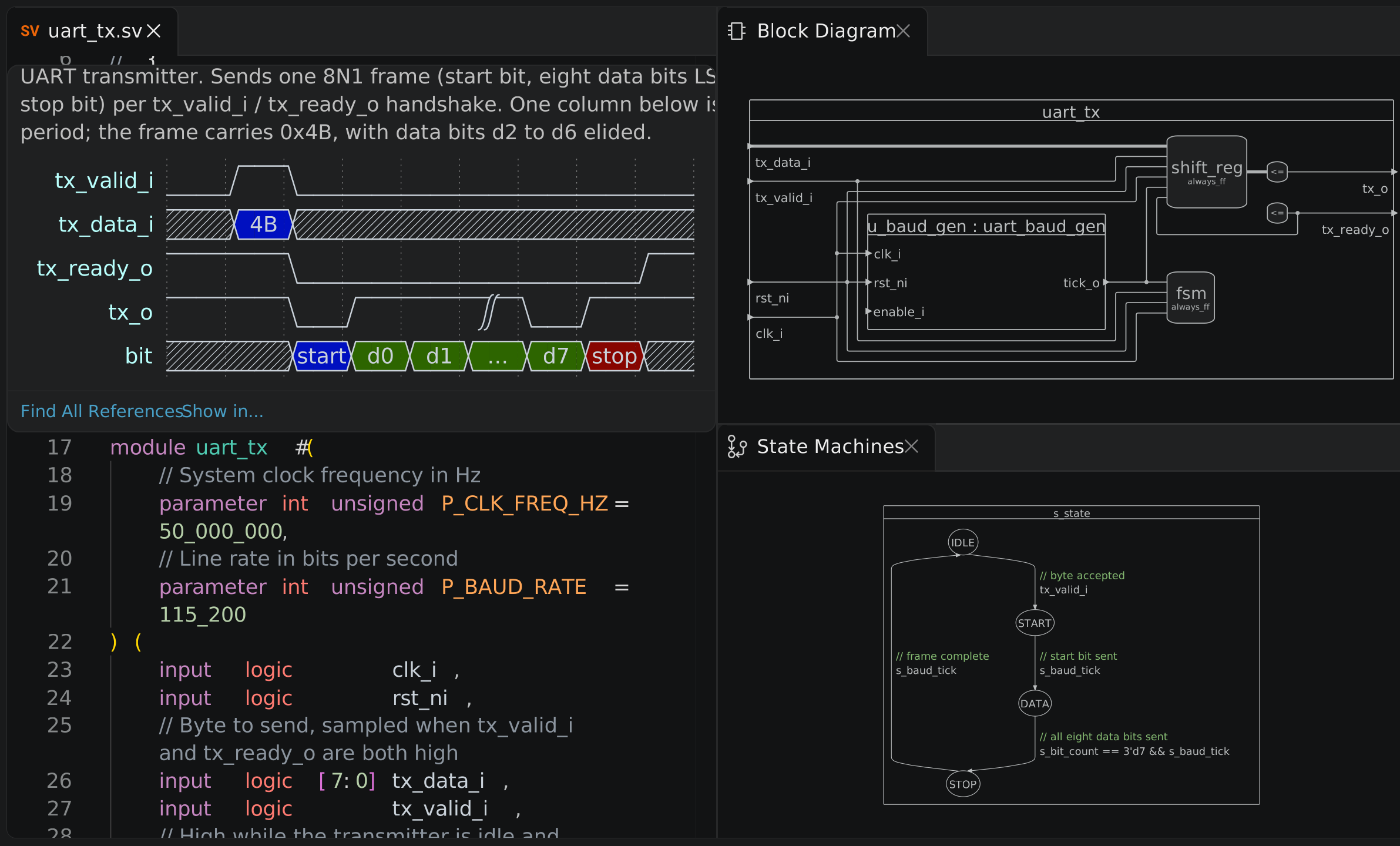
An interface change may involve internal RTL, supplier IP, generated sources, and vendor libraries. Sigasi helps engineers navigate declarations, references, hierarchy, and dependencies. Supported diagrams provide additional ways to inspect design structure and state machines alongside the source. That context helps a developer investigate unfamiliar logic and gives reviewers a shared implementation to discuss. It is particularly useful when an established design gains new channels or is adapted for another product variant.
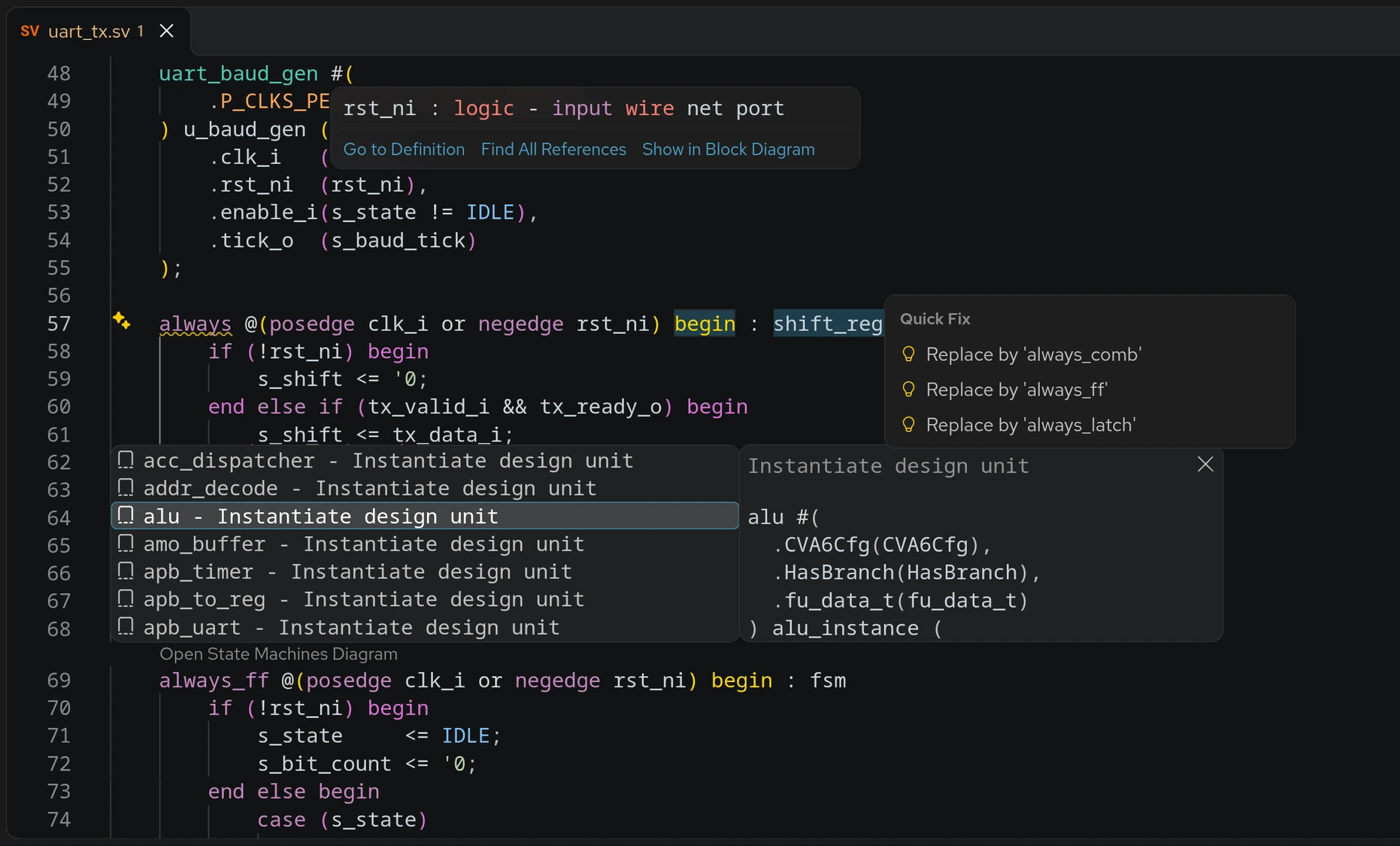
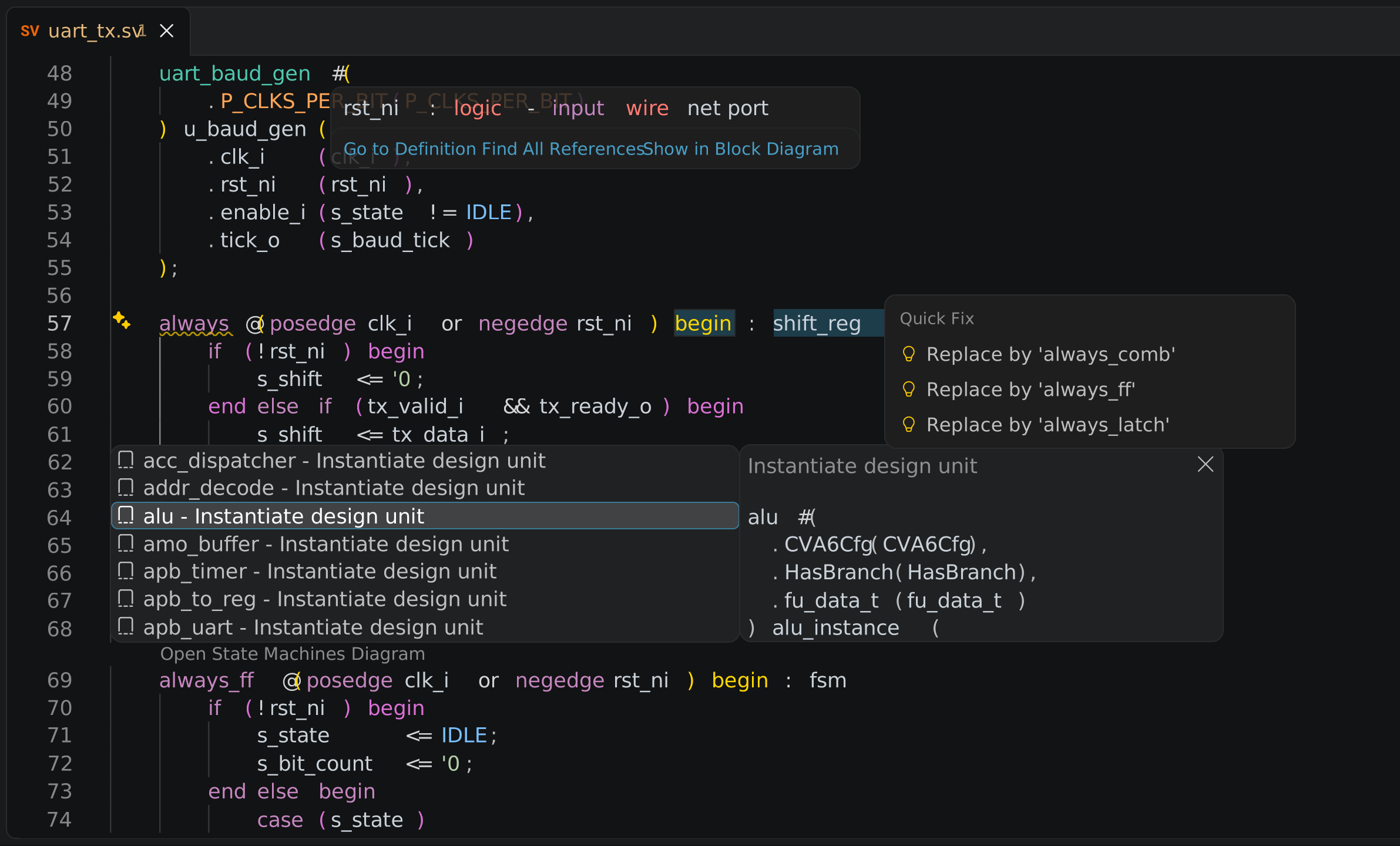
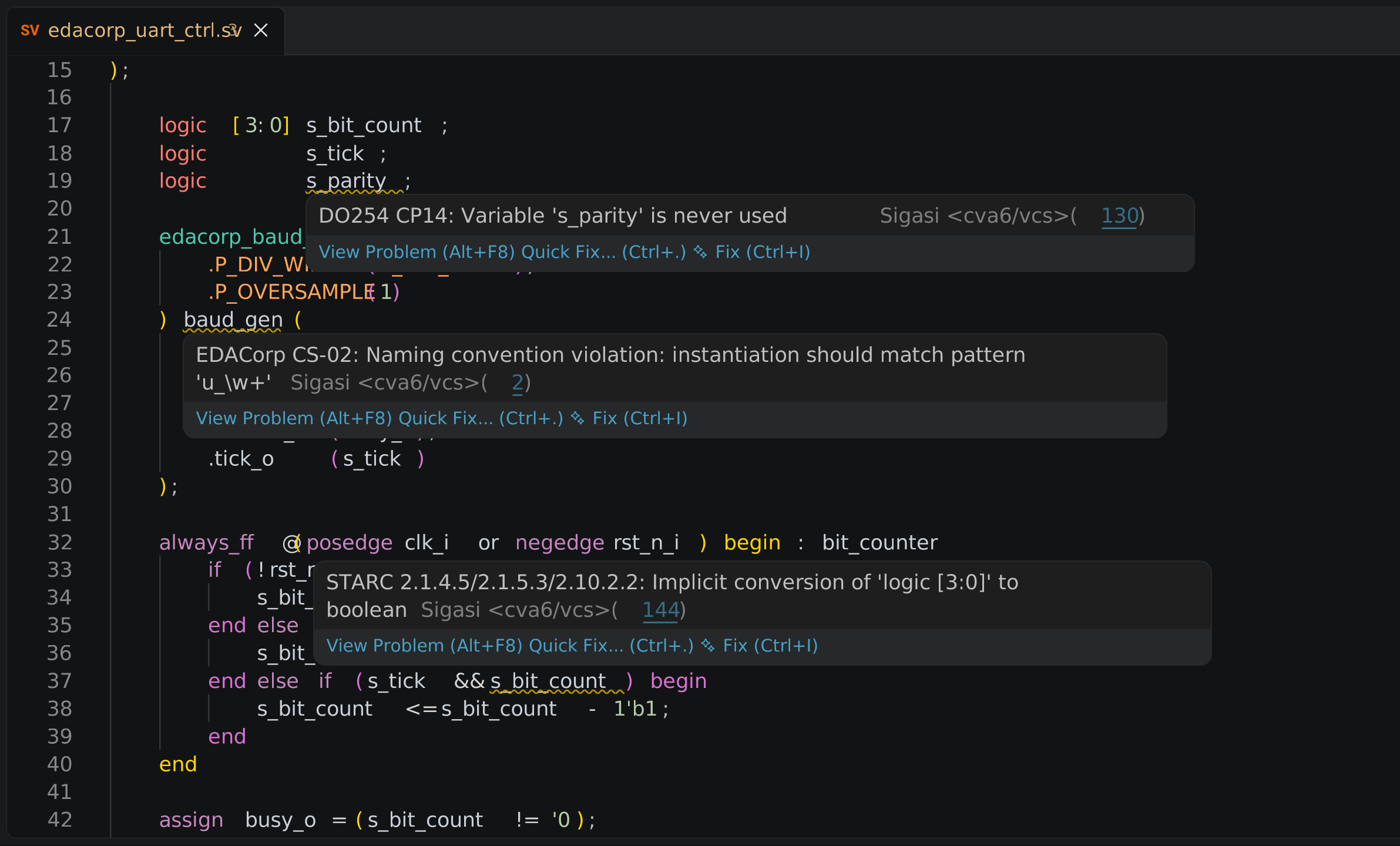
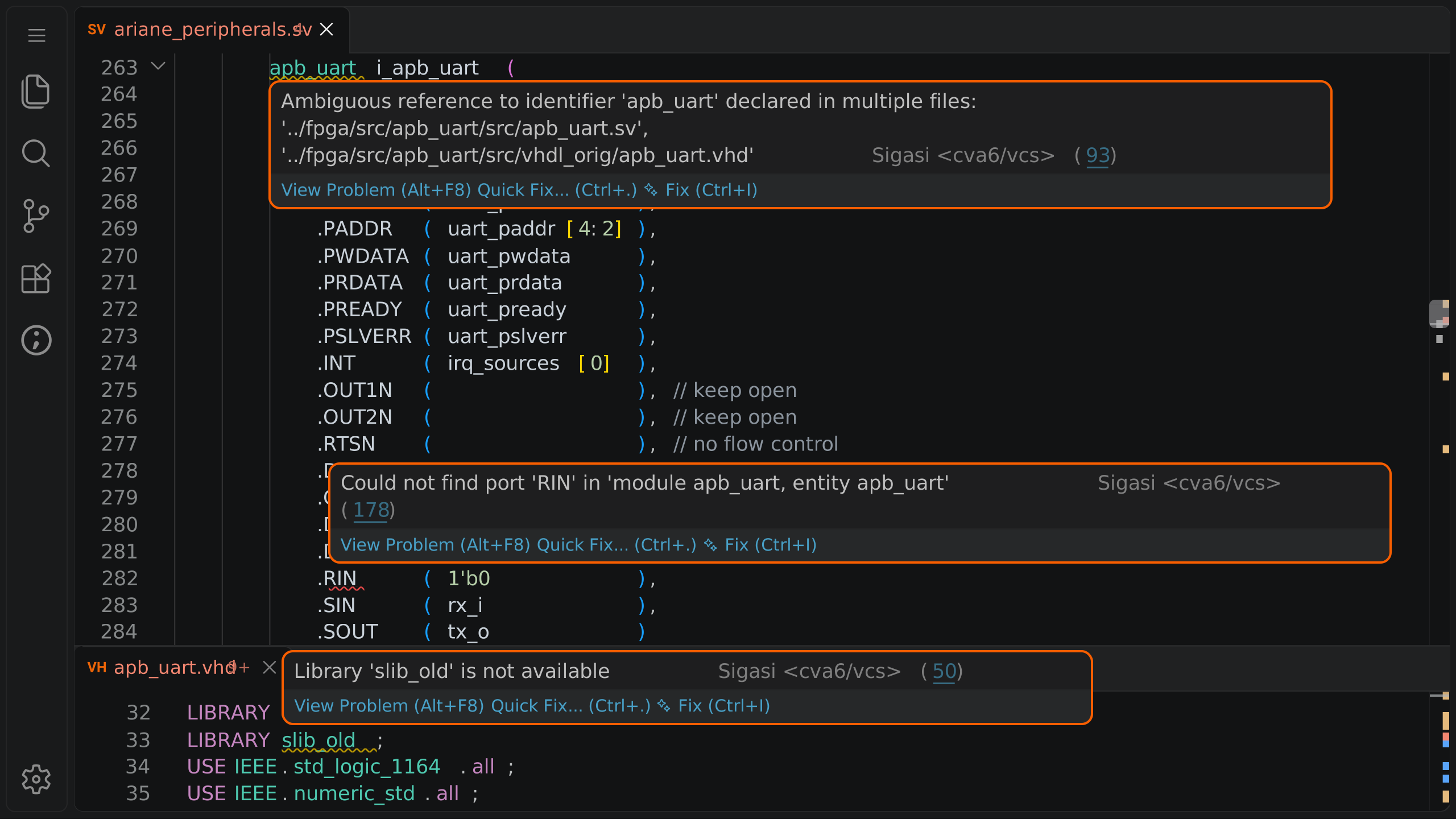
Sigasi provides semantic diagnostics and configurable linting in the editor. Engineers can identify supported language and coding-rule issues before they interrupt downstream work. The repair still requires judgment. An unresolved reference may come from a missing package or library mapping rather than incorrect RTL. Investigating the configured project helps engineers address the cause without rewriting valid source.
Versioned project definitions and shared settings help a team reconstruct the development baseline. Source-derived documentation can capture interfaces, comments, and design structure when regenerated from the relevant source revision. Licensed CLI workflows can repeat supported checks and documentation generation in automation. Where AI agents are approved, Sigasi’s MCP tools provide diagnostics, project context, symbol searches, and formatting while engineers review the proposed changes. The current MCP server requires an open configured project in the extension.
Sigasi works alongside FPGA vendor and ASIC implementation tools. Simulation, formal verification, timing analysis, control-system validation, and hardware testing retain their respective roles. A clean semantic report does not prove converter stability, protection performance, or compliance with an energy standard.
Request the energy whitepaper for a detailed look at RTL development across grid equipment, power conversion, storage, and charging infrastructure, with practical workflows for integration, review, and maintenance.
Sigasi parses the full project, not the open file: hierarchy, types, scopes, dependencies, interfaces and references across SystemVerilog, Verilog and VHDL. That model is what makes a review of supplier, legacy or AI-generated RTL an inspection rather than a reading exercise.
Compile at coding speed, so problems surface in the second they are written rather than at integration.
Fewer iterations, less wasted AI tokens, less review late in a program when work is most expensive.
RTL checked against your real project whether you or an AI agent wrote the code. You decide what moves forward based on facts, not hope.
12 weeks
16 weeks
10 weeks
6 weeks (-50%)
12 weeks (-25%)
10 weeks (no impact)
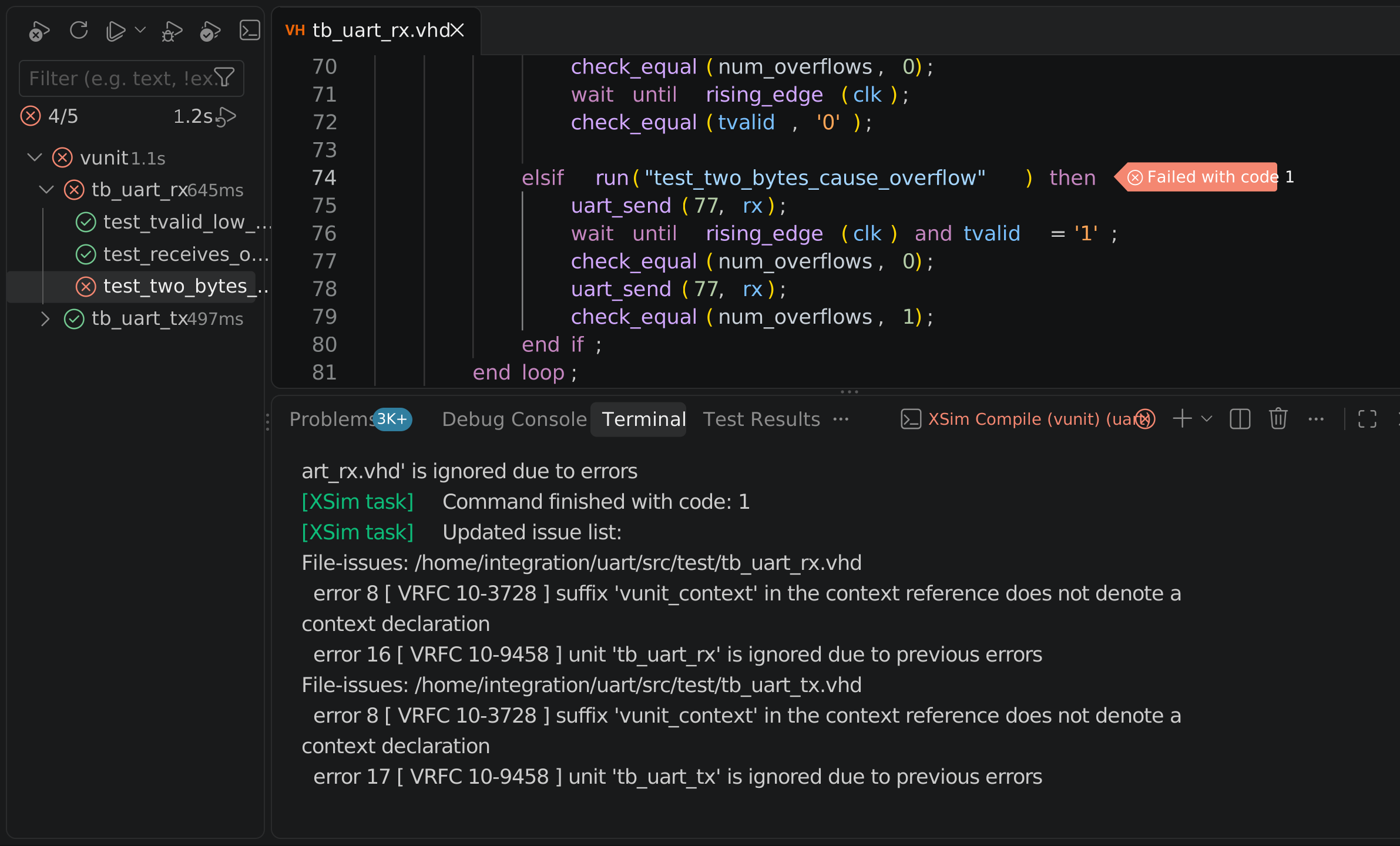
Five short recordings of the product doing the work described above. No sign-up.
View all screencasts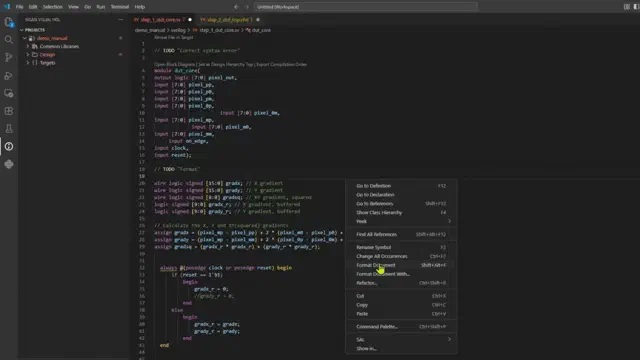 Incremental real-time compiler
Context-aware feedback, linting and completion as you type
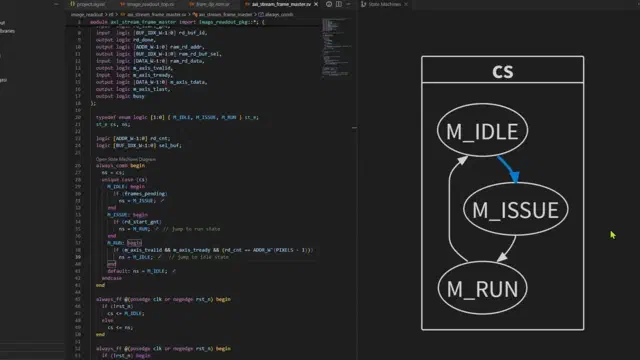 Interactive visual design creator
Block and state machine diagrams generated while you type
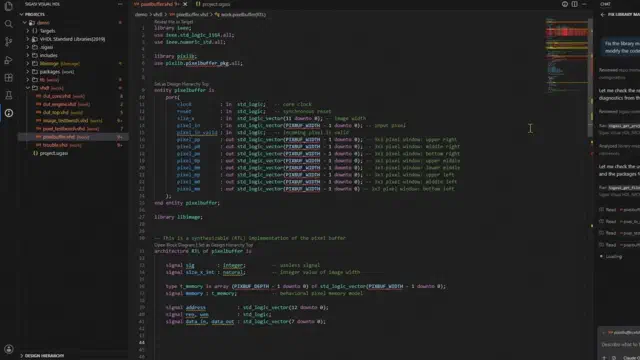 Dependency analysis
Spot missing mappings and broken includes across supplier and legacy code
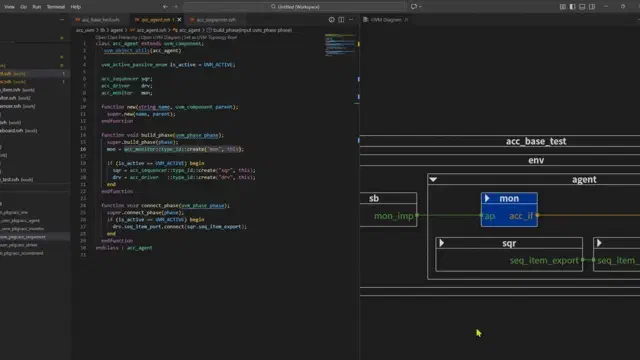 Verification accelerator
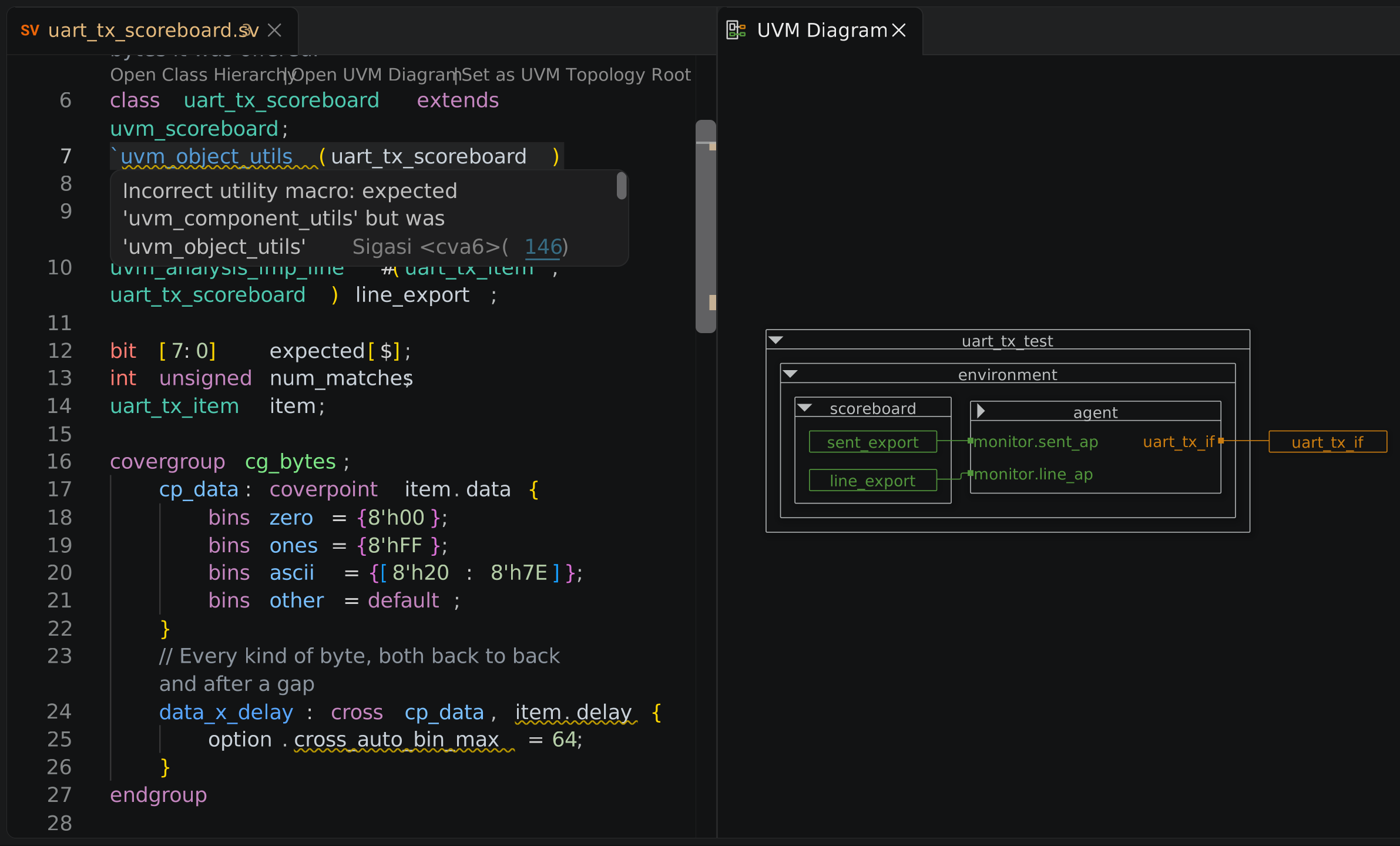
Debug UVM, UVVM, OSVVM, VUnit and Cocotb faster
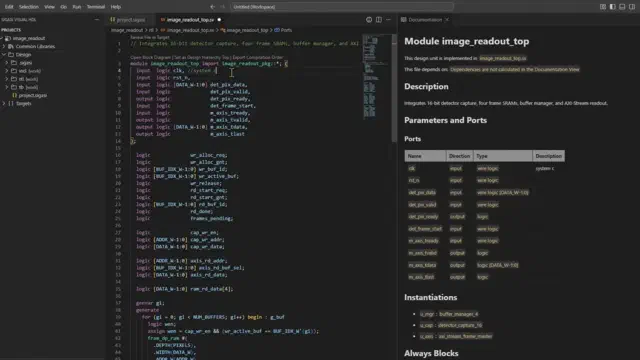 Up-to-date documentation
Documentation generated from the design, ready for review packages
Evaluate Sigasi on a representative ASIC or FPGA project, on your own infrastructure.