Control.
Engineers stay in charge of AI-assisted and human-written RTL decisions.
Sigasi helps ASIC and FPGA teams in financial technology validate, understand, document, and review RTL. No matter whether it is written by engineers, generated by HLS, supplied as IP, or produced by AI. SystemVerilog, Verilog, VHDL, and mixed-language projects are analyzed locally at interactive speed, so that changes to a trading routine can be understood before they reach simulation.
SystemVerilog · Verilog · VHDL · Mixed-language · AI-assisted or human-written RTL · Analyzed locally, on your own infrastructure
Engineers stay in charge of AI-assisted and human-written RTL decisions.

Teams understand project context, dependencies and design impact faster.

Technical leads apply coding rules and project-specific engineering discipline.

Developers catch issues earlier and reduce avoidable downstream friction.

RTL reaches review and integration in a more inspectable, maintainable state.

A market-data update arrives. A hardware pipeline interprets it, updates internal state, and contributes to an action. For teams developing financial hardware, improving that path requires more than fast logic. Engineers need to understand the RTL they are changing, its dependencies, and the evidence needed to release it.
Jane Street publicly describes FPGA and ASIC engineering. Hudson River Trading confirms that it develops custom logic for both in SystemVerilog. These are examples of sophisticated hardware development within electronic trading, where engineering tools deserve attention alongside runtime performance.
A small change can cross a large design. Adding a field to an internal message may affect a decoder, shared types, downstream consumers, wrappers, and the testbench. Finding those relationships is part of the work.
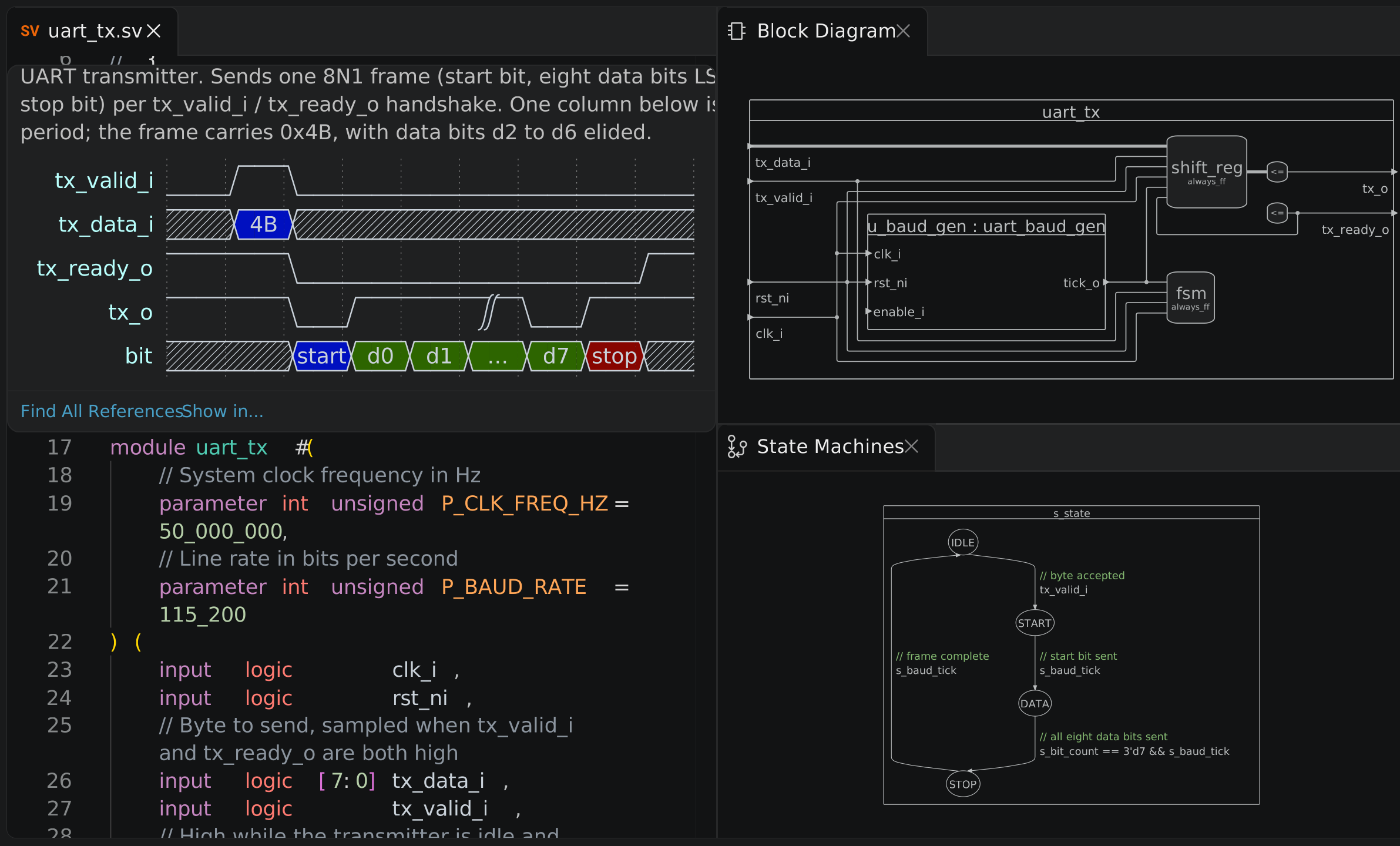
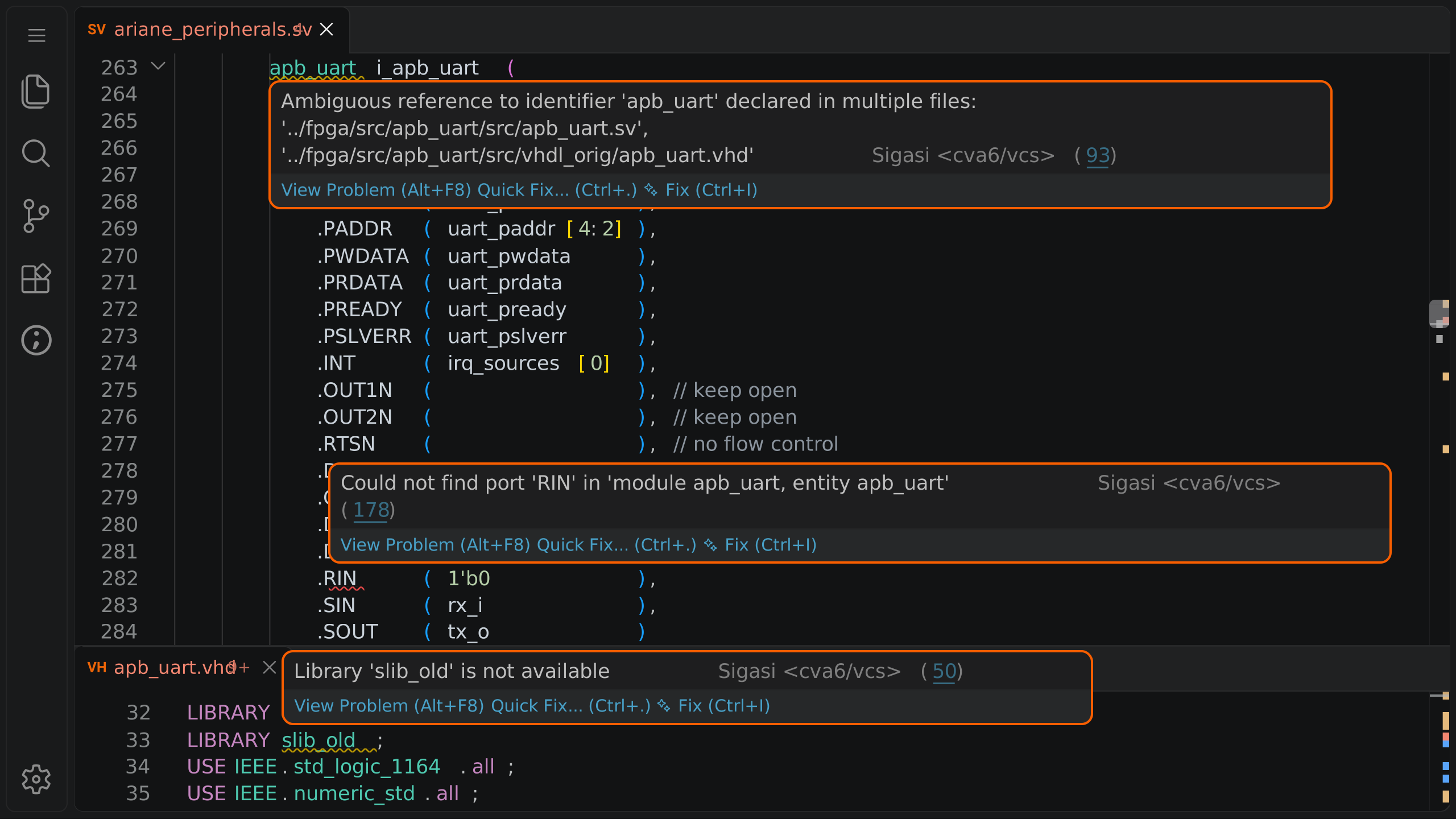
Sigasi brings deterministic semantic analysis into the RTL workspace for SystemVerilog, Verilog, and VHDL. Project-aware references and contextual information help engineers investigate declarations and their use. Source-linked block diagrams provide another way to explore the implementation. That need is visible in the sector itself. HRT’s March 2026 article describes its own open-source SystemVerilog language server and the value of navigation and immediate editor feedback. Its experience illustrates why these everyday development tasks deserve serious engineering attention.
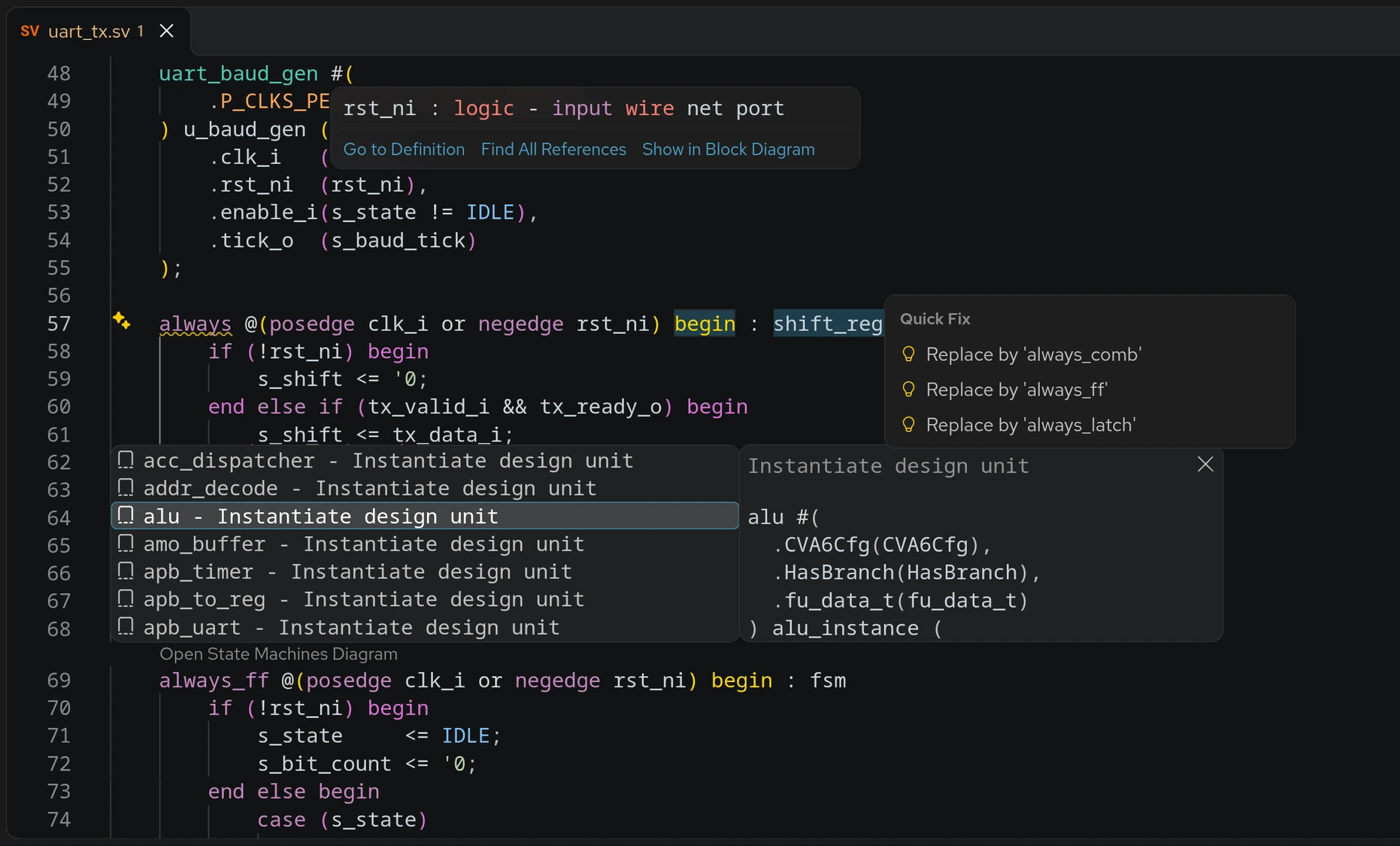
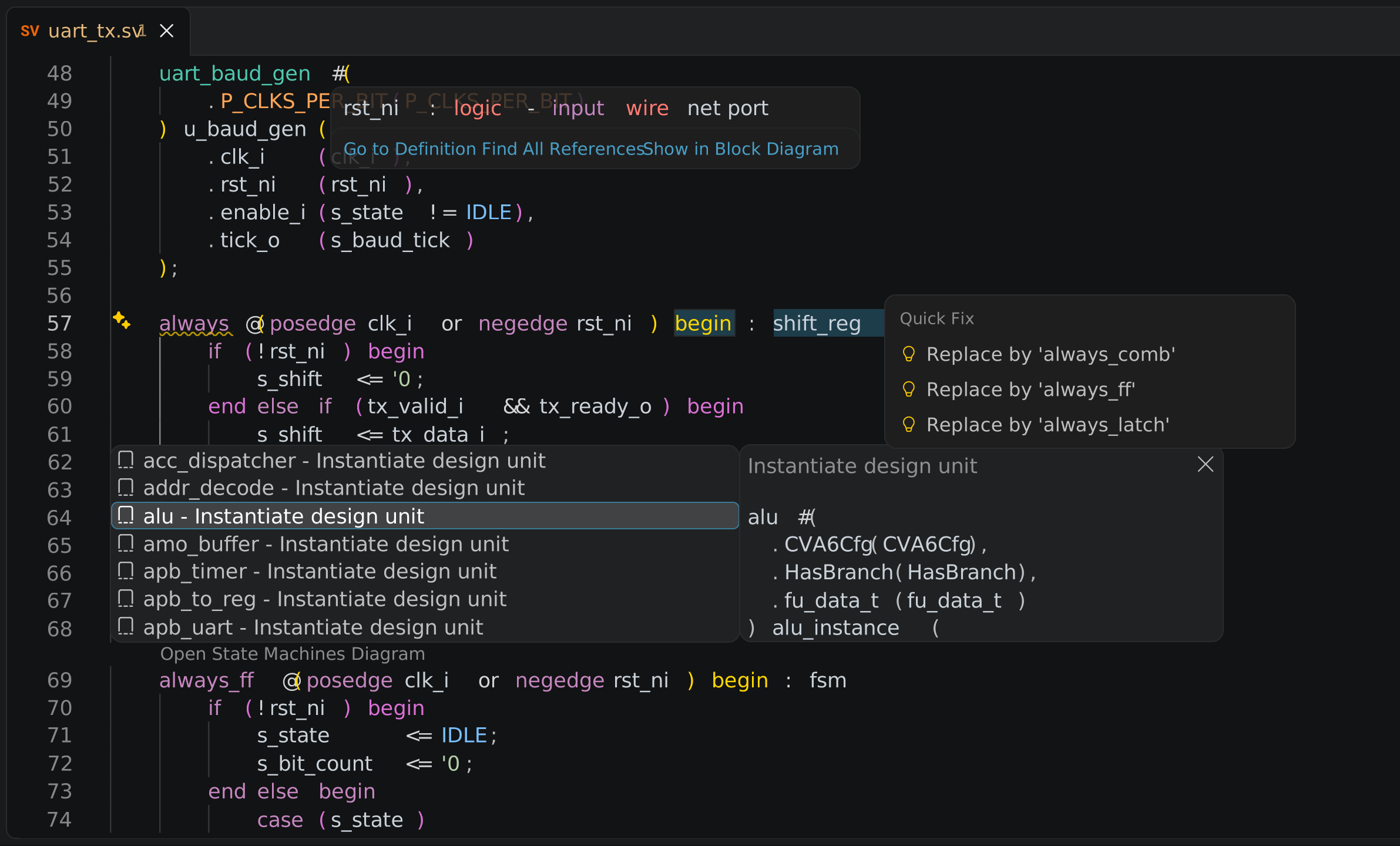
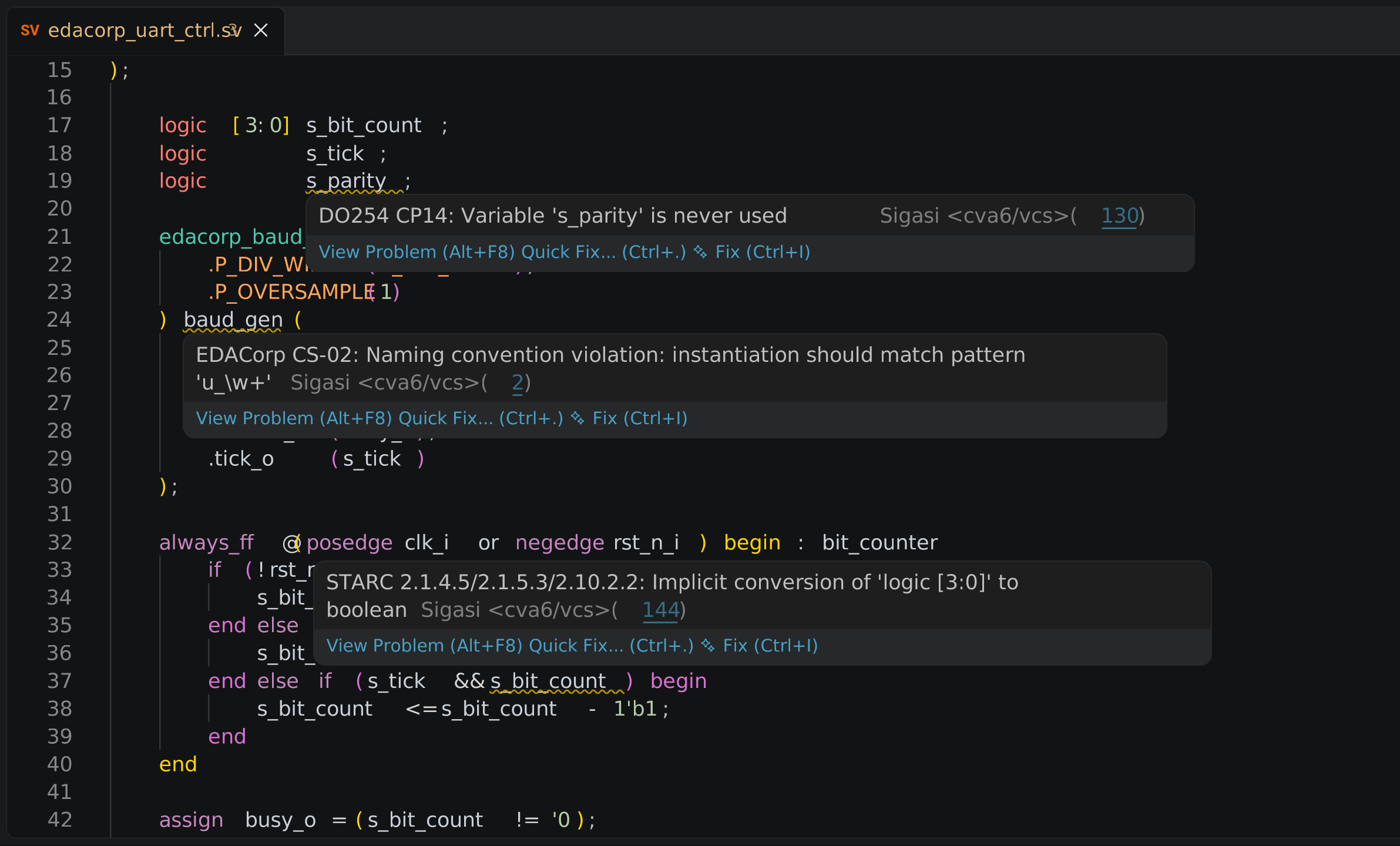
Sigasi reports supported language errors and configurable lint findings during editing. Engineers can investigate a missing declaration, an interface inconsistency, or a configuration problem while the change is still fresh. Project context matters. The same repository can contain FPGA and ASIC targets, simulation models, and several product variants. Sigasi’s Modular Projects represent targets and dependencies so teams can make the configuration under review explicit.
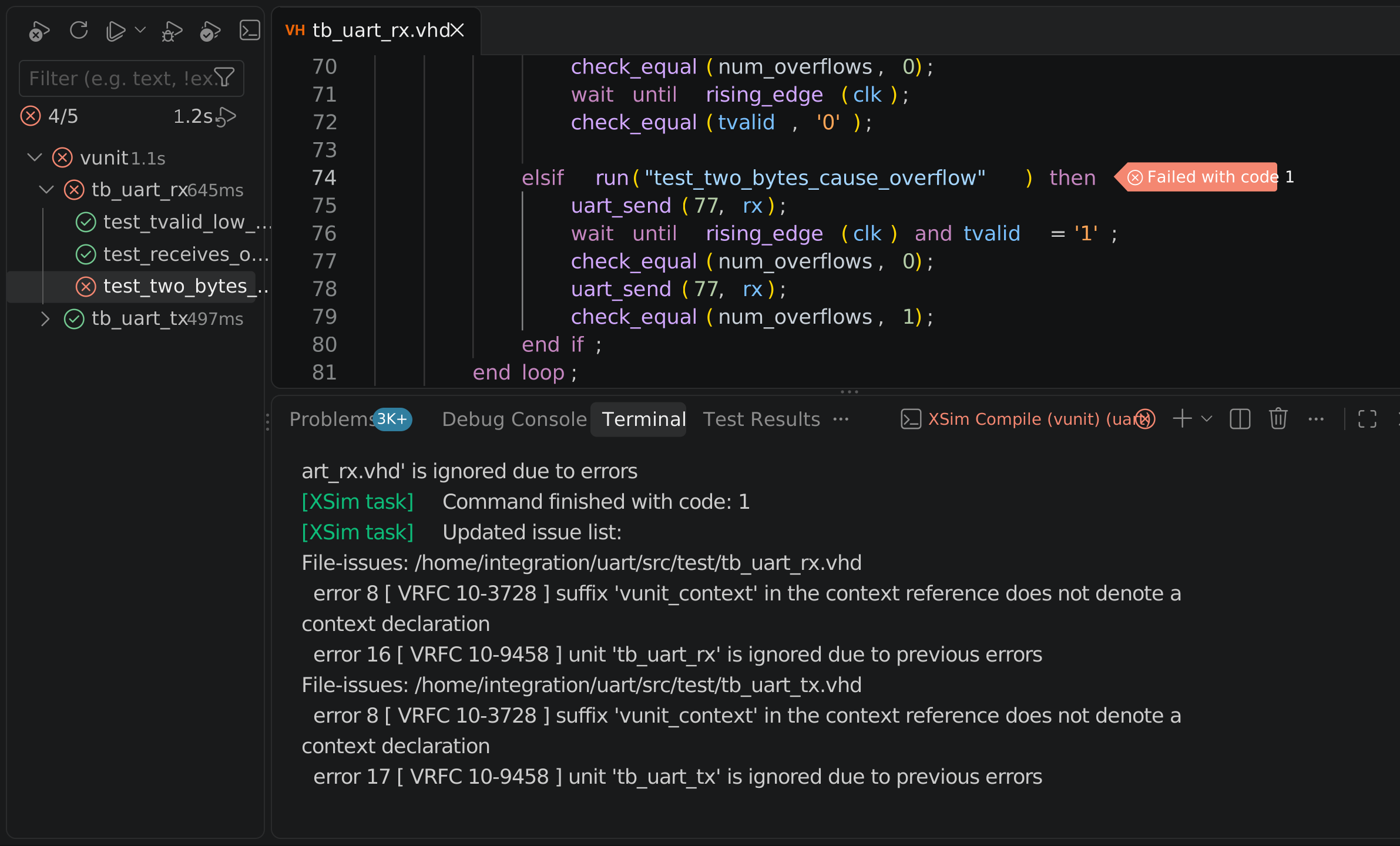
Source checks, functional verification, and performance measurement answer different questions. A clean analysis result does not establish a correct risk check, a compliant trading system, or lower deployed latency. Simulation, formal verification where appropriate, implementation analysis, and hardware measurements remain part of the engineering flow.
Sigasi helps prepare the RTL for those activities. Licensed CLI workflows can repeat checks in automation. Where AI agents are approved, Sigasi’s MCP integration gives them access to project-aware diagnostics and exploration inside the running extension. Engineers review the proposed changes and decide what advances.
A productive workflow leaves the next engineer with more than a passing build. It leaves a clear configuration, understandable interfaces, and a reviewable change. Sigasi’s navigation, visual views, and source-derived documentation help teams maintain that continuity. Exported documentation should be regenerated and its explanatory comments reviewed as the source changes.
Request the fintech whitepaper for a detailed look at RTL development across market-data processing, risk-related logic, hardware/software integration, verification, and AI-assisted workflows. Then discuss your financial hardware project with Sigasi.
Sigasi analyzes the whole project, not only the open file: hierarchy, types, scopes, dependencies, interfaces, and references across SystemVerilog, Verilog, and VHDL. This deep project understanding is makes every review of supplier, legacy, or AI-generated RTL a breeze.
Compile at coding speed, so problems surface in the second they are written rather than at integration.
Fewer iterations, less wasted AI tokens, less review late in a program when work is most expensive.
RTL checked against your real project whether you or an AI agent wrote the code. You decide what moves forward based on facts, not hope.
12 weeks
16 weeks
10 weeks
6 weeks (-50%)
12 weeks (-25%)
10 weeks (no impact)
Five short recordings of the product doing the work described above. No sign-up.
View all screencasts Incremental real-time compiler
Context-aware feedback, linting and completion as you type
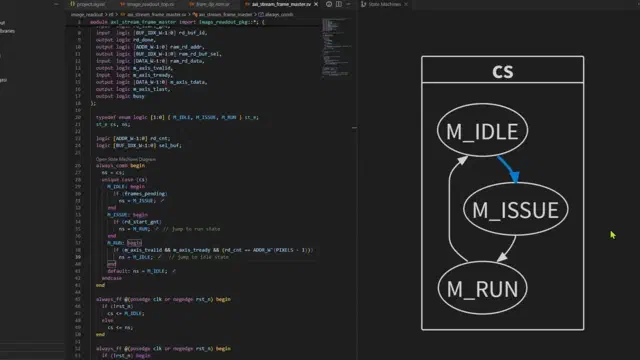 Interactive visual design creator
Block and state machine diagrams generated while you type
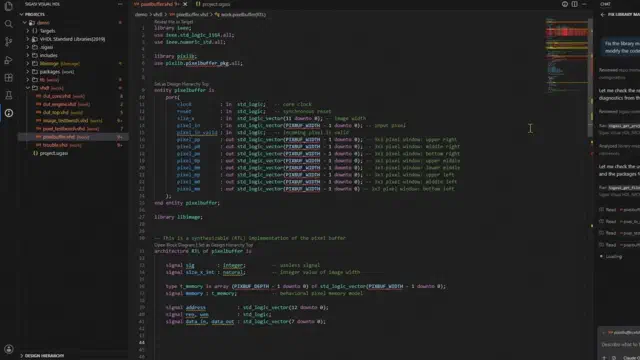 Dependency analysis
Spot missing mappings and broken includes across supplier and legacy code
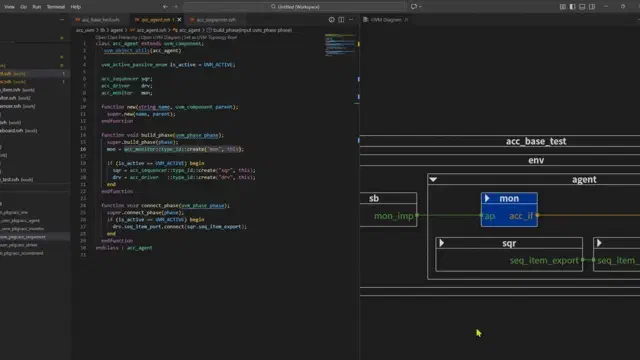 Verification accelerator
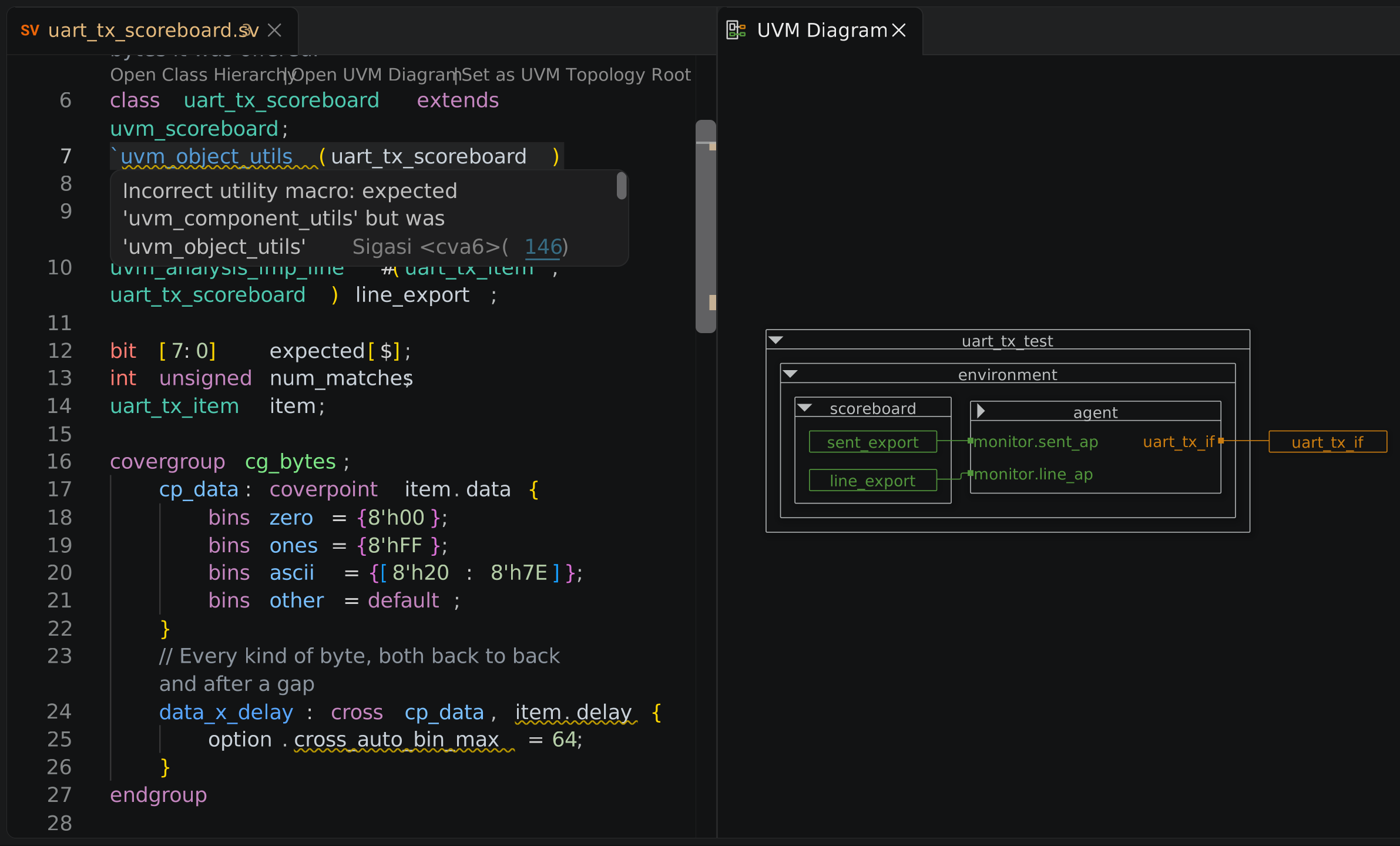
Debug UVM, UVVM, OSVVM, VUnit and Cocotb faster
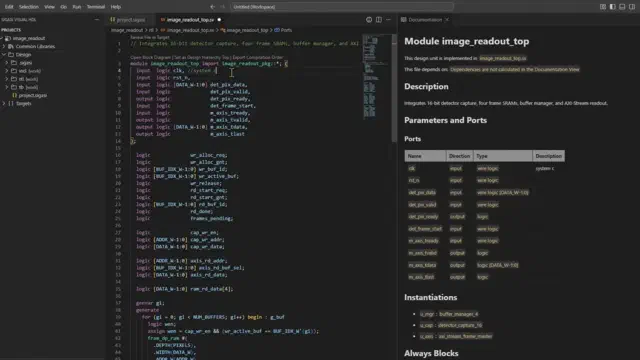 Up-to-date documentation
Documentation generated from the design, ready for review packages
Evaluate Sigasi on a representative ASIC or FPGA project, on your own infrastructure.