Control.
Engineers stay in charge of AI-assisted and human-written RTL decisions.
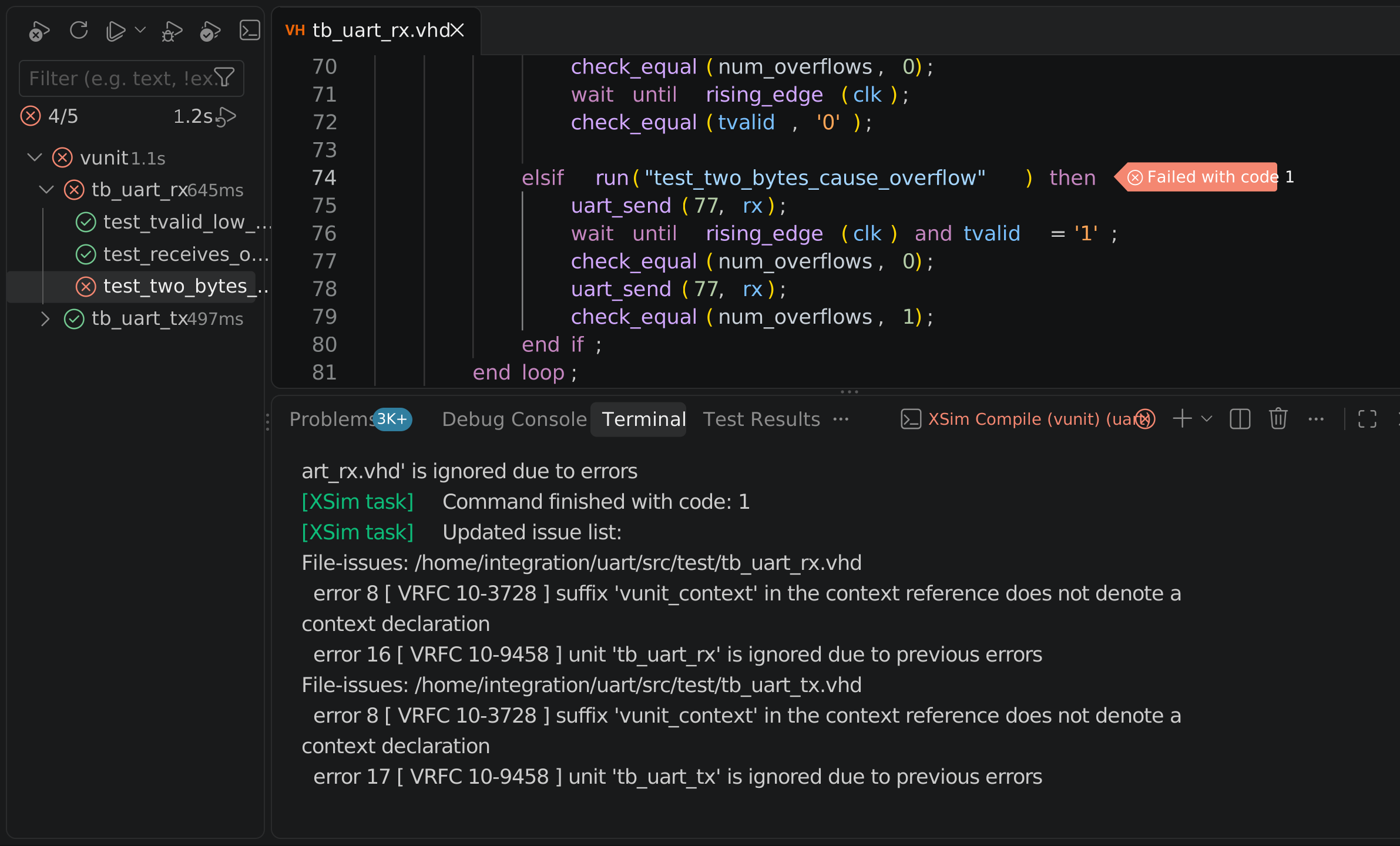
Sigasi helps ASIC and FPGA teams in medical technology validate, understand, document, and review RTL in full project context, whether it is written by engineers, generated by HLS, supplied as IP, or produced by AI. SystemVerilog, Verilog, VHDL, and mixed-language projects are analyzed locally at interactive speed, supporting the disciplined engineering practice these programs require. Sigasi’s semantic analysis stays on-premises; project files are not sent to Sigasi servers.
SystemVerilog · Verilog · VHDL · Mixed-language · AI-assisted or human-written RTL · Analyzed locally, on your own infrastructure
Engineers stay in charge of AI-assisted and human-written RTL decisions.

Teams understand project context, dependencies and design impact faster.
Technical leads apply coding rules and project-specific engineering discipline.

Developers catch issues earlier and reduce avoidable downstream friction.

RTL reaches review and integration in a more inspectable, maintainable state.
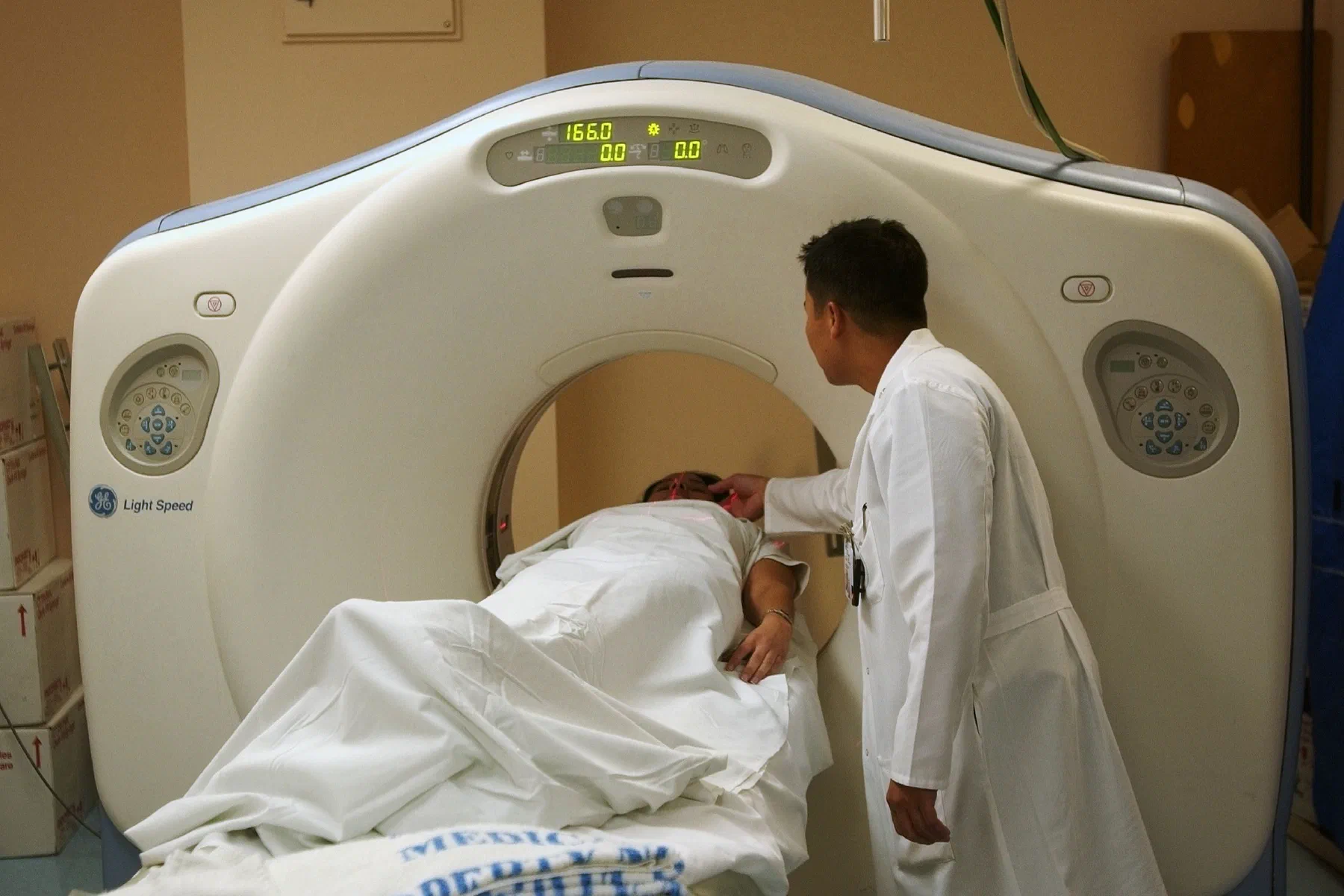
The image on a medical display begins with an engineering chain. Measurements must be acquired, associated with the right channel or event, transferred, and processed. A new acquisition mode can change interfaces, shared types, configuration logic, and verification code across that chain.
FPGAs and custom ICs support different parts of medical equipment. Suppliers identify applications in ultrasound, CT, MRI, medical video, and compact devices. Sigasi serves the engineers developing the digital HDL within those architectures.
An acquisition controller rarely stands alone. It can depend on vendor libraries, reusable IP, generated processing blocks, and product-specific wrappers. Engineers need to understand those relationships before deciding what to modify.
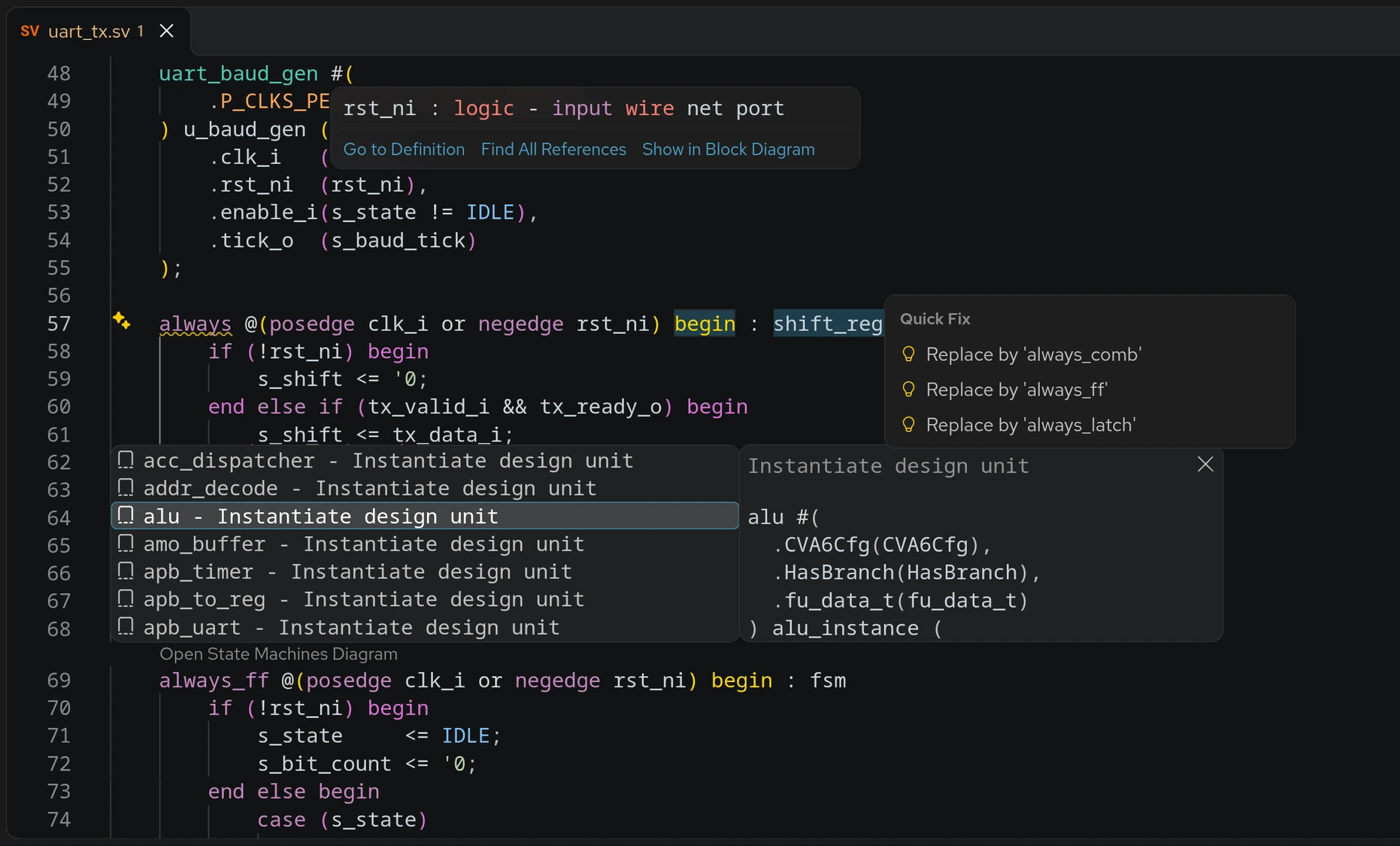
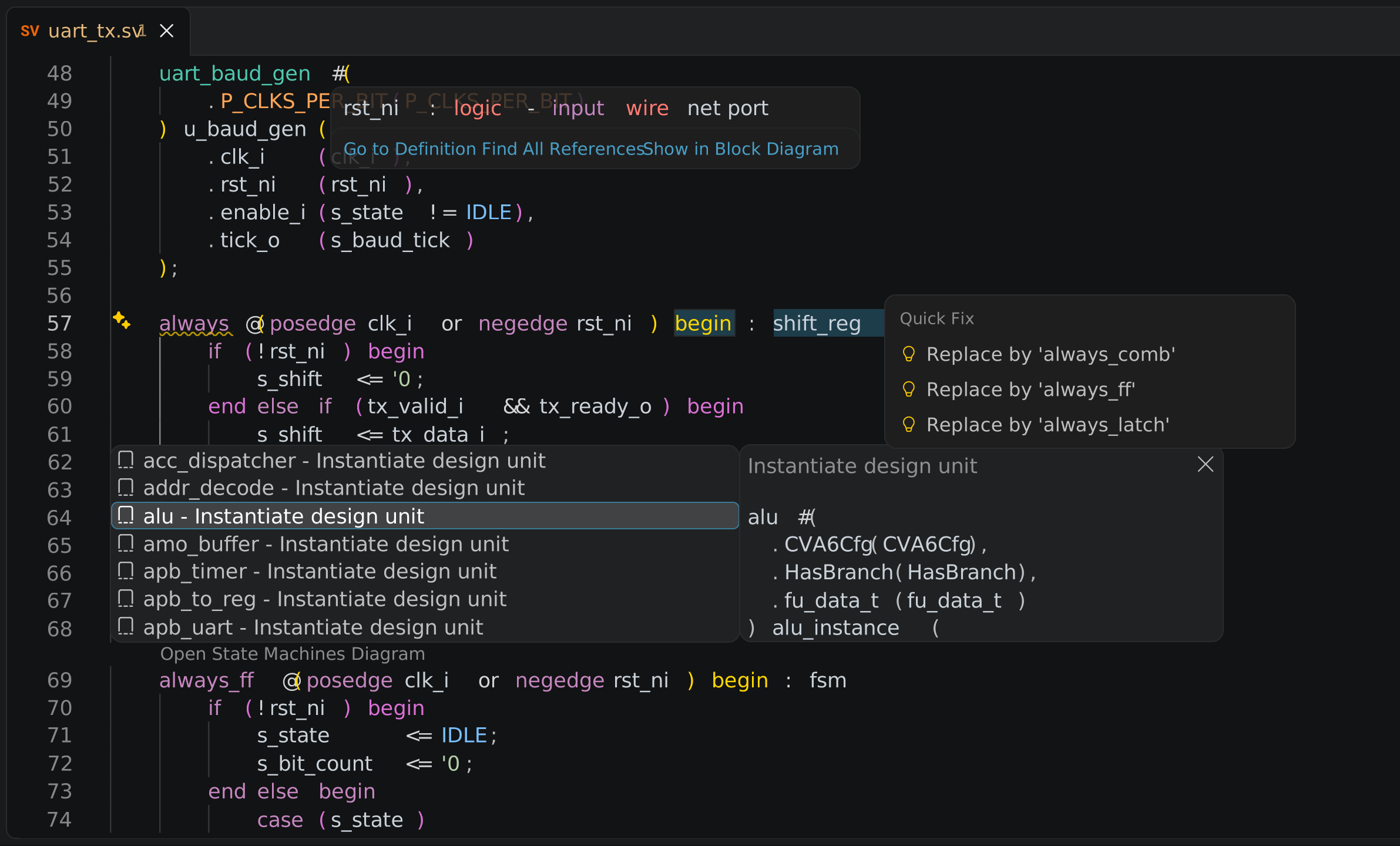
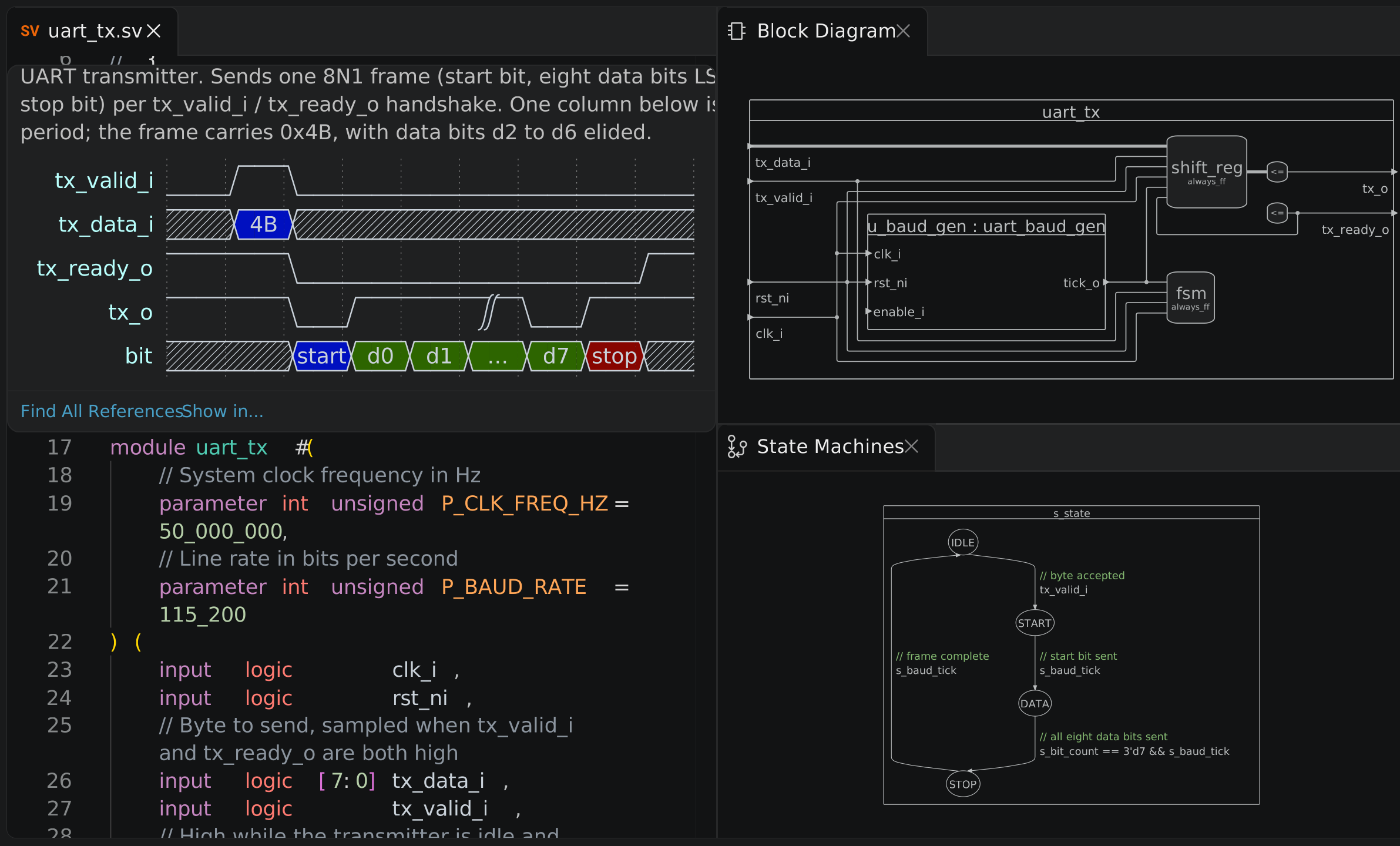
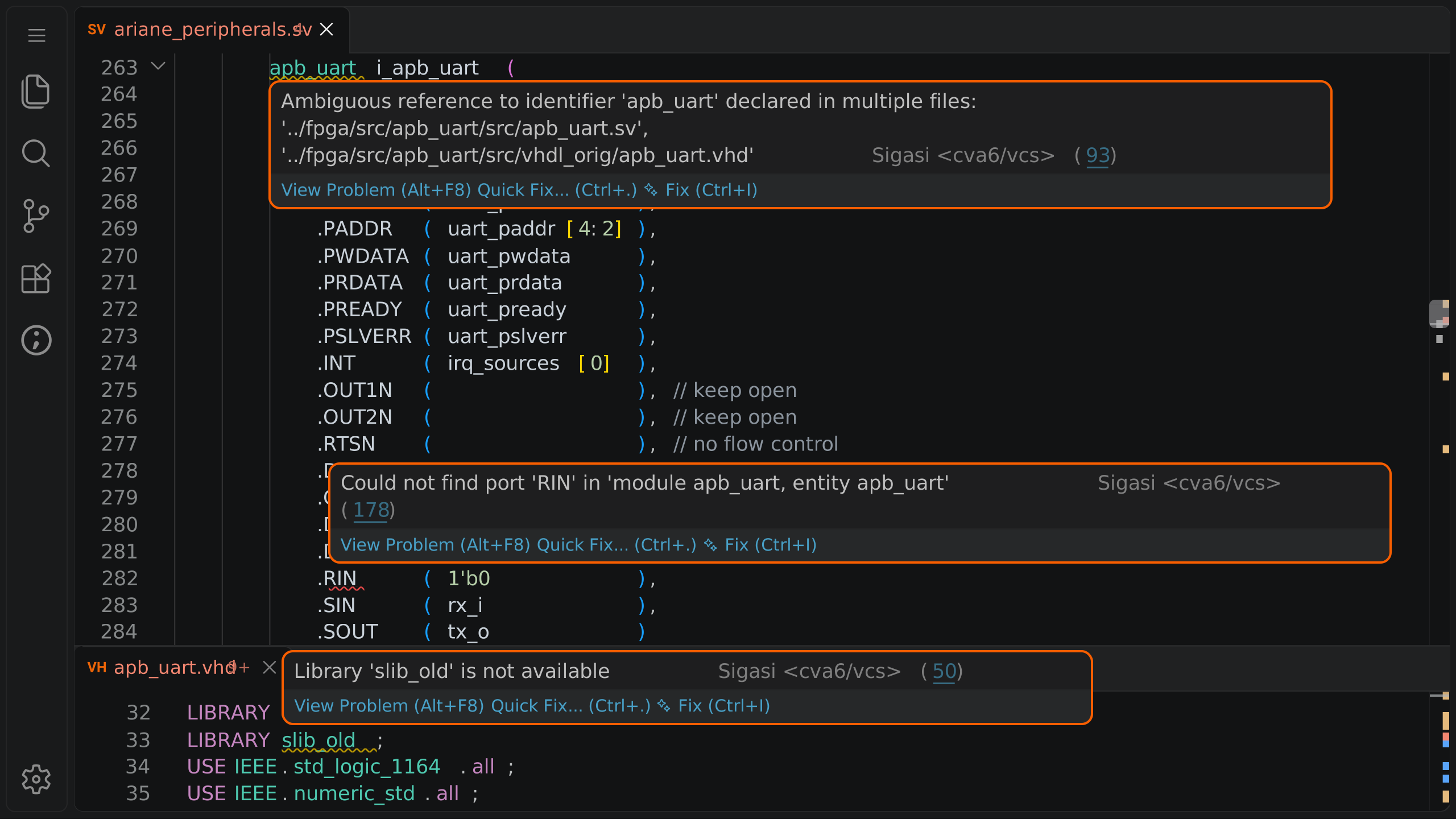
Sigasi brings deterministic semantic analysis into the workspace for SystemVerilog, Verilog, and VHDL. Reference navigation and contextual information help engineers investigate declarations and their use. Source-linked block diagrams and supported state-machine views provide additional ways to inspect the implementation. Modular Projects organize targets and dependencies so the configuration under investigation is explicit. That helps teams distinguish an RTL issue from missing project context and assess a change in the variants where it will be used.
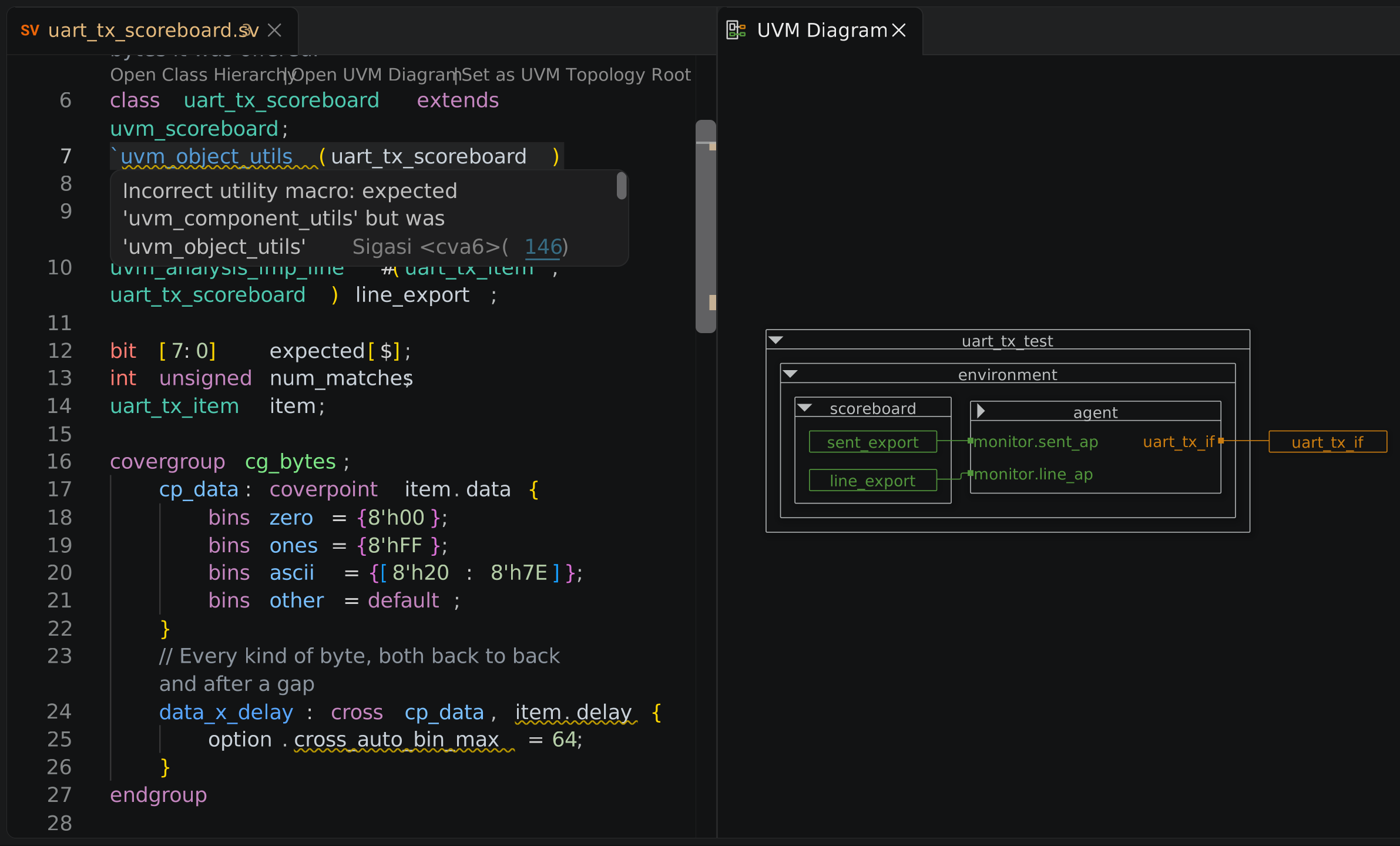
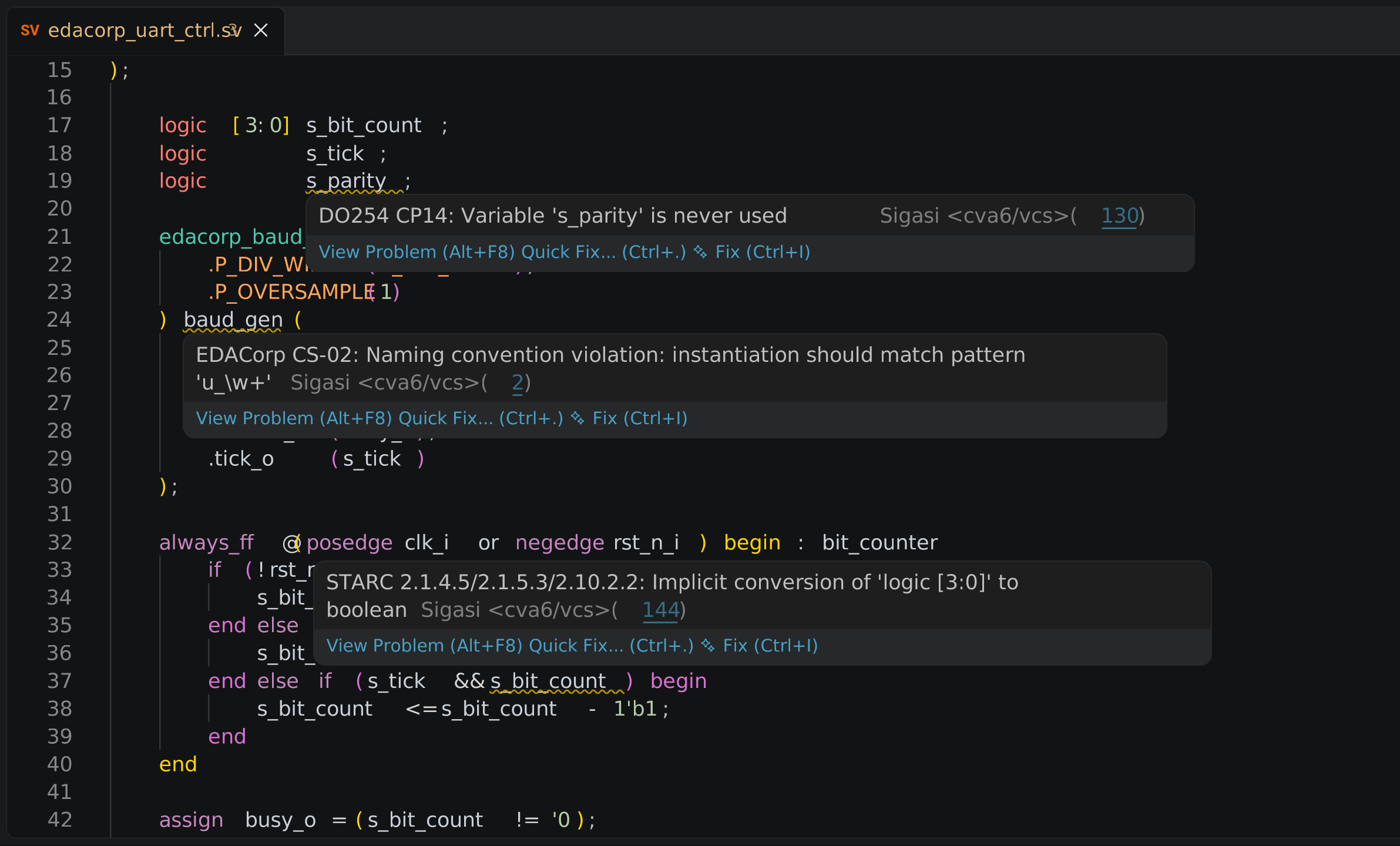
Suppose a detector interface gains a wider measurement field. A downstream wrapper or testbench may retain earlier definitions. Sigasi’s supported language checks and configurable lint rules can expose source inconsistencies while the engineer still has the change in mind. The engineer can investigate the relevant definitions, correct the source or configuration, and carry a better-understood project into verification. A clean analysis result is a useful checkpoint. Simulation, appropriate formal and implementation checks, and product-level evaluation still establish the required behavior.
GE HealthCare’s cSound material describes software beamforming supported by an acquisition and data-processing architecture. It illustrates why moving computation into software increases the value of a clear hardware interface. This is application context; the cited material does not establish use of Sigasi.
Sigasi helps engineers inspect the HDL implementing those interfaces and maintain the surrounding project. Source-derived documentation provides a reference that can be regenerated as the implementation changes, while requirements and design rationale retain their own records.
Where AI agents are approved, Sigasi’s MCP integration provides project-aware feedback inside the running extension. Licensed CLI workflows can repeat checks in automation. Engineers review proposed edits and decide what advances through the established development process.
That contribution is specific: understandable RTL, supported early feedback, and clearer project context. Medical-device risk management , clinical performance, and compliance require their own evidence and remain part of the manufacturer’s wider process.
Request the medical whitepaper for detailed workflows covering acquisition, ultrasound, medical video, reusable IP, verification, and AI-assisted RTL development. Then discuss your medical hardware project with Sigasi.
Sigasi parses the full project, not the open file: hierarchy, types, scopes, dependencies, interfaces and references across SystemVerilog, Verilog and VHDL. That model is what makes a review of supplier, legacy or AI-generated RTL an inspection rather than a reading exercise.
Compile at coding speed, so problems surface in the second they are written rather than at integration.
Fewer iterations, less wasted AI tokens, less review late in a program when work is most expensive.
RTL checked against your real project whether you or an AI agent wrote the code. You decide what moves forward based on facts, not hope.
12 weeks
16 weeks
10 weeks
6 weeks (-50%)
12 weeks (-25%)
10 weeks (no impact)
Five short recordings of the product doing the work described above. No sign-up.
View all screencasts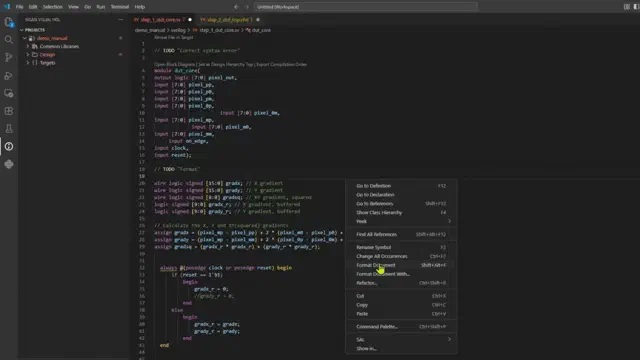 Incremental real-time compiler
Context-aware feedback, linting and completion as you type
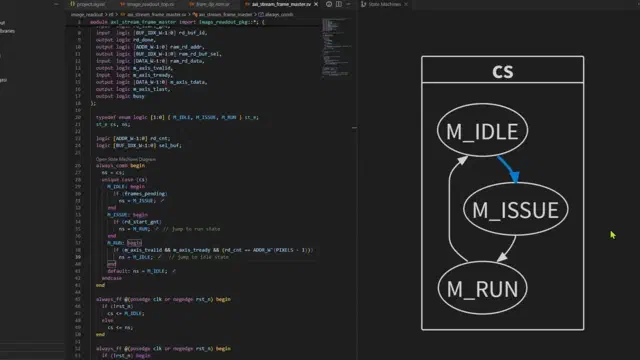 Interactive visual design creator
Block and state machine diagrams generated while you type
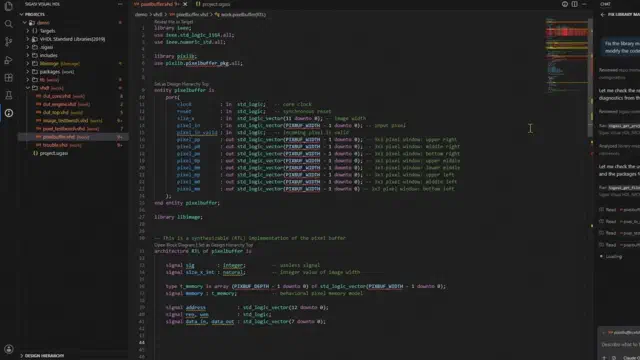 Dependency analysis
Spot missing mappings and broken includes across supplier and legacy code
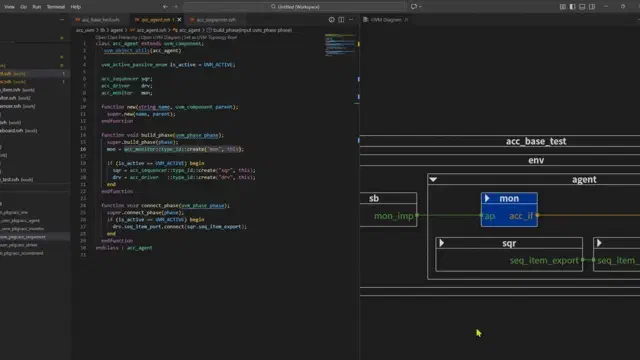 Verification accelerator
Debug UVM, UVVM, OSVVM, VUnit and Cocotb faster
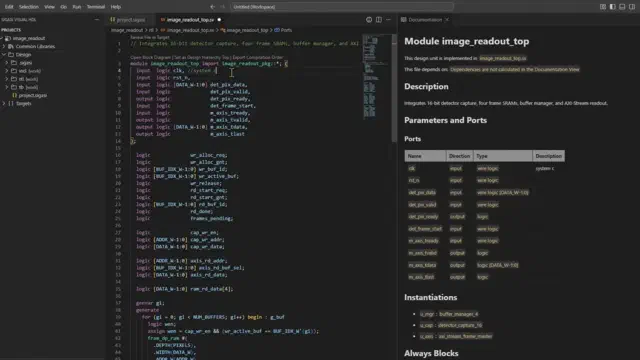 Up-to-date documentation
Documentation generated from the design, ready for review packages
Evaluate Sigasi on a representative ASIC or FPGA project, on your own infrastructure.