Control.
Engineers stay in charge of AI-assisted and human-written RTL decisions.
Sigasi helps ASIC and FPGA teams in telecom validate, understand, document, and review RTL in full project context, whether it is written by engineers, generated by HLS, supplied as IP, or produced by AI. SystemVerilog, Verilog, VHDL, and mixed-language projects are analyzed locally at interactive speed, across the deep hierarchies and reused IP in network silicon. Sigasi’s semantic analysis stays on-premises; project files are not sent to Sigasi servers.
SystemVerilog · Verilog · VHDL · Mixed-language · AI-assisted or human-written RTL · Analyzed locally, on your own infrastructure
Engineers stay in charge of AI-assisted and human-written RTL decisions.

Teams understand project context, dependencies and design impact faster.

Technical leads apply coding rules and project-specific engineering discipline.

Developers catch issues earlier and reduce avoidable downstream friction.

RTL reaches review and integration in a more inspectable, maintainable state.

A wider sample format affects a radio pipeline. A new packet field reaches across a routing subsystem. An optical processing mode changes framing and control.
Radio equipment, packet networks, and coherent optical links use specialized semiconductor technology. Programmable devices also support radio interfaces and transport functions.
Sigasi Visual HDL serves the engineers developing that digital source. It brings deterministic semantic analysis into the workspace for SystemVerilog, Verilog, and VHDL, with project-aware navigation and feedback during editing.
A telecom block depends on shared packages, reusable IP, wrappers, and configuration. The open file reveals only part of the implementation.
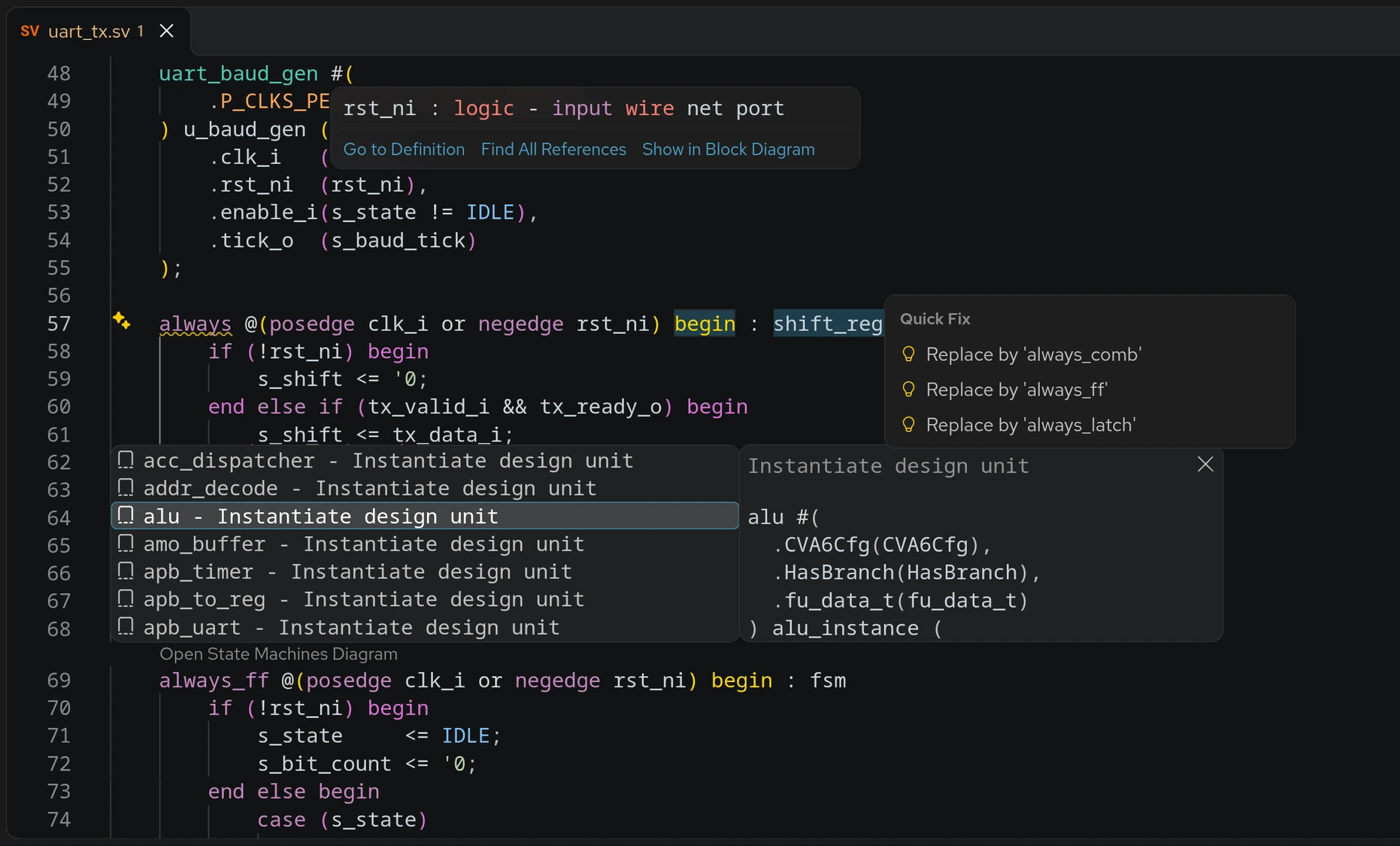
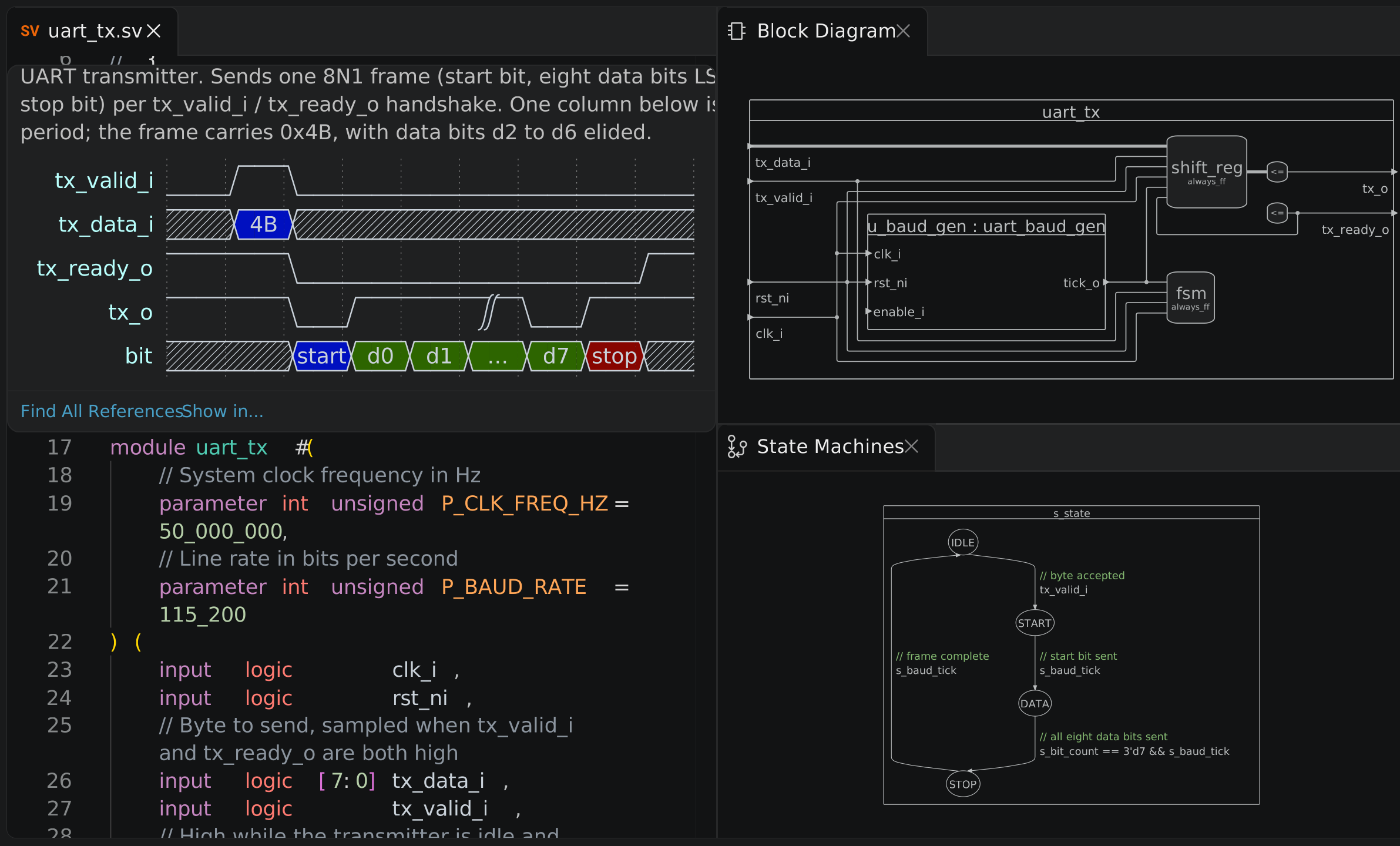
Sigasi helps engineers locate declarations, inspect types, and follow analyzed references. Source-derived block diagrams provide another route into the code. Modular Projects organize targets and dependencies so the context under investigation is explicit. For a radio designer, that can mean finding the wrappers affected by a sample-format change. For a network-chip team, it can mean investigating how packet metadata passes between processing stages. Verification engineers can inspect the related environment in the same workspace.
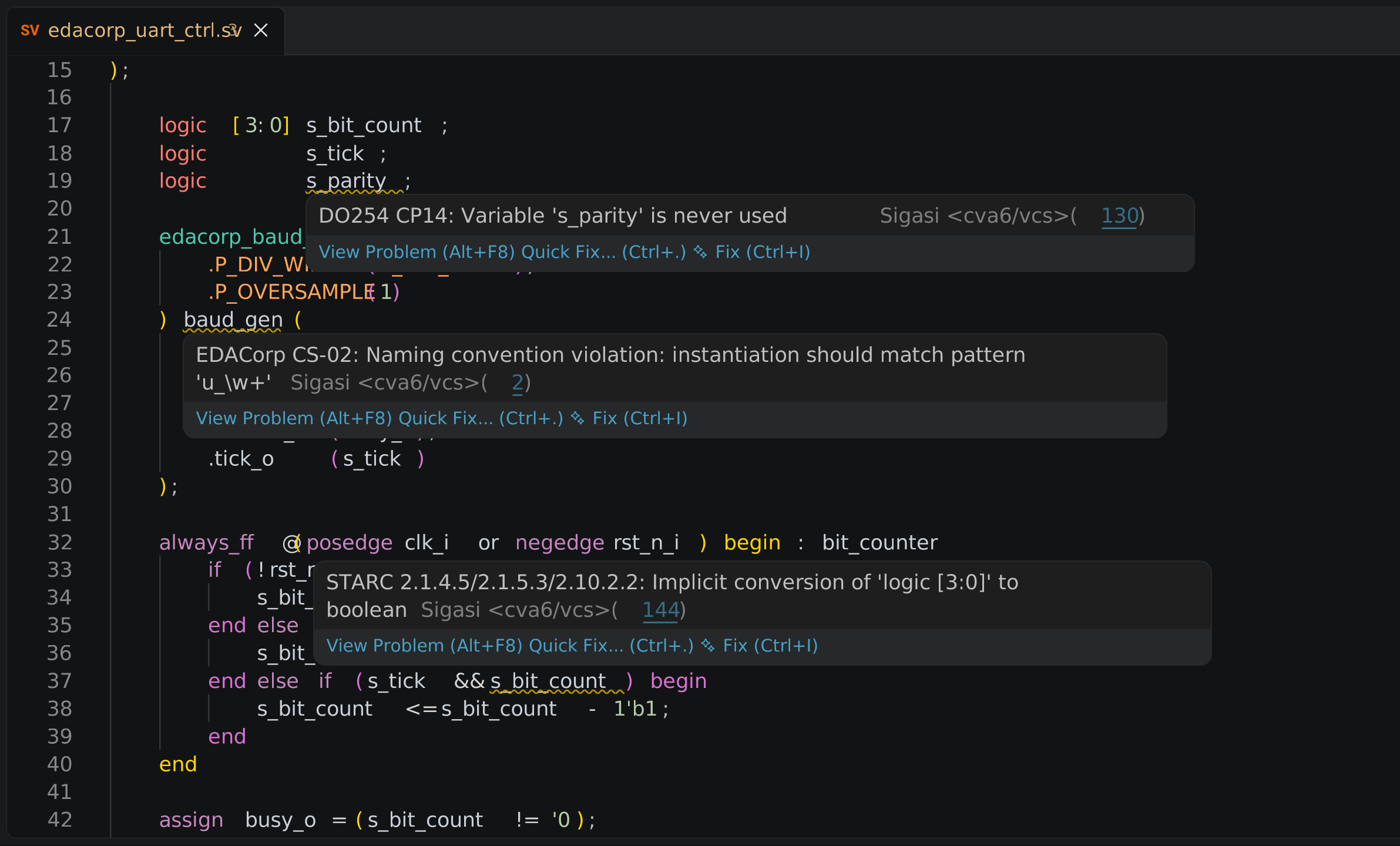
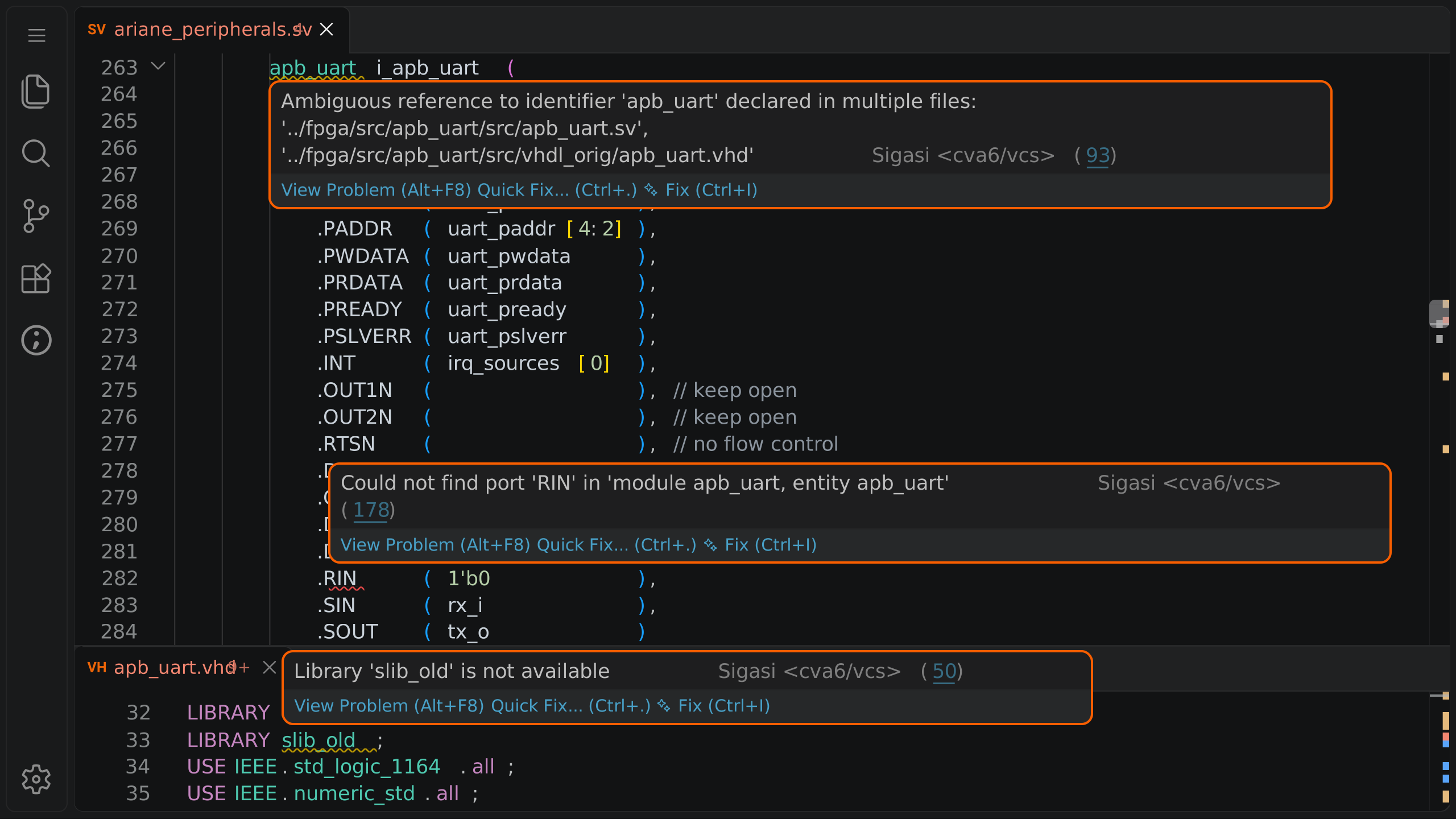
Suppose a sample interface becomes wider, while an adapter retains the old declaration. Supported language checks and configurable lint rules can expose source inconsistencies during editing. Engineers can investigate the definitions and correct the code or project setup before the next downstream run.
The behavioral questions still need appropriate verification. Does the pipeline preserve sample order and numerical meaning? Do packet descriptors stay associated with their payloads under backpressure? Sigasi helps engineers prepare understandable source for those checks.
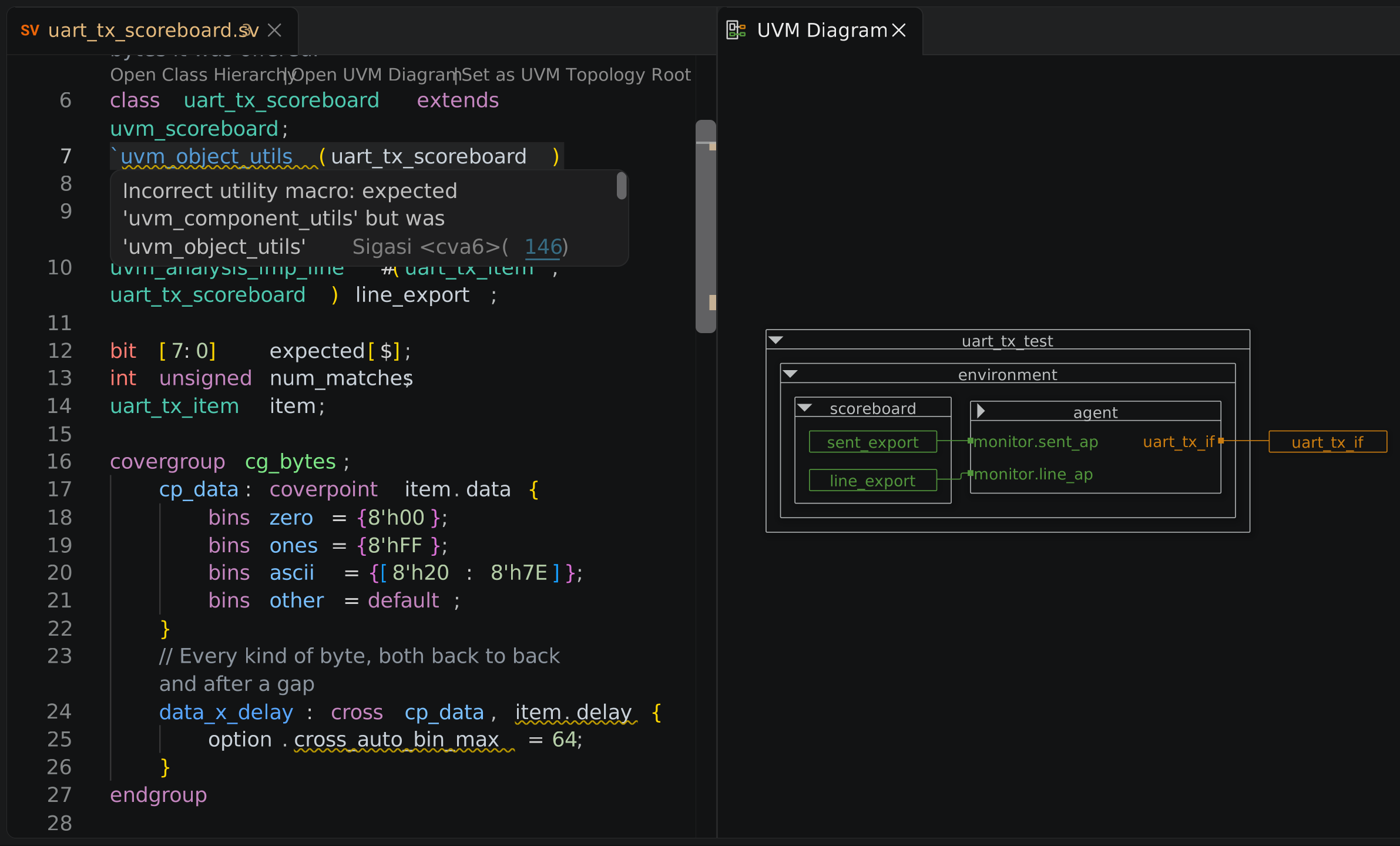
A product family may share processing logic across radio configurations, FPGA devices, and ASIC prototypes. Engineers need to distinguish common implementation from deliberate adaptation. Explicit targets and dependencies support that investigation. Source-derived documentation can be regenerated for handovers, while UVM-specific checks and views assist inspection of supported verification structures.
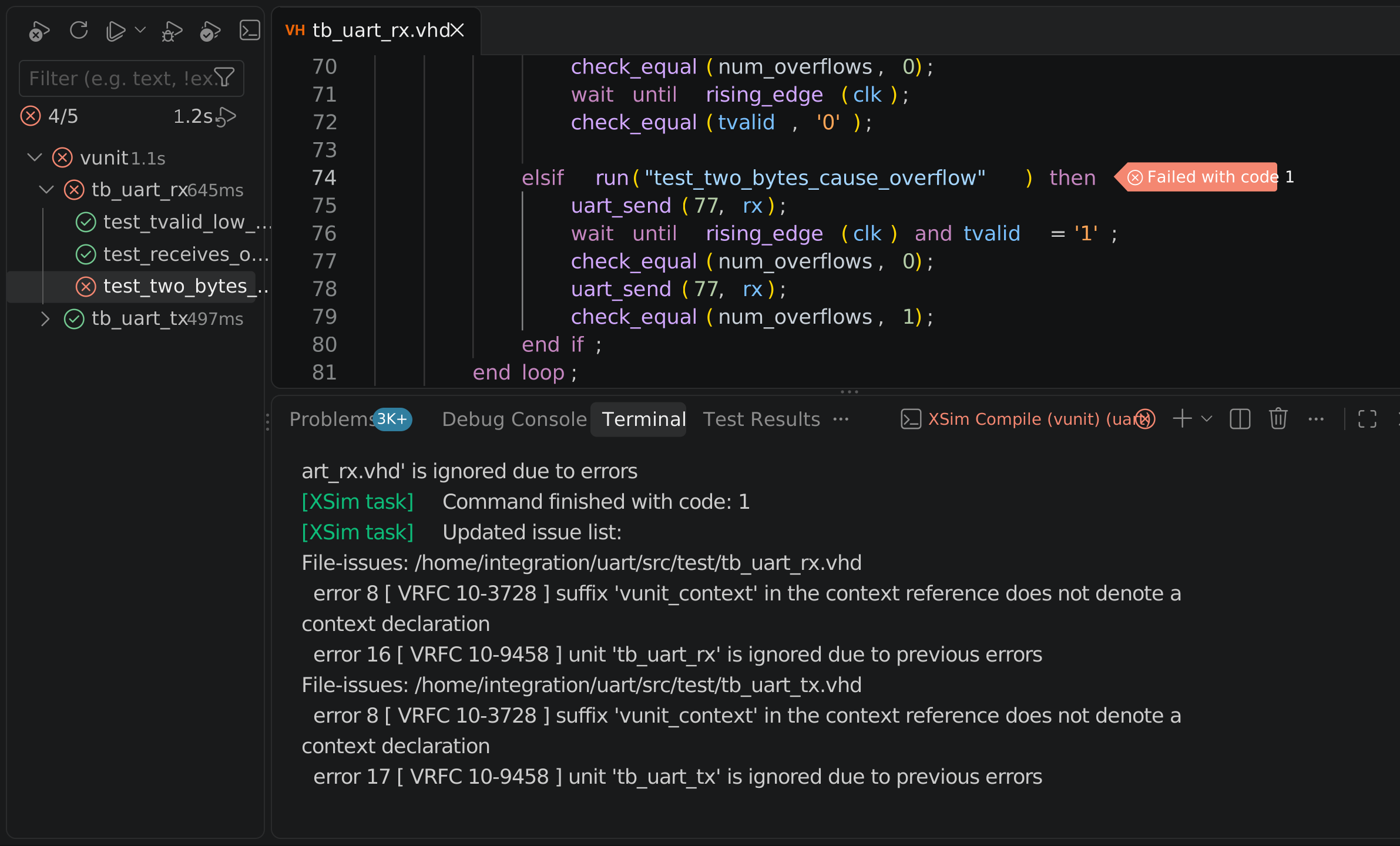
An agent can propose a plausible wrapper that uses an obsolete interface. Sigasi’s MCP integration gives agents access to project-aware analysis through the running extension. Licensed CLI workflows extend supported checks into automation. Engineers review the proposed change and the evidence before it advances.
That contribution is precise: clearer source relationships and earlier feedback. Protocol conformance , interoperability, signal quality, timing, and power require their own verification and measurement.
Download the telecom whitepaper for detailed radio, packet-processing, optical, verification, and AI-assisted RTL workflows.
Sigasi parses the full project, not the open file: hierarchy, types, scopes, dependencies, interfaces and references across SystemVerilog, Verilog and VHDL. That model is what makes a review of supplier, legacy or AI-generated RTL an inspection rather than a reading exercise.
Compile at coding speed, so problems surface in the second they are written rather than at integration.
Fewer iterations, less wasted AI tokens, less review late in a program when work is most expensive.
RTL checked against your real project whether you or an AI agent wrote the code. You decide what moves forward based on facts, not hope.
12 weeks
16 weeks
10 weeks
6 weeks (-50%)
12 weeks (-25%)
10 weeks (no impact)
Five short recordings of the product doing the work described above. No sign-up.
View all screencasts Incremental real-time compiler
Context-aware feedback, linting and completion as you type
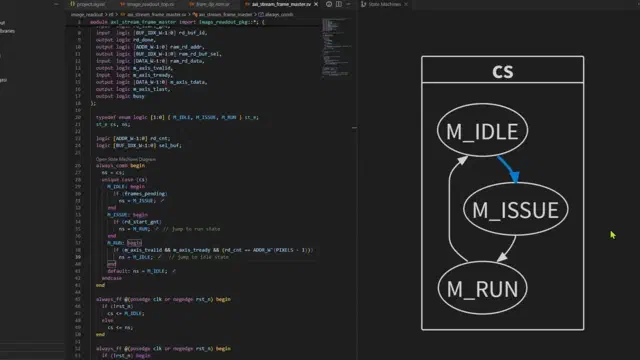 Interactive visual design creator
Block and state machine diagrams generated while you type
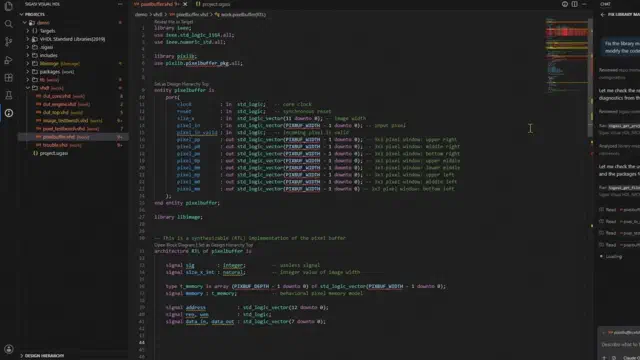 Dependency analysis
Spot missing mappings and broken includes across supplier and legacy code
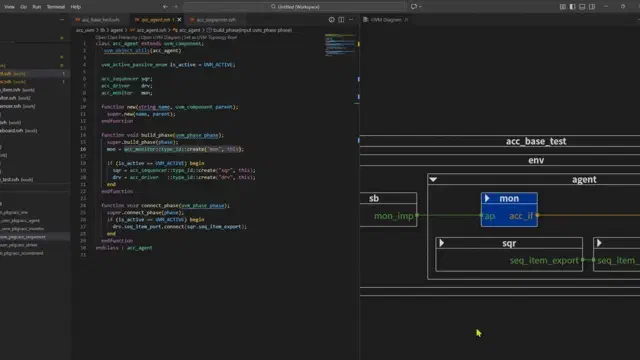 Verification accelerator
Debug UVM, UVVM, OSVVM, VUnit and Cocotb faster
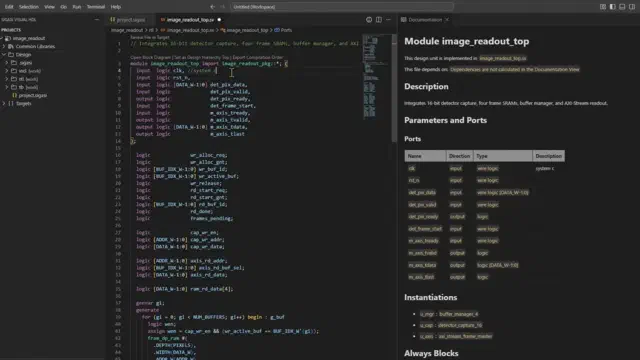 Up-to-date documentation
Documentation generated from the design, ready for review packages
Evaluate Sigasi on a representative ASIC or FPGA project, on your own infrastructure.