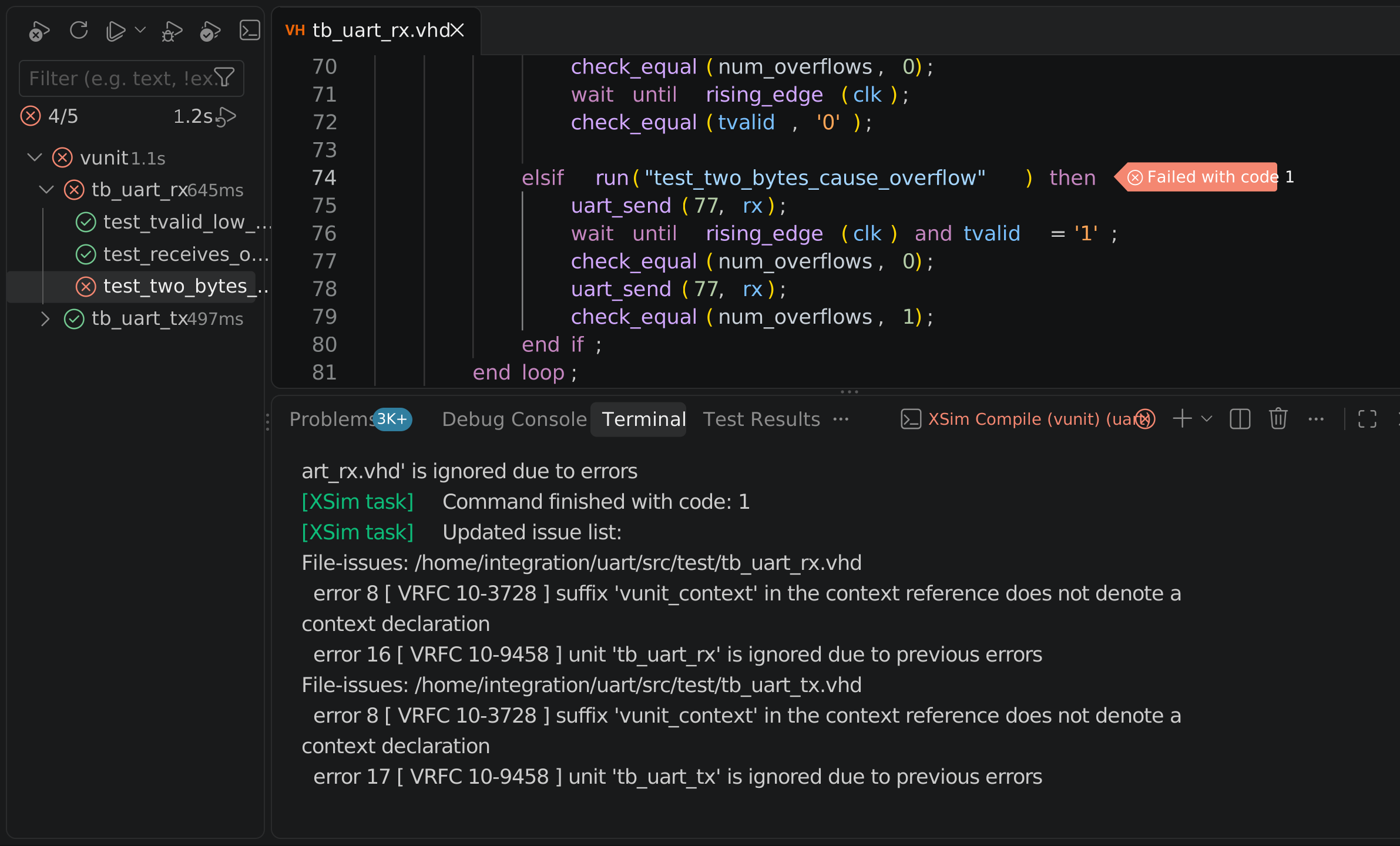
Triage.
Tell a design failure from an environment or configuration failure before you open a waveform.
A missing factory registration, a library the project never mapped, a config_db key that does not match, a protected type the configured VHDL version rejects. None of these are design failures and all of them cost the same debug hours. Sigasi builds one model of your configured project, testbench included, and answers them as you are writing the testbench.
UVM · UVVM · OSVVM · VUnit · cocotb · SystemVerilog, Verilog, VHDL and mixed-language testbenches · Analyzed locally, on your own machine
Tell a design failure from an environment or configuration failure before you open a waveform.

UVM, UVVM, and OSVVM are included in Sigasi. Simply choose the correct version.

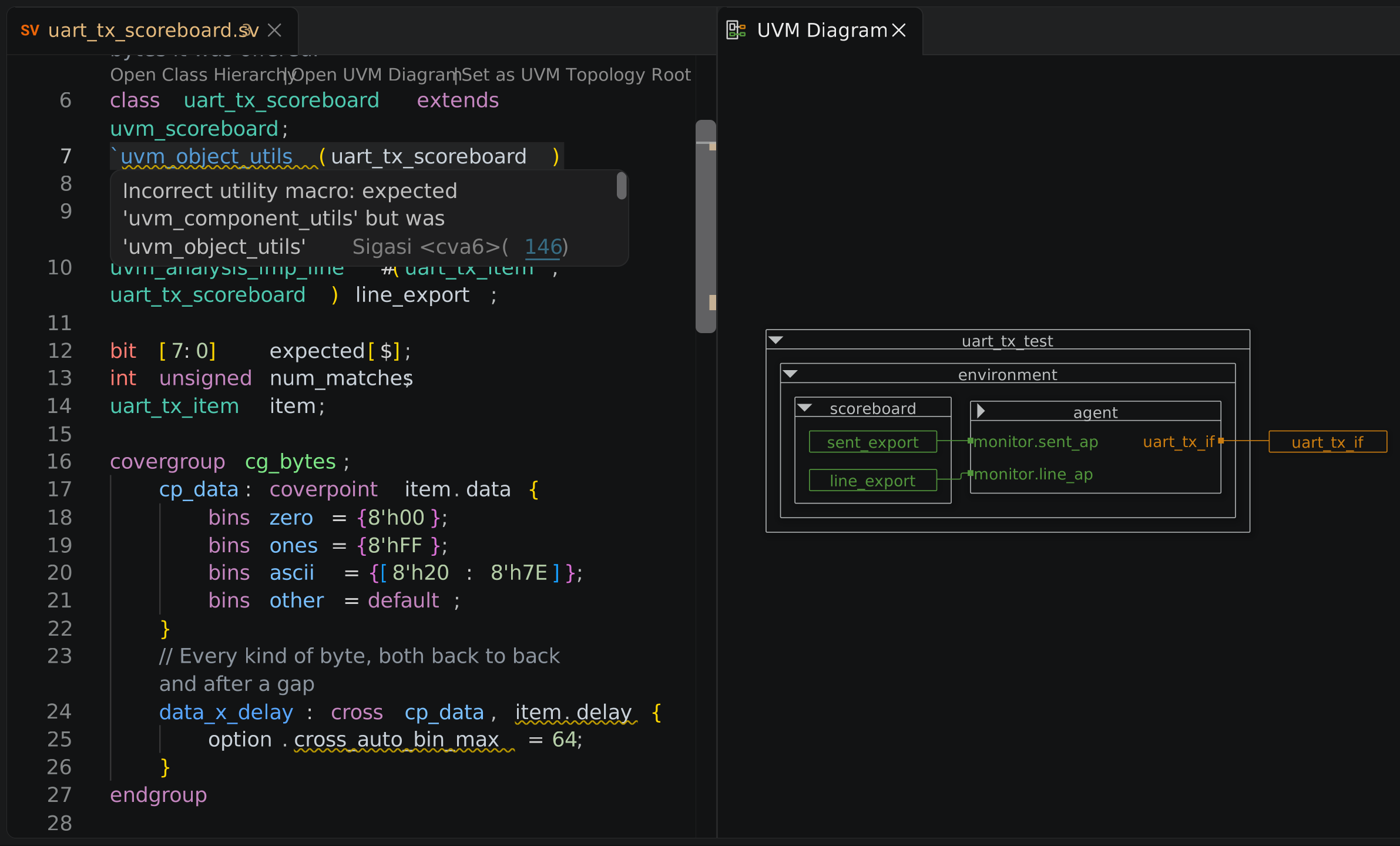
The UVM component hierarchy and diagram help you keep an overview of your testbench.

Jump from a sequence to its item and from a port to its declaration, across SystemVerilog and VHDL.

Your coding agent gets the real environment and its answers are checked. You decide what moves downstream.
class axi_driver extends uvm_driver #(axi_item);
	// `uvm_component_utils(axi_driver)

	function new(string name, uvm_component parent);
		super.new(name, parent);
	endfunction
endclass
The class compiles yet the factory has never heard of your axi_driver, so the override in your test does nothing. The failure shows up far from the root cause.
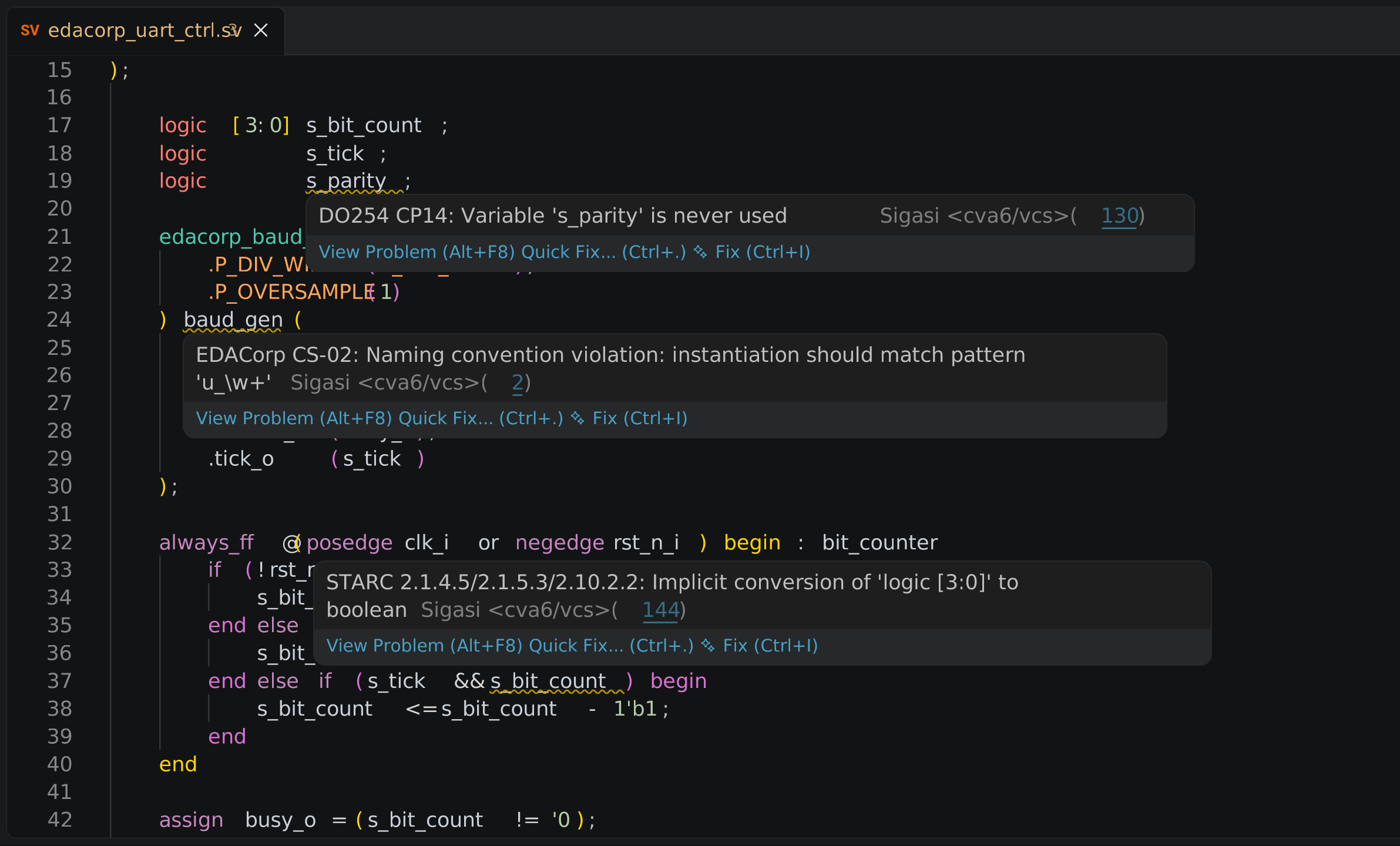
UVM-specific checks catch the registration while as the problem manifests, rather than leaving you in charge of finding the root cause of a symptom.
library uvvm_util;
context uvvm_util.uvvm_util_context;

library bitvis_vip_axistream;
use bitvis_vip_axistream.vvc_methods_pkg.all;
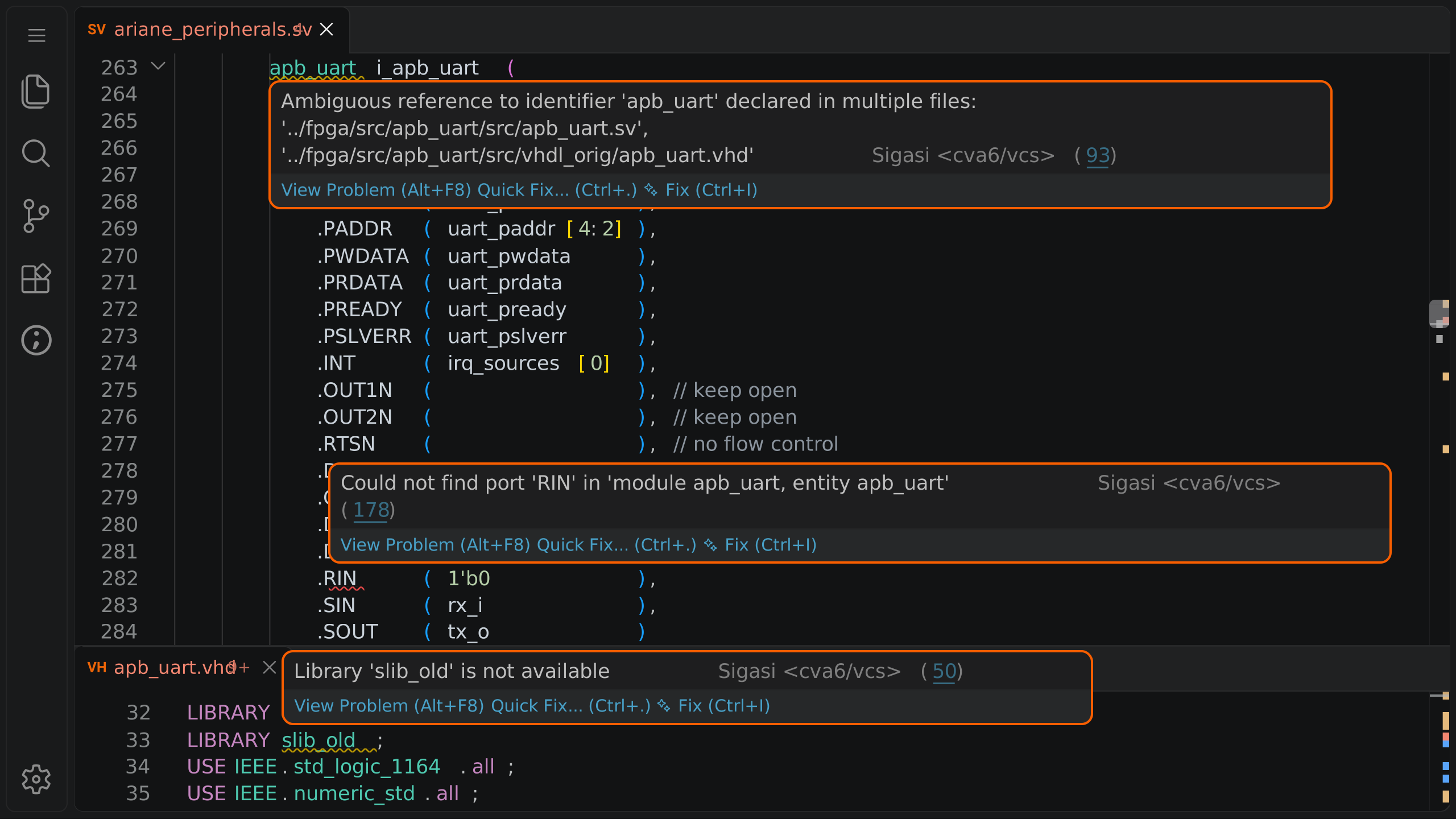
These lines are perfectly fine, unless the VIP simply is not mapped in the project you are compiling. The simulator will give up and leave you searching the logs to figure out this mistake. Sigasi connects libraries to source references, immediately surfacing misconfigurations.
library osvvm;
context osvvm.OsvvmContext;

architecture tb of axi_tb is
	shared variable Cov : CovPType;   -- protected type
begin
Whether that line is legal depends on the VHDL version the project is configured for. This isn’t visible in the file itself. OSVVM’s coverage and alert types are protected types, and a project still on an older revision is rejected by compilers and simulators. A tool that does not know your project settings cannot answer this. One that does will tell you which VHDL version supports the construct and help you migrate to it.
// env
uvm_config_db #(virtual axi_if)::set(this, "agent*", "vif", vif);

// driver
if (!uvm_config_db #(virtual axi_if)::get(this, "", "axi_vif", vif))
	`uvm_fatal("NOVIF", "virtual interface not set")
Two string literals that do not match, cause a fatal error at simulation time zero without a compilation error in sight.
// SystemVerilog testbench, VHDL design unit in library work
dut_core u_dut (
	.clk    (clk),
	.rst_n  (rst_n),
	.wr_en  (axi_vif.wr_en),
	.wdata  (axi_vif.wdata),
	.status (status)   // VHDL declares 12 bits
);
A UVM environment on top of a VHDL design isn’t some exotic use case. Yet support for mixed languages is lackluster. Sigasi’s mixed language project model blurs the separation so the port is checked against the VHDL declaration catching mistakes as they emerge.
An agent will write you a sequence, a scoreboard or a whole agent quickly. It does not know your library mappings, your compile order, which VIP this project actually uses, or the language revision you are on, because none of that is in the file it is reading.
Give it the project through MCP or the command line and what it proposes is checked against the real environment by the same engine you use, rather than graded by the model that wrote it. You still review it. Sigasi does not generate RTL or testbench code, and it does not decide.
Analysis runs locally, on your machine or inside your own network. Project files are not sent to Sigasi servers for semantic analysis. Telemetry is optional on a commercial license and does not transmit source code.
It does not replace your simulator, formal tools, coverage analysis or sign-off, and it does not catch everything. Sigasi runs the most important checks before code ever reaches compilation or simulation.
A demo says more than a thousand words. Ask for a trial and point Sigasi at a real testbench, with your VIP, your library mappings and your compile order. A field application engineer will be ready to set up with you at no charge during the trial.
Request a trial, or book a session on your own environment.
Sigasi parses the full project, not the open file: hierarchy, types, scopes, dependencies, interfaces and references across SystemVerilog, Verilog and VHDL. That shared model is what lets an engineer, a reviewer, a coding agent and your CI ask the same question and get the same answer.
Five short recordings of the product doing the work described above. No sign-up.
View all screencasts Incremental real-time compiler
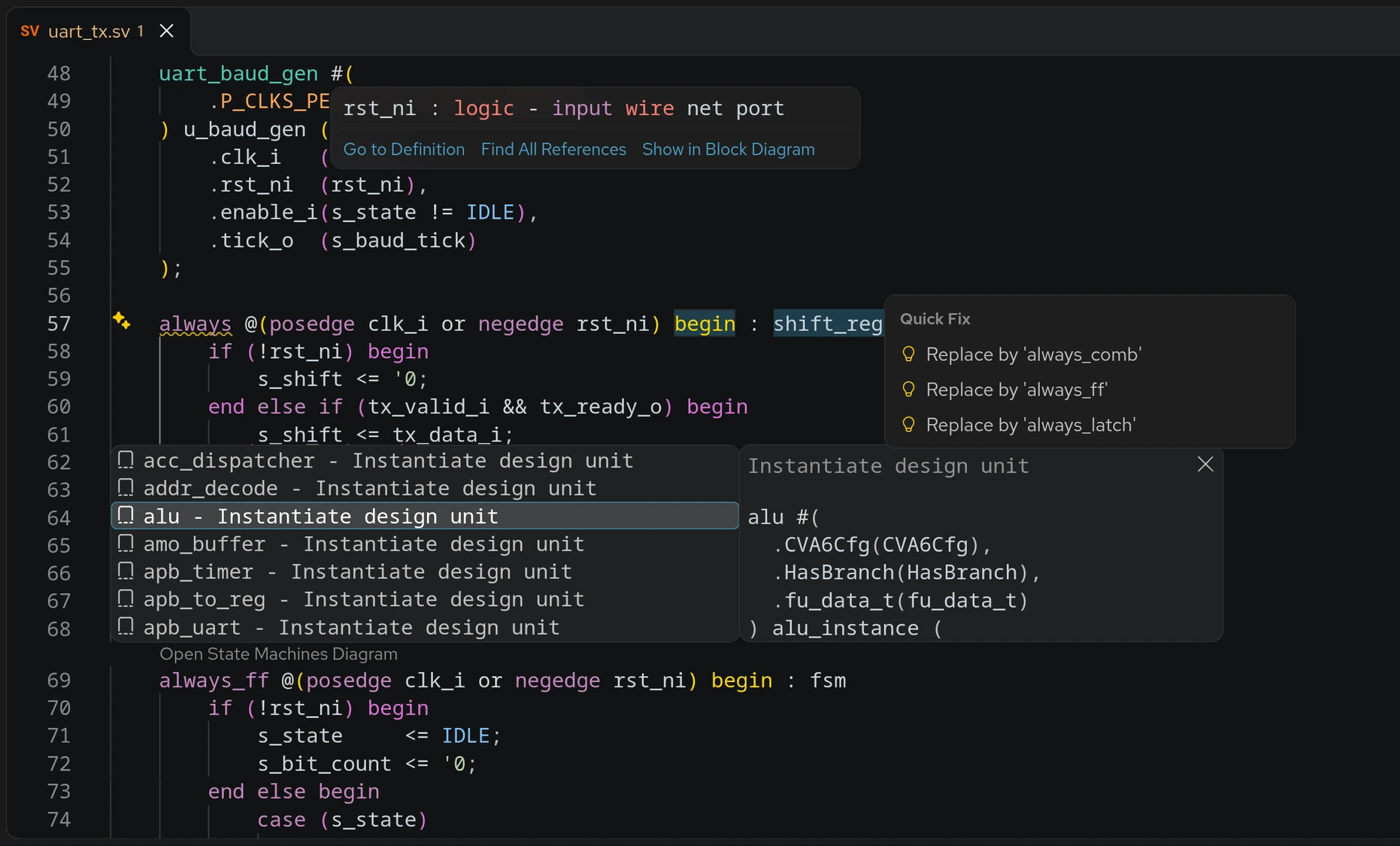
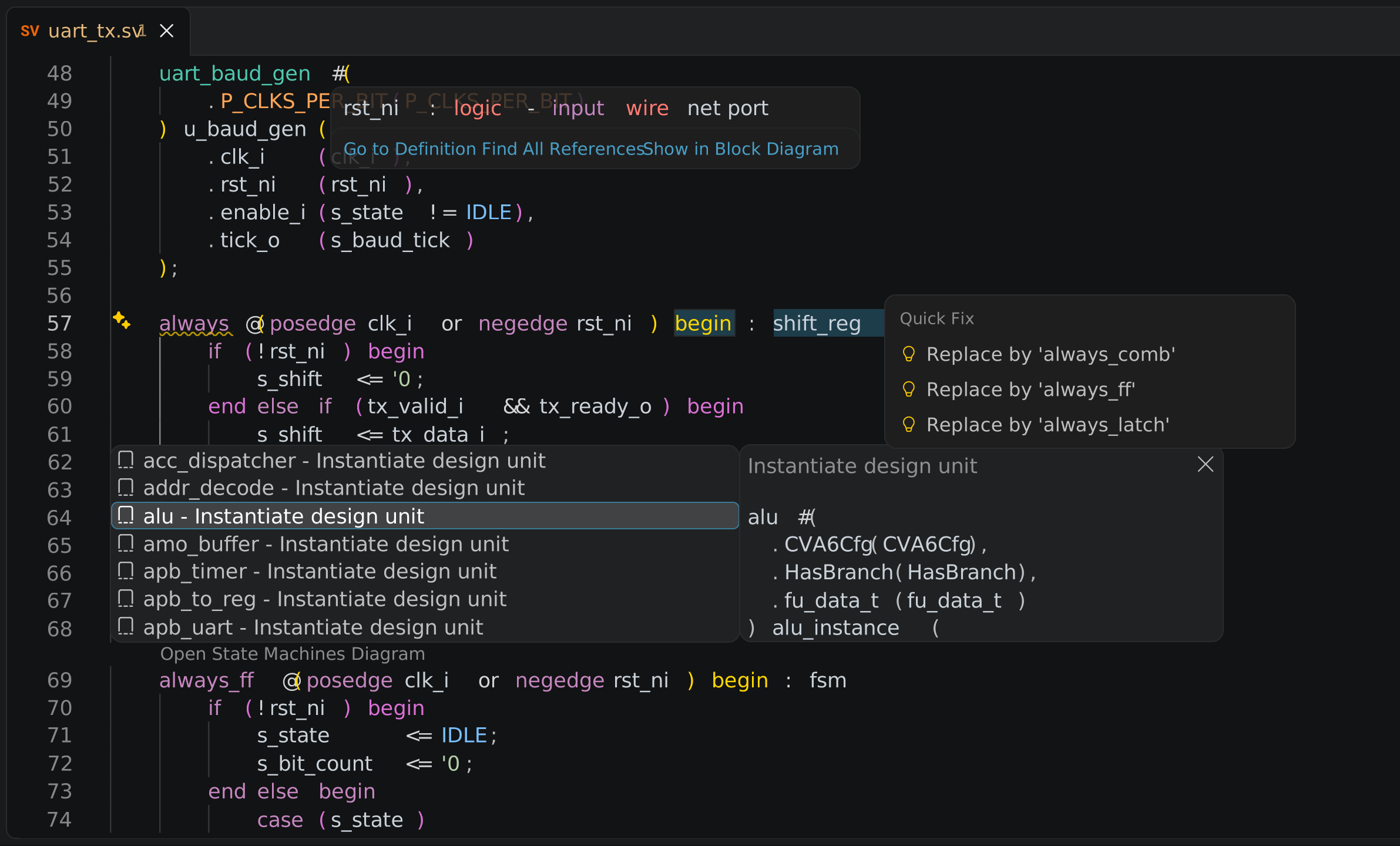
Context-aware feedback, linting and completion as you type
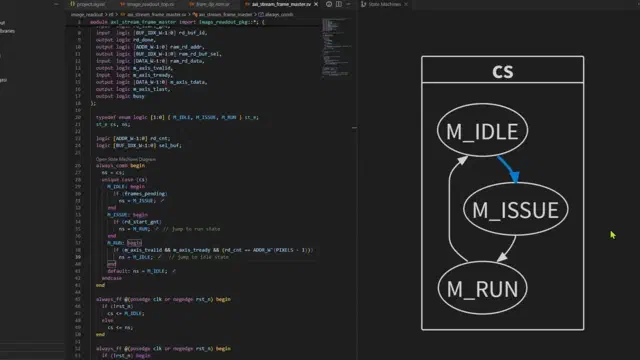 Interactive visual design creator
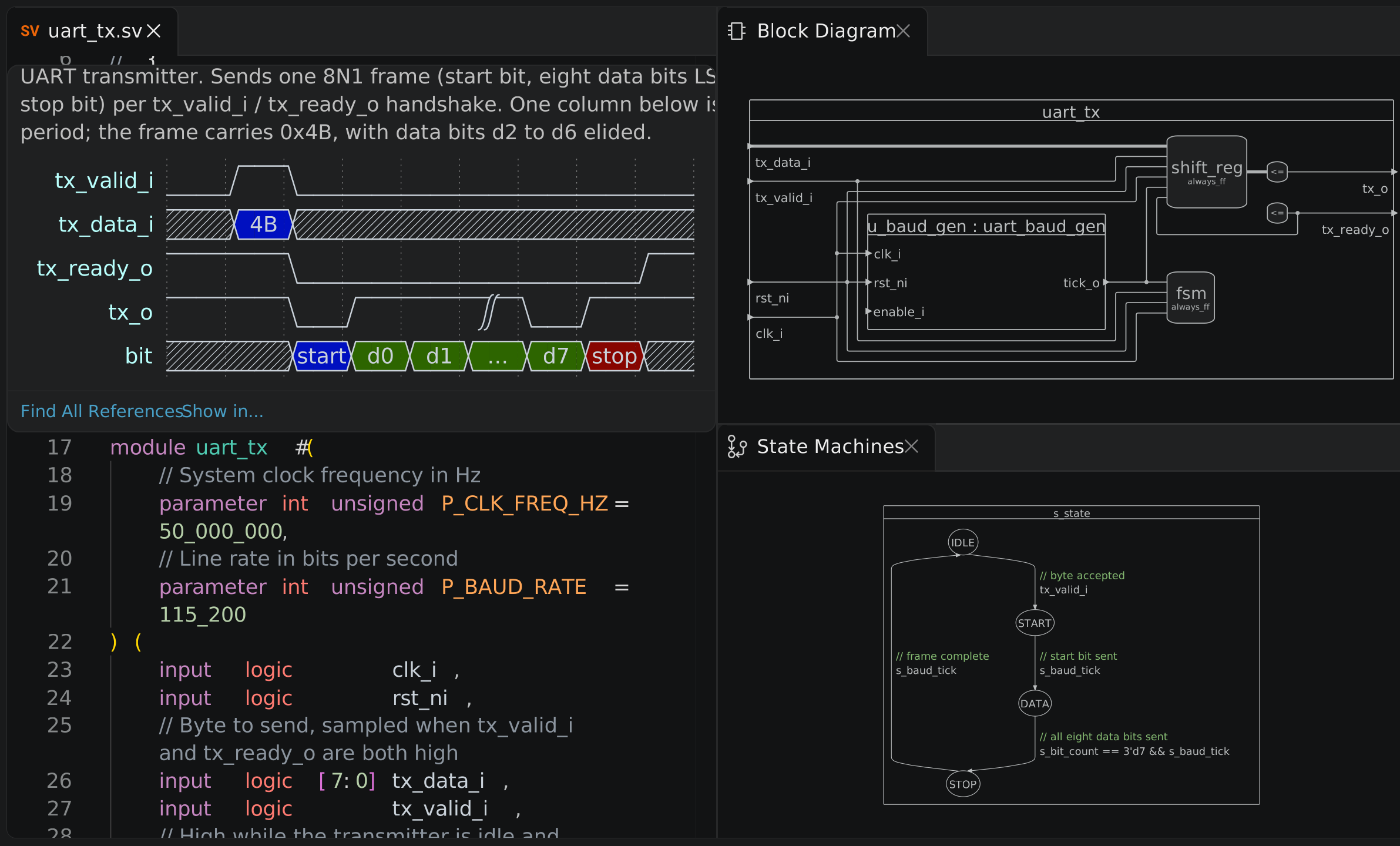
Block and state machine diagrams generated while you type
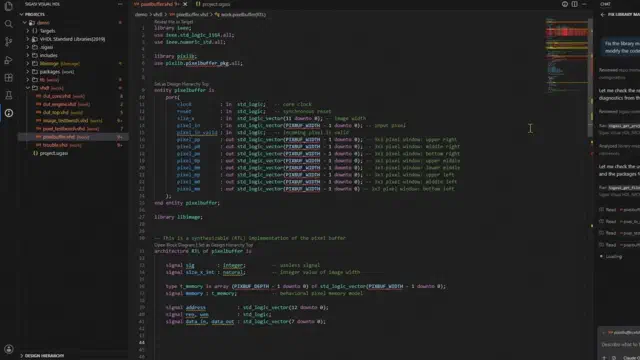 Dependency analysis
Spot missing mappings and broken includes instantly
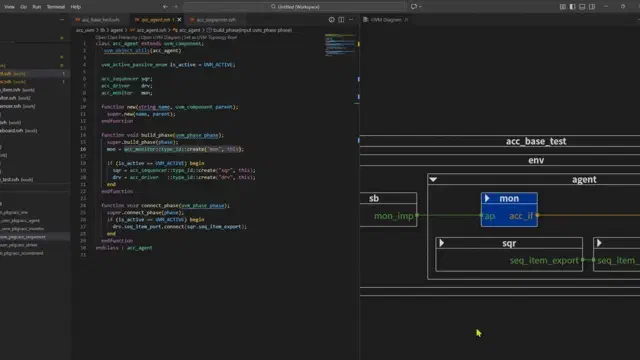 Verification accelerator
Debug UVM, UVVM, OSVVM, VUnit and Cocotb faster
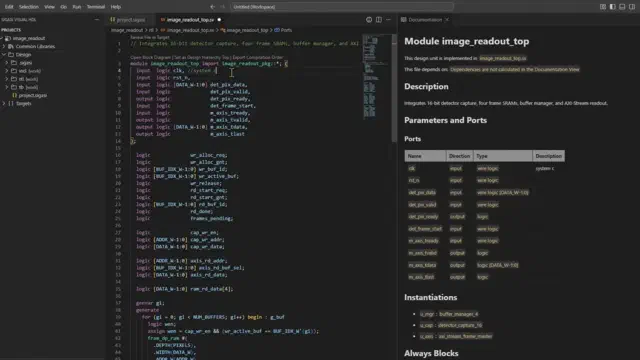 Up-to-date documentation
Documentation generated from the design, always current
With your VIP, your library mappings, your compile order and the VHDL revision you are actually on. A field application engineer will set it up with you at no charge during the trial, and it is worth doing with the design engineers at the same time.