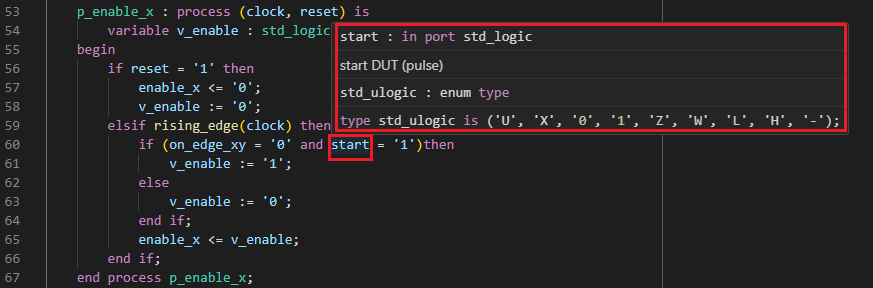
To learn more about the declaration of a given identifier, you can hold your mouse over it. After a short time, a pop-up will show you the name and data type of the signal. This technique is called hovering.
Hover pop-ups can show various kinds of information and actions:
- data type: the type of the identifier
- comments: inline documentation written for the declaration (see association rules)
- value: default values or the value of constants
- errors, warnings, and infos: a description of the linting problem, if the given identifier has an error, warning, or info associated with it. If the problem has a rule ID, clicking it opens the rule’s documentation
- decimal conversion: for hexadecimal, octal, or binary values, the decimal equivalent
- hover actions: various actions that can be performed by clicking a link in the hover
Hover actions
Hover actions expose common actions right where you need them. The table below lists all hover actions.
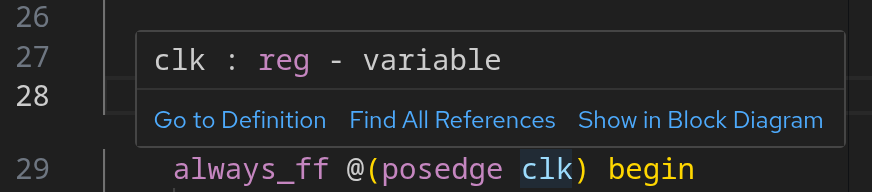
Hovers are also available in the preprocessor view, but it only offers the Go to Definition and Find All References actions.
Verilog
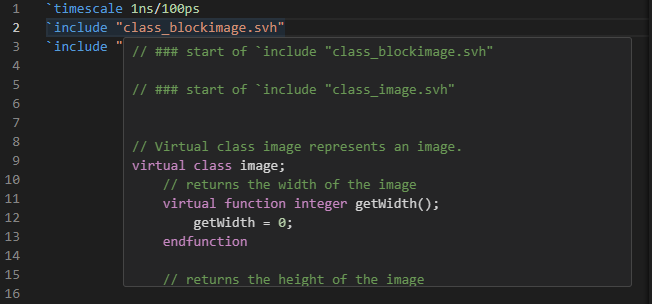
When you hover over a Verilog preprocessor directive (e.g., `foobar or `include ...), Sigasi shows the preprocessed text.
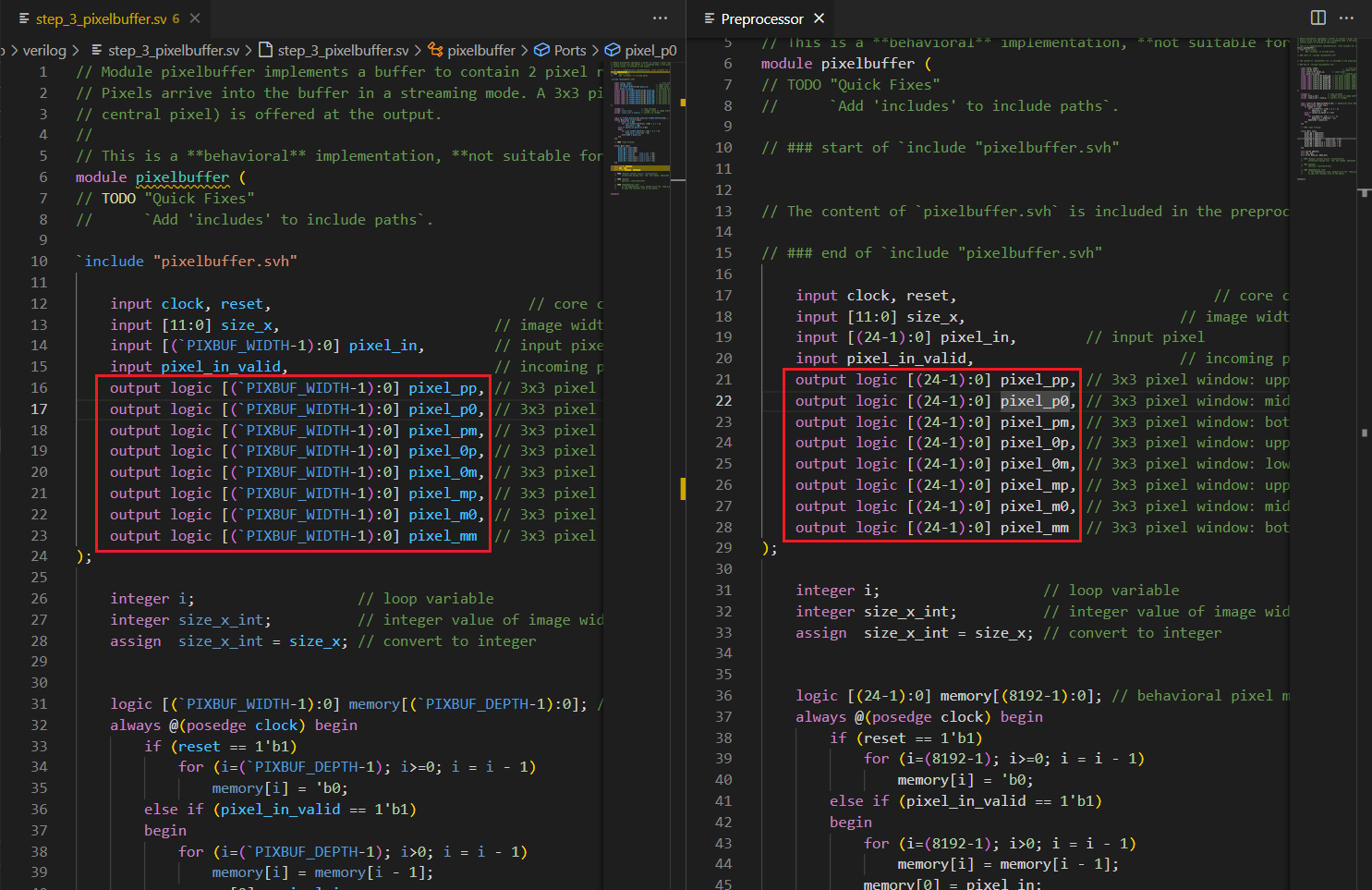
You can preview the fully preprocessed version of your source files in the Preprocessor View
VHDL
Sigasi propagates the values of VHDL constants to the expressions where they are used and even shows the result of the calculation.
