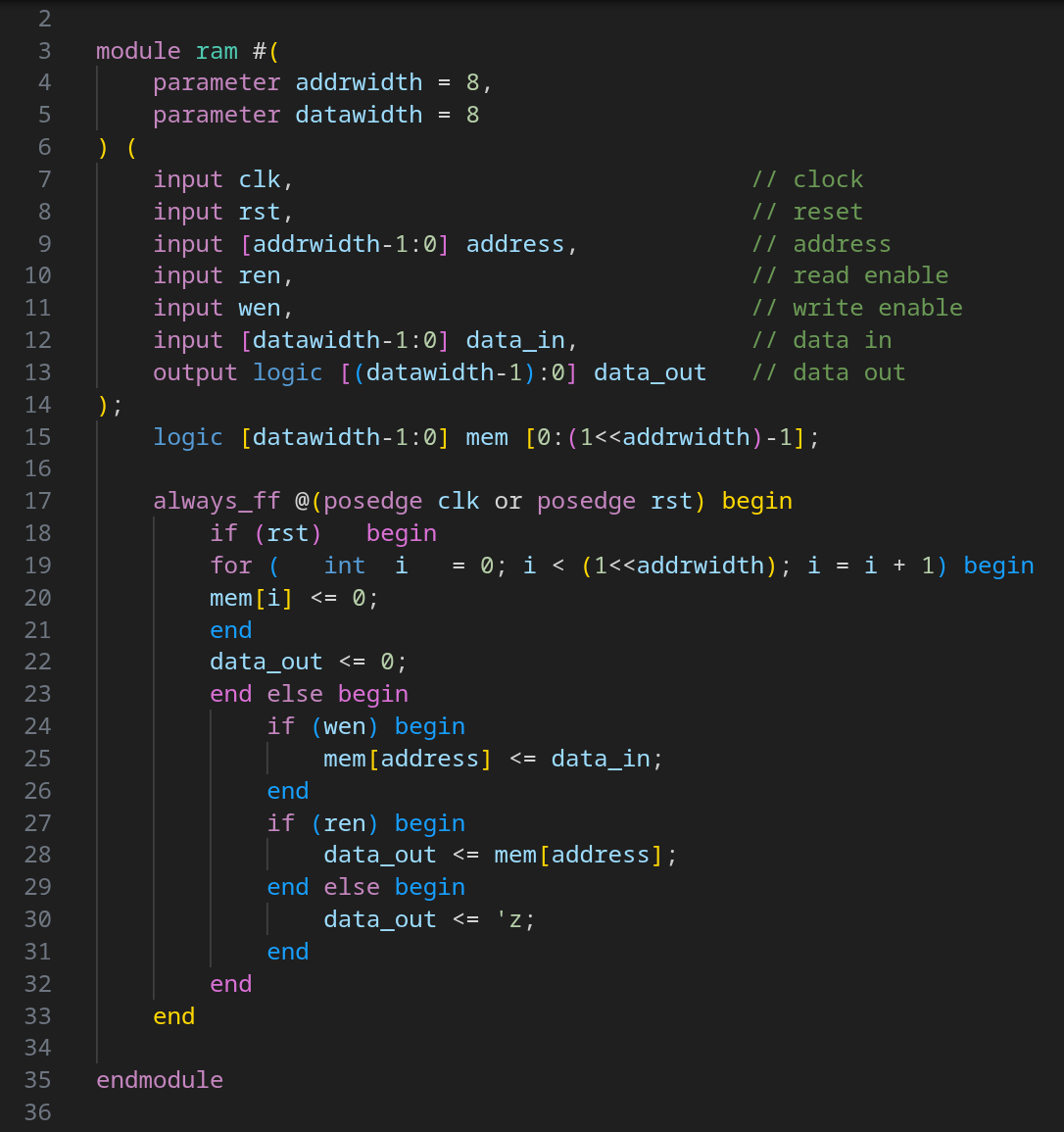
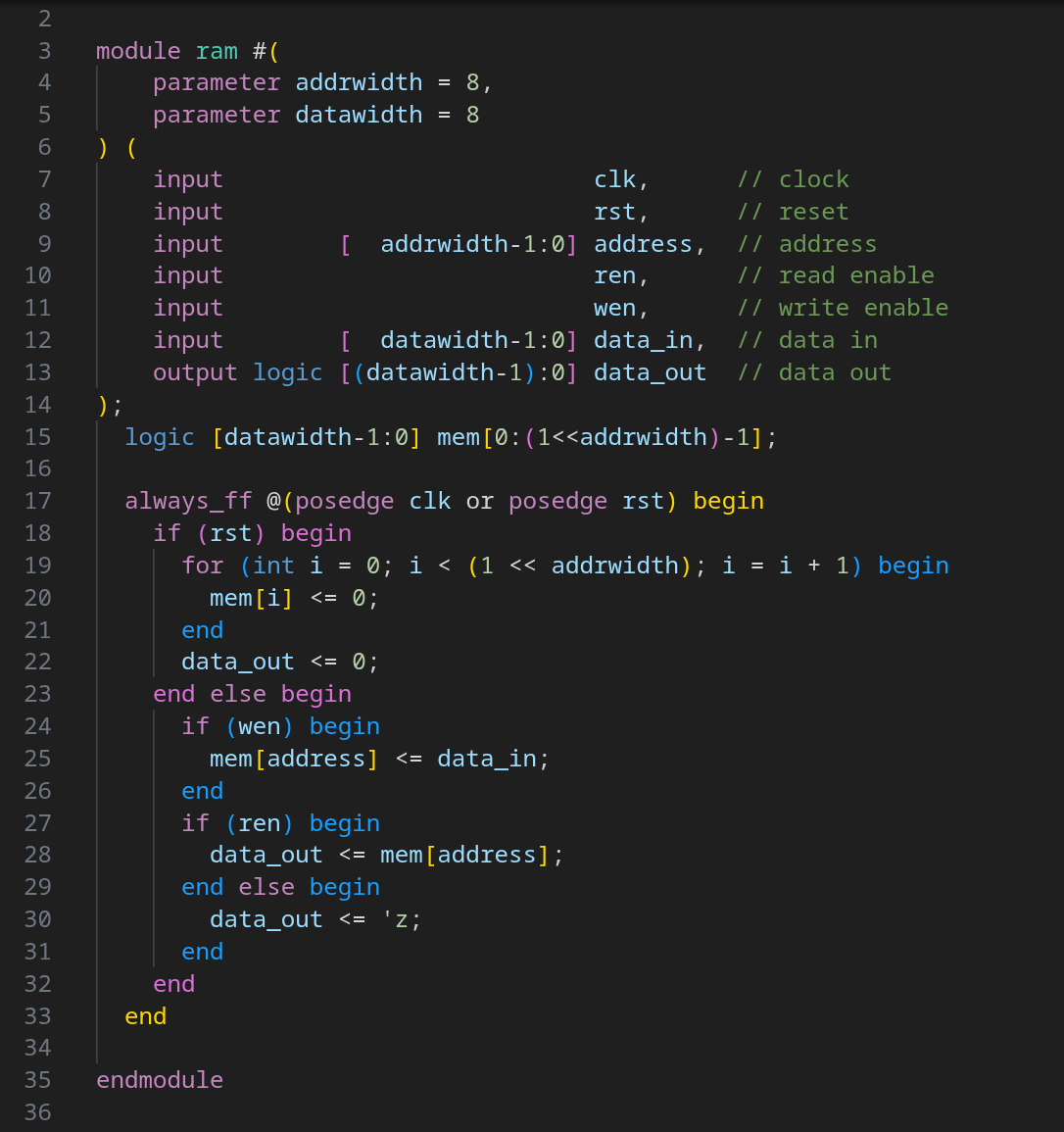
Automated consistent code formatting makes code more readable and understandable for developers, both when working on their own code and when they’re cooperating with colleagues.
To format your code using Sigasi, right-click in the editor and select Format Document. For Verilog, the built-in formatter applies indentation only, but you can switch to the Verible formatter for complete formatting. For VHDL, Sigasi’s advanced formatter handles indentation, spacing between keywords and references, vertically aligning symbols like <=, keyword casing, and comment alignment. All of these are configurable. Formatting can be applied when saving a file by enabling the editor.formatOnSave
setting.
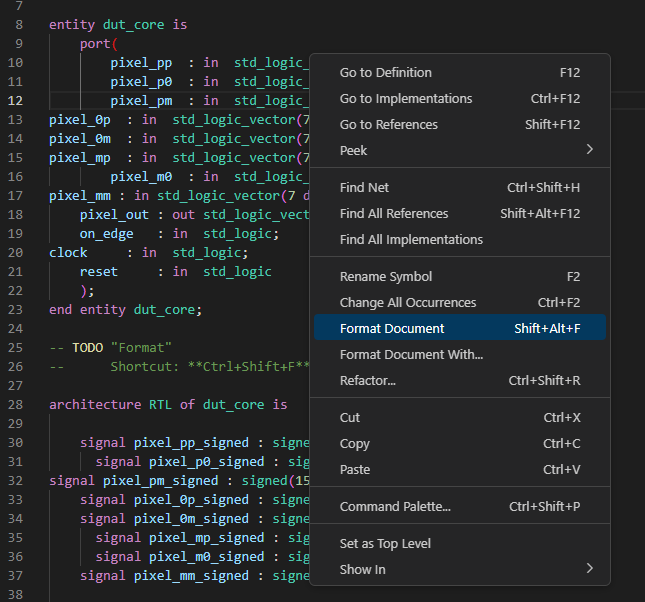
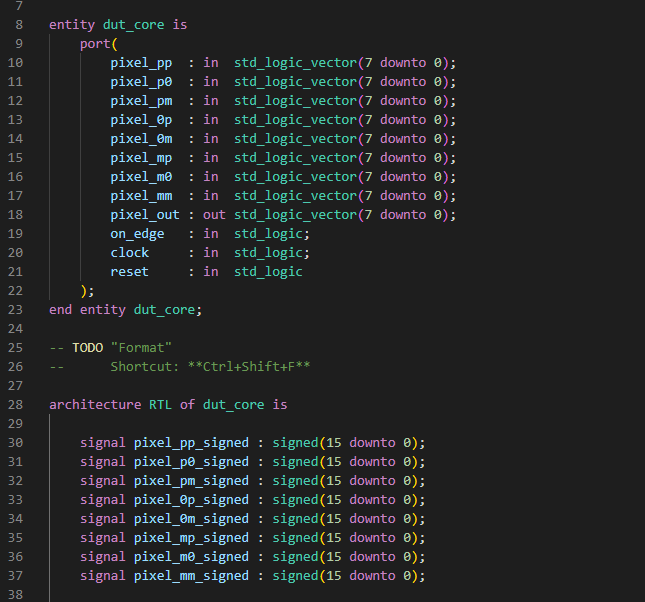
Sigasi’s formatter is context-based and tries to respect the author’s style. So depending on your source style, the formatter will make different choices.
For example, Sigasi decides whether to format a conditional signal assignment on one or multiple lines based on the position of the first else keyword.
If you put the else keyword on the first line, the formatter will keep everything on one line. If you put the else keyword on a new line, the formatter will use multiple lines for the assignment.
demo <= (others => '0') when enable = '1'
   else (others => '1') when input  = '1' -- else on new line
   else (others => 'X');
When your source file contains syntactical errors, the formatter cannot accurately figure out the appropriate formatting. For this reason, the formatter is programmed to stop applying whitespace changes beyond syntax errors.
Formatter selection
You likely have many VS Code extensions installed. Any extension can contribute support for any language, including formatting for VHDL and Verilog. To ensure you’re using Sigasi’s formatter, execute the Format Document With… command in the command palette (
Ctrl+Shift+P
) and check that you see (default) to the right of VHDL & SystemVerilog IDE by Sigasi
. If it’s not set, select Configure Default Formatter... and then select VHDL & SystemVerilog IDE by Sigasi
.
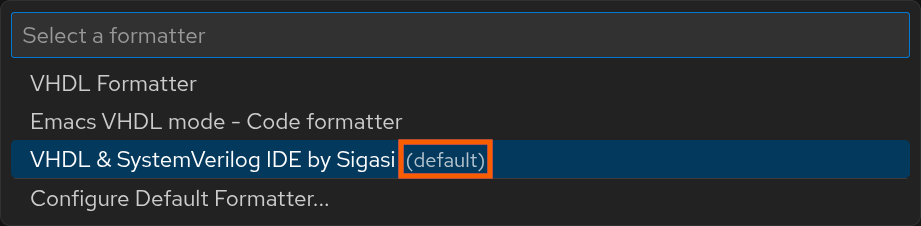
Configuring the formatter
The formatting whitespace, as well as the regions in which it operates, can be configured. Additionally, there are VHDL-specific configarutions to be tuned.
Disable formatting in defined regions
You can disable the formatter for defined regions in your VHDL source files by adding off and on tags:
- off tag:
-- @formatter:off- Turns off the formatter until the end of the file or until an on tag is encountered
- on tag:
-- @formatter:on- Reenables the formatter following an off tag
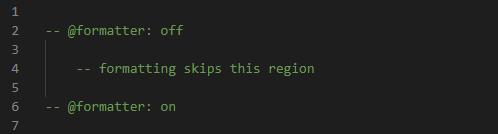
Indentation and whitespace
You can further configure the inserted indentation through the following settings:
editor.indentSize: Configures the size of the inserted indentation.editor.insertSpaces: Ensures Sigasi inserts spaces rather than tabs.editor.detectIndentation: Dynamically adjusts the previous two settings based on the indentation style used in the current file.
To instead edit the settings for 1 file only, access the Tab Size & Spaces configuration at the bottom-right of the VS Code window.

If you click Tab Size or Spaces, a dialog box appears at the top-middle of the window.
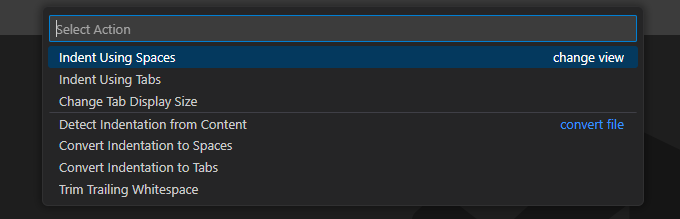
The options in this menu are only valid for the file in the editor. Before using these actions, ensure your file has been saved.
VHDL formatting configuration
In VHDL, the following properties can be configured:
- Preserve newlines
- Use vertical alignment
- Lowercase/Uppercase keywords
- Alignment column for trailing comments
Refer to the configuration page for all the details.
Verilog formatting configuration
For Verilog/SystemVerilog, you can choose which formatter to use through the sigasi.verilog.formatter
setting:
sigasi(default): Sigasi’s built-in formatter, which corrects indentation only.verible: the Verible formatter, an open-source SystemVerilog formatter maintained by the CHIPS Alliance that also handles wrapping, alignment, and spacing.
Sigasi ships with a bundled version of Verible, so no manual installation is required to use it. When Verible is selected, the following settings apply:
sigasi.verible.formatArguments: Command-line arguments passed to Verible. Ensureeditor.detectIndentationis enabled, or configureeditor.insertSpacesandeditor.indentSizeto match your arguments, to avoid mismatches between editing and formatting.sigasi.verible.useExternal: Whether to use your own Verible installation or the bundled one.sigasi.verible.installationPath: The directory containing the externalverible-verilog-formatexecutable. Leave empty to use the one from the systemPATH. Only applies whensigasi.verible.useExternalis set.
Verible does not support all SystemVerilog language features and can fail to format some files.